Spring HVAC Tune-Up Prevents Costly AC Failures
An air conditioner rarely fails on a convenient day. My most expensive breakdown occurred during the first hot spell, when every local technician was booked and replacement parts were scarce. A small spring HVAC tune-up would have exposed the weak capacitor and dirty coil before the system stopped cooling.
Spring maintenance gives your air conditioning system time to recover from winter, clear restricted airflow, and reveal worn components while repair options are still available. It also helps control energy use, protects indoor comfort, and reduces the chance of paying emergency rates for a failure that could have been prevented.
Project Snapshot
Average Cost: $90 to $350
Timeline: One to three hours
Lifespan: One season of improved performance, with benefits that support a system lasting 12 to 20 years
Best Season: Spring
DIY Friendly: Partial
Permits: Usually not required for routine maintenance, but permits may apply to refrigerant work, electrical changes, or equipment replacement
Why Spring Is the Right Maintenance Window
An air conditioner sits idle or works lightly through much of the cooler season. Dust collects around the outdoor condenser, leaves block drainage paths, and moisture can corrode electrical connections. Rodents sometimes nest near wiring or insulation. A system can look fine from the outside while carrying several hidden risks.
Spring service also gives you scheduling flexibility. Contractors are usually less overwhelmed than they are during the first sustained heat wave. You may have more choices among licensed technicians, and ordering a small part does not automatically turn into a long comfort problem.
A neglected system often shows warning signs before it fails. Weak airflow, unusual sounds, short cycling, musty odors, and rising utility bills all deserve attention. Do not wait for warm weather to confirm the problem.
What a Professional Tune-Up Includes
A proper service visit should be more thorough than changing a filter and spraying the outdoor cabinet. Ask for a written checklist so you know what the technician inspected.
Electrical and Mechanical Checks
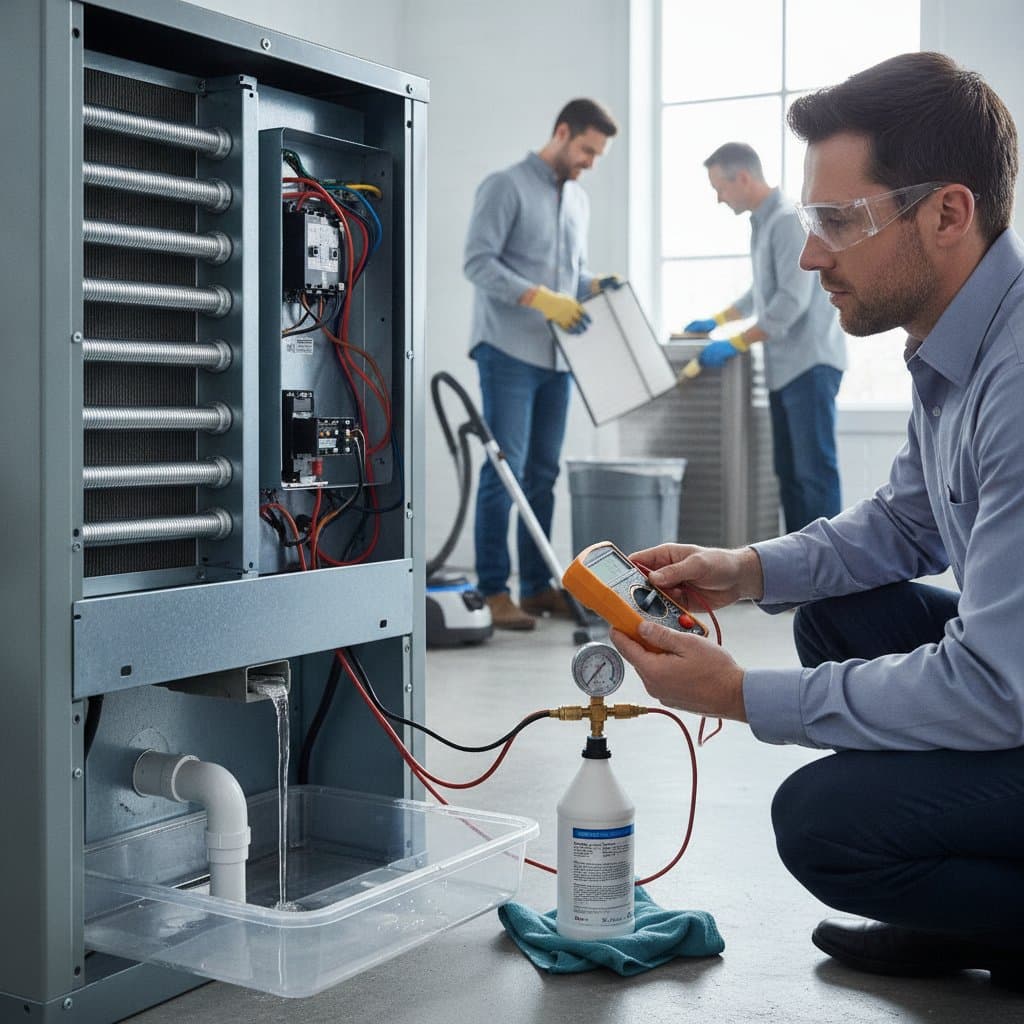
The technician should inspect capacitors, contactors, wiring, disconnects, and electrical terminals. Loose connections can create heat and damage components. A weak capacitor may cause slow starts, humming, or repeated shutdowns. Replacing one commonly costs $150 to $400, while a compressor failure can cost $1,500 to $3,500 or more.
The technician should also check the blower motor, fan motor, belts where applicable, and mounting hardware. Strange vibration often points to a loose panel, damaged fan blade, or failing motor bearing.
Refrigerant and Cooling Performance
A service professional can measure operating pressures, temperature differences, and refrigerant charge. Low refrigerant usually indicates a leak, not normal consumption. Adding refrigerant without finding the leak only delays the problem and can violate environmental rules.
Leak detection and repair commonly cost $300 to $1,200, depending on accessibility. Refrigerant work requires proper tools and certification, so this is not a safe homeowner task.
Coils, Drainage, and Airflow
Dirty evaporator or condenser coils force the system to work harder. The technician should clean accessible coil surfaces, inspect the condensate pan, clear the drain line, and test the safety switch. A blocked drain can overflow into ceilings, walls, or flooring. Drain clearing often costs $100 to $250, while water damage can reach several thousand dollars.
Airflow checks should include the filter, return grille, supply registers, blower compartment, and accessible ductwork. A filter that is clogged with dust or pet hair can freeze the coil and raise operating costs.
What You Can Do Safely
Several spring tasks are reasonable for a careful homeowner. Turn off power at the indoor service switch and outdoor disconnect before cleaning around the equipment. Never rely only on the thermostat.
Replace the filter with the correct size and efficiency rating. Basic filters often cost $5 to $15 each, while higher filtration options cost $15 to $40. A filter that is too restrictive can reduce airflow, so follow the equipment manufacturer's guidance.
Clear at least two feet around the outdoor condenser. Remove leaves, grass clippings, and stored items. Use a soft brush for loose debris and avoid bending the delicate fins. A garden hose can rinse the exterior coil from the inside outward only when power is off and the equipment manual permits it.
Check visible insulation on refrigerant lines, inspect the drain outlet for water, and listen for unusual sounds during a brief test. Do not remove electrical panels, handle refrigerant, straighten damaged fins with sharp tools, or climb onto a roof-mounted unit.
Call a licensed HVAC technician if you see scorched wires, oil near fittings, repeated breaker trips, ice on the refrigerant line, burning odors, or water around the furnace or air handler.
Cost Breakdown by Service Level
A basic homeowner filter replacement and outdoor cleanup may cost $10 to $50 in materials. This option suits systems with no warning signs, but it does not test electrical parts or refrigerant performance.
A standard professional tune-up usually costs $90 to $200 in lower cost regions and $150 to $350 in major metropolitan areas. Labor generally accounts for $75 to $250, with materials such as cleaner, fuses, drain treatments, or replacement filters adding $15 to $100.
A deeper service visit, including coil cleaning, drain treatment, electrical testing, and airflow measurements, commonly runs $250 to $500. Older systems, rooftop equipment, and hard-to-access condensers can push labor higher.
The repair budget deserves separate planning. Minor fixes such as a contactor, fuse, or drain clearing may cost $100 to $350. Fan motors often cost $400 to $900. Replacing an aging central AC system may cost $5,000 to $12,000, depending on capacity, ductwork, efficiency, electrical requirements, and regional labor rates.
Ask whether the company charges a diagnostic fee. Typical fees range from $75 to $175, and some companies apply that amount toward approved repairs.
Regional Pricing and Scheduling Advice
Labor costs tend to run higher in large cities, coastal markets, and areas with strict licensing requirements. Rural markets may offer lower hourly rates, but replacement parts can take longer to arrive. In hot southern regions, cooling equipment may need service earlier in spring. In northern areas, homeowners may have a wider scheduling window.
Book service before the first major heat wave. Ask the contractor to reserve time for repairs if testing reveals a weak component. If your system uses an older refrigerant or has a history of leaks, request a replacement plan before an emergency forces a rushed purchase.
Do not accept pressure to replace equipment solely because it is not the newest model. Ask for measured results, repair costs, estimated remaining life, and expected efficiency. Replacement makes better financial sense when repair costs approach half the price of a suitable new system, the compressor is failing, or the unit repeatedly breaks down.
DIY or Professional Service
DIY cleaning works for simple exterior maintenance, but it cannot replace diagnostic testing. You can save $50 to $150 by handling filters and debris yourself, yet one mistake around wiring or fins can erase that savings quickly.
Hire a licensed professional for electrical testing, refrigerant service, coil access, duct modifications, motor replacement, and any work involving combustion equipment near the air handler. Confirm licensing, insurance, and refrigerant certification. Request an itemized estimate before approving repairs.
A maintenance agreement can make sense for older systems or homes with demanding cooling loads. Plans often cost $150 to $350 per year and may include priority scheduling, discounts, and two service visits. Read the contract carefully. Some plans exclude major parts, refrigerant, after-hours work, or rooftop access.
A Practical Spring Tune-Up Checklist
- Replace or clean the filter according to the equipment instructions.
- Clear leaves, weeds, and stored objects around the condenser.
- Inspect visible wiring and insulation without opening panels.
- Check supply registers and return grilles for blocked airflow.
- Test the thermostat and replace batteries if needed.
- Look for drain pan water, staining, or algae near the indoor unit.
- Schedule professional electrical, refrigerant, coil, and airflow testing.
- Record the service date, repairs, filter size, and technician findings.
Keep receipts and measurements with your home records. They help during future troubleshooting and may support warranty claims.
The Comfort and Value Payoff
A well-maintained system uses less electricity because it does not fight clogged filters, dirty coils, or weak airflow. Actual savings depend on equipment condition, weather, insulation, thermostat settings, and utility rates, but a neglected system can lose 5 to 15 percent in operating efficiency. Preventive service may also reduce cooling repair frequency by catching worn parts before they damage connected components.
Comfort improves too. Balanced airflow reduces hot rooms, long run cycles, humidity problems, and repeated thermostat adjustments. For buyers, maintenance records show responsible ownership and may support confidence during an inspection. The direct resale return is difficult to guarantee, but reliable equipment and lower operating costs make a home easier to live in and easier to market.
Your Next Steps
Start with the filter, outdoor clearance, and visible warning signs. Then schedule a licensed HVAC tune-up before demand rises. Ask for test readings, an itemized estimate, and a clear explanation of every recommended repair.
A spring visit cannot prevent every failure, but it can replace surprises with choices. Spending a modest amount on inspection and maintenance may protect your comfort, preserve your system, and prevent a much larger emergency bill when you need cool air most.