
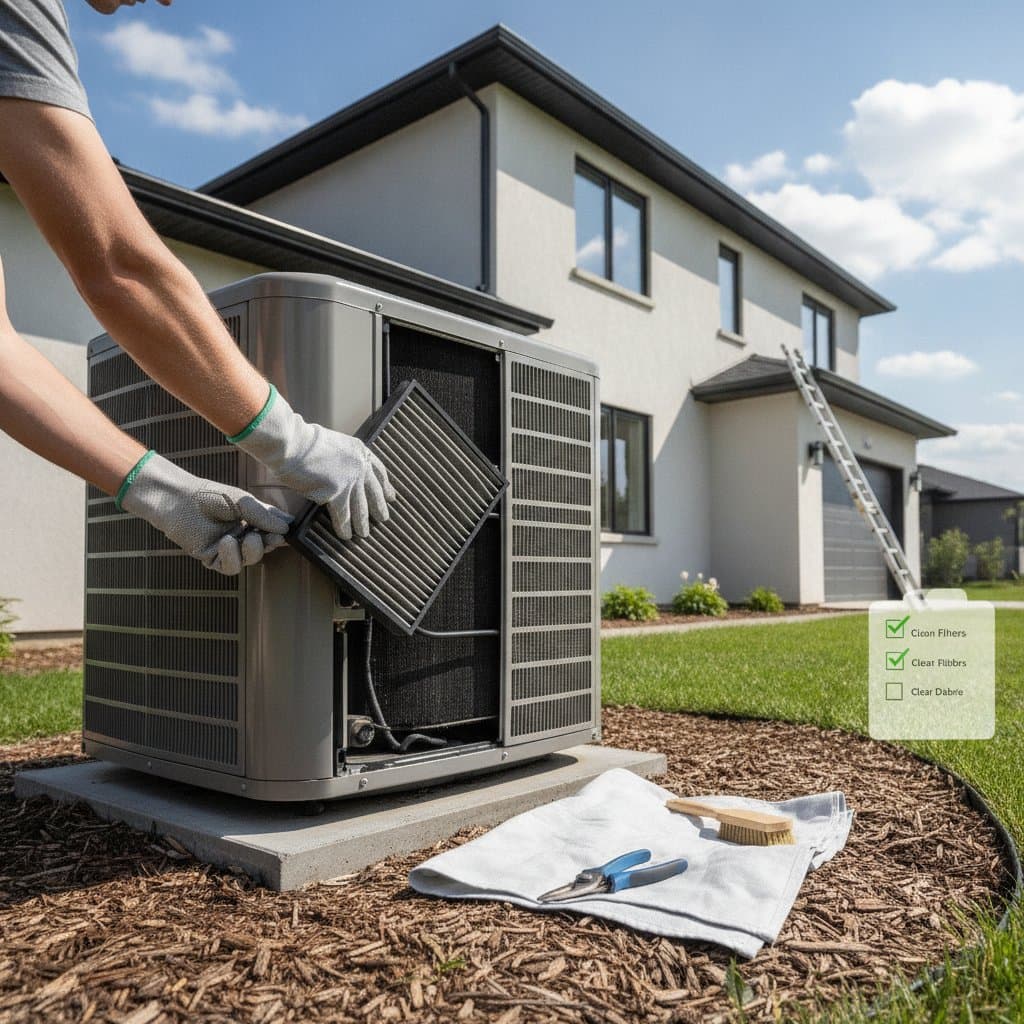
Spring AC Preparation: 10 Steps Before Summer Heat Arrives
When warm weather returns, your air conditioning system becomes one of the most important parts of your home. A spring HVAC tune-up keeps your system efficient, prevents breakdowns, and ensures comfort throughout the season. Skipping maintenance can shorten equipment life and increase energy bills. This spring checklist helps you get your AC ready for reliable cooling before temperatures rise.
Key Facts
- Average tune-up cost: 80 to 200 dollars
- Full inspection time: 1 to 2 hours
- System lifespan: 12 to 20 years with regular care
- DIY difficulty: Moderate for cleaning and filter replacement
- Pro involvement: Required for refrigerant, electrical, or compressor issues
DIY or Professional: Know the Limits
Homeowners can handle filter changes, cleaning, and visual inspections. Anything involving refrigerant, wiring, or sealed components should be left to licensed professionals. Attempting complex repairs without training can void warranties or cause injury. Schedule a spring service visit before the first heat wave to avoid delays during peak demand.
Ways to Save on HVAC Maintenance
- Bundle services. Combine your spring AC check with a furnace inspection for a lower annual cost.
- Join a maintenance plan. Many HVAC companies offer membership discounts and priority scheduling.
- Use rebates or tax credits. Some utilities provide incentives for upgrading to energy-efficient components.
- Clean regularly. Keeping coils, filters, and vents dirt-free reduces the need for major repairs later.
Proactive care can reduce energy use by up to 15 percent each season.
The 10-Step Spring AC Checklist
- Replace the air filter with a new one rated for your system to improve airflow and indoor air quality.
- Clear leaves, grass, and debris from around the outdoor condenser unit for proper ventilation.
- Inspect and gently clean evaporator and condenser coils to remove dirt buildup that reduces efficiency.
- Check and straighten bent fins on the coils using a fin comb for optimal heat exchange.
- Verify that the thermostat functions correctly and consider upgrading to a programmable model.
- Examine visible ductwork for gaps or damage and seal any leaks with appropriate mastic or tape.
- Flush the condensate drain line with a vinegar solution to prevent clogs and water damage.
- Lubricate moving parts such as fan motors if the manufacturer recommends it.
- Test the entire system by running it through a full cooling cycle and noting any unusual noises.
- Schedule a professional inspection to handle refrigerant levels, electrical connections, and compressor checks.
Preventing Bigger Problems
A neglected system will show early warning signs. Higher utility bills, uneven cooling, or musty odors often mean airflow or coil issues. Ignoring these can lead to compressor failure or water damage. Keeping up with this checklist avoids those costs and extends your system lifespan.
Track Performance Over Time
A reliable cooling system starts with consistent spring maintenance. Begin with simple cleaning and filter replacement, then schedule professional service for deeper inspection. Keep notes on what was done and when so you can track performance each year.