Keep Your HVAC Running During Grid Outages
Homeowners face sudden challenges when power outages interrupt heating or cooling. Indoor temperatures can shift rapidly without reliable backup. Preparation allows the HVAC system to operate safely through interruptions.
This guide covers backup power options, proper sizing methods, maintenance routines, and professional consultation points.
Essential Maintenance Tasks
A well maintained HVAC system draws less power and pairs more effectively with backup sources. Perform these steps before selecting equipment.
- Replace or clean air filters on a monthly schedule during peak seasons to maintain airflow.
- Clear leaves, grass clippings, and debris from the outdoor condenser unit each season.
- Verify thermostat calibration and program efficient temperature set points for both heating and cooling modes.
- Inspect wiring connections for tightness and insulation integrity to prevent faults during power transitions.
- Arrange annual professional inspections that include electrical load testing and refrigerant checks.
These tasks lower overall energy demand and reduce the capacity required from any backup source.
Choosing the Right Backup Power Option
Three primary solutions exist for sustaining HVAC operation. Selection depends on system size, budget, and installation constraints.
Portable Generators
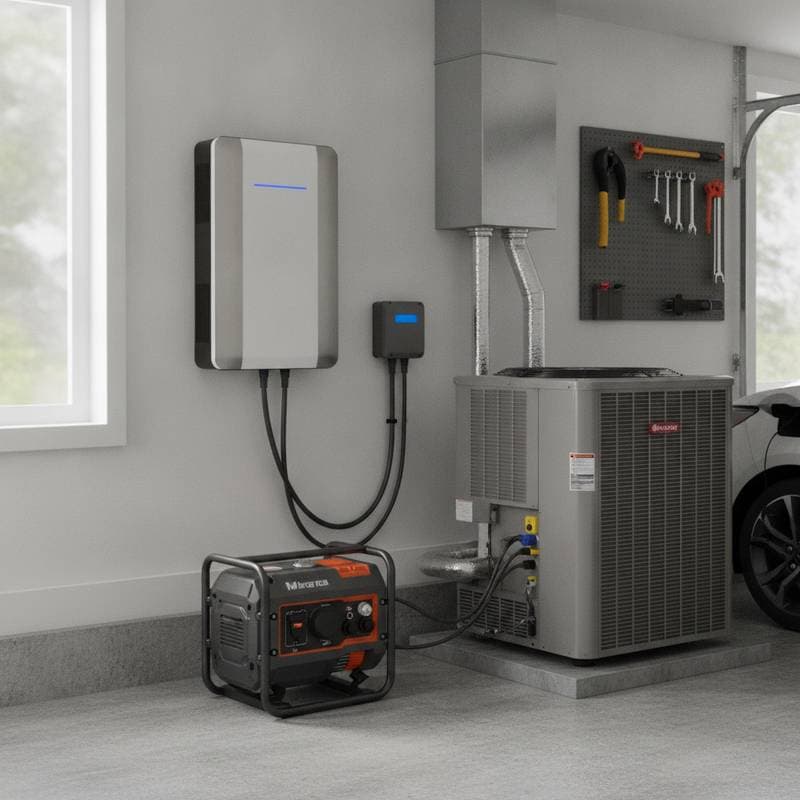
Portable units supply power to smaller loads such as window air conditioners or space heaters. They require manual connection and outdoor placement.
Pros:
- Lower purchase price
- Easy storage when not in use
- Ability to serve several small appliances
Cons:
- Insufficient capacity for central systems
- Manual starting procedure
- Strict outdoor operation requirements
Whole House Generators
Whole house generators connect through an automatic transfer switch and start without user intervention. They accommodate central HVAC compressors and fans.
Pros:
- Automatic activation within seconds
- Capacity for full central systems
- Fuel options include natural gas or propane
Cons:
- Higher initial equipment and installation cost
- Mandatory professional electrical work
- Scheduled maintenance intervals required
Battery Backup Systems
Battery systems paired with solar arrays deliver silent power and recharge during daylight hours. Runtime depends on battery capacity and HVAC load.
Pros:
- No noise or exhaust during operation
- Solar recharging extends availability
- Immediate switchover at outage onset
Cons:
- Significant upfront investment
- Limited duration for large compressors
- Possible panel or inverter upgrades needed
Hybrid configurations that combine batteries with a generator often deliver balanced performance.
Budget Friendly Solutions
Targeted improvements reduce backup requirements without full system replacement.
- Activate zoning controls to condition only occupied areas during outages.
- Add attic and wall insulation to slow temperature changes when power is unavailable.
- Operate portable window units or space heaters that match smaller generator ratings.
- Upgrade to high efficiency HVAC equipment that lowers starting and running amperage.
Safety Considerations
- Position generators outdoors and at least twenty feet from building openings to disperse exhaust.
- Install a transfer switch instead of connecting directly to household outlets.
- Select outdoor rated extension cords sized for the generator output.
- Allow the generator to cool before adding fuel.
- Confirm that supply and return air paths remain unobstructed while the system runs on backup power.
Planning for Extended Outages
Evaluate whole house generator models with automatic transfer switches. Compare battery capacity against measured HVAC startup current. Develop a priority list that sequences critical loads first. Store replacement filters, stabilized fuel, and charged batteries in accessible locations.
Implementing Your Backup Strategy
Assess household electrical loads and HVAC nameplate data. Schedule an efficiency inspection. Establish a budget that matches selected equipment. Consult a licensed electrician to verify safe integration with existing service capacity. Consistent preparation maintains indoor comfort regardless of grid status.