2026 Flood-Resistant Flooring Materials Built to Last
Extreme weather patterns have increased flood risks for many homes. Homeowners now face more frequent standing water, high humidity, and the need for materials that withstand repeated exposure. Flood-resistant flooring protects structural integrity, limits mold growth, and reduces long-term repair costs.
Water damage often begins beneath the surface. Materials must resist swelling, maintain seams, and allow thorough drying after submersion. Selection depends on subfloor condition, local climate, and intended use.
Criteria for Flood-Resistant Performance
True flood resistance requires more than surface-level water tolerance. Qualifying materials meet these standards:
- Retain shape and strength after hours or days of submersion
- Block mold and mildew during extended moisture exposure
- Dry without permanent expansion or warping
- Permit complete disinfection after flood events
Dense composition, waterproof adhesives, and sealed seams determine success. Subfloor preparation remains equally important. Moisture testing before installation prevents future failures.
Ceramic and Porcelain Tile
Tile provides proven durability in wet environments. It withstands standing water, repeated cleaning, and disinfectants.
Cost Breakdown
- Material: $2 to $10 per square foot
- Labor: $6 to $12 per square foot
- Total installed: $8 to $22 per square foot
Performance Advantages
Porcelain offers higher density than ceramic and resists water penetration. Installation over cement backer board with waterproof grout creates a long-lasting barrier. This combination suits basements, laundry rooms, and entryways.
Limitations
Shifting subfloors can cause cracks. Tile remains cold underfoot unless paired with radiant heating.
Rubber Flooring
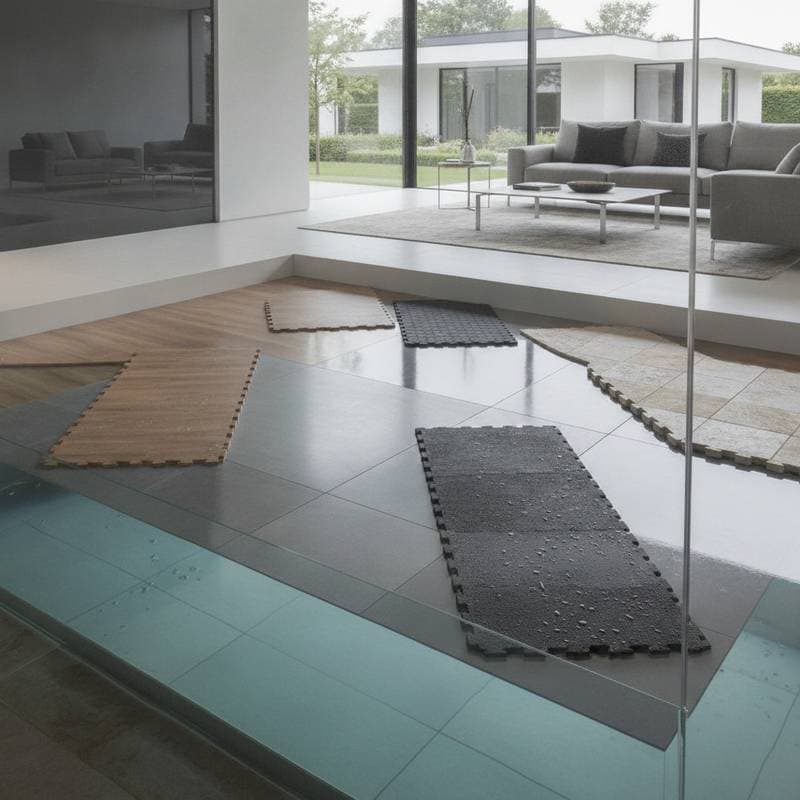
Rubber performs well in utility spaces and high-traffic zones. It handles moisture, provides slip resistance, and offers comfort.
Cost Breakdown
- Material: $3 to $8 per square foot
- Labor: $2 to $4 per square foot
- Total installed: $5 to $12 per square foot
Performance Advantages
Vulcanized rubber resists water absorption. Interlocking tiles allow targeted replacement after damage. Commercial-grade products maintain performance under repeated flooding.
Limitations
Edge sealing prevents moisture trapping beneath the surface. Lower-grade mats may fail in prolonged submersion.
Decision Framework for Installation
Some materials suit experienced do-it-yourselfers. Others require professional handling to avoid hidden defects.
Suitable for DIY
- Interlocking vinyl plank systems
- Rubber tiles with click-lock edges
- Epoxy kits on dry, level concrete
Recommended for Professional Installation
- Tile with waterproof membranes
- Epoxy on irregular or previously wet slabs
- Large-format vinyl or engineered stone requiring glued seams
Common Installation Risks
Trapped moisture leads to mold. Poor seam alignment allows seepage. Uneven subfloors cause warping. Prior flood history warrants a professional moisture test before any work begins.
Regional Cost Variations
Labor and material prices differ by location. Coastal and flood-prone zones carry premiums of $1 to $2 per square foot. Midwest markets often see lower epoxy costs. Northern climates add $3 to $5 per square foot for radiant heating under tile. Specialized contractors may require advance booking during peak storm seasons.
Health and Code Requirements
Floodwater introduces contaminants. Remove all porous materials such as carpet, laminate, and untreated wood. Discard subfloor sections that remained wet beyond several days. Install vapor barriers or raised subfloors in basements per local codes. Engage a licensed electrician when outlets or baseboards have contacted water.
Selecting Materials for Specific Spaces
Assess vulnerability by room. Basements, laundry areas, and ground-floor entries near doors experience the highest risk. Match material choice to traffic patterns, cleaning frequency, and desired surface temperature. Request manufacturer test data on submersion duration and recovery performance from suppliers.