Ember Vents: A Smart Upgrade for Fire Zone Home Value
In wildfire prone neighborhoods, small openings can create a serious weakness. Ember vents replace standard attic, crawlspace, and soffit vents with products designed to resist windblown embers. This upgrade gives homeowners a practical layer of wildfire protection while strengthening the home's appeal to careful buyers.
The upgrade matters most where dry vegetation, steep terrain, and seasonal fire conditions make ember exposure a realistic concern. A home does not need to sit near visible flames to face danger. Burning embers can travel through the air, settle against siding or leaves, and enter through ordinary vents.
At a Glance
- Best for: Attics, crawlspaces, soffits, and enclosed roof areas
- Primary benefit: Helps limit ember entry during a wildfire
- Value benefit: Supports resilience, buyer confidence, and insurance conversations
- Design benefit: Available in discreet finishes that preserve curb appeal
Why Standard Vents Can Leave a Home Vulnerable
Traditional vents are built to encourage airflow, not defend against airborne embers. Their mesh may block insects, yet tiny burning particles can still pass through. Once inside an attic or crawlspace, embers can ignite insulation, stored belongings, framing, or accumulated dust.
That risk often hides in plain sight. A vent may look clean and well maintained from the yard, while its openings remain exposed to wind driven fire. A wildfire ready home needs attention to those less glamorous details. Protection is rarely about one dramatic product. It comes from closing several quiet pathways.
How Ember Vents Improve Wildfire Protection
Ember resistant vents use specialized screens, baffles, or layers that interrupt ember travel while preserving necessary ventilation. Some models include intumescent materials that expand under extreme heat, helping seal the opening. Others use tightly engineered metal mesh and airflow channels.
A qualified contractor can identify the right product for each location. Attic vents, crawlspace vents, gable vents, and soffit vents may require different dimensions or installation methods. The goal is to protect vulnerable openings without trapping moisture, which can create mold, rot, and poor indoor air quality.
Look for products tested to recognized wildfire construction standards. A label alone does not replace proper installation. Gaps around the frame, loose fasteners, or damaged screens can weaken the entire improvement.
What the Upgrade Looks Like
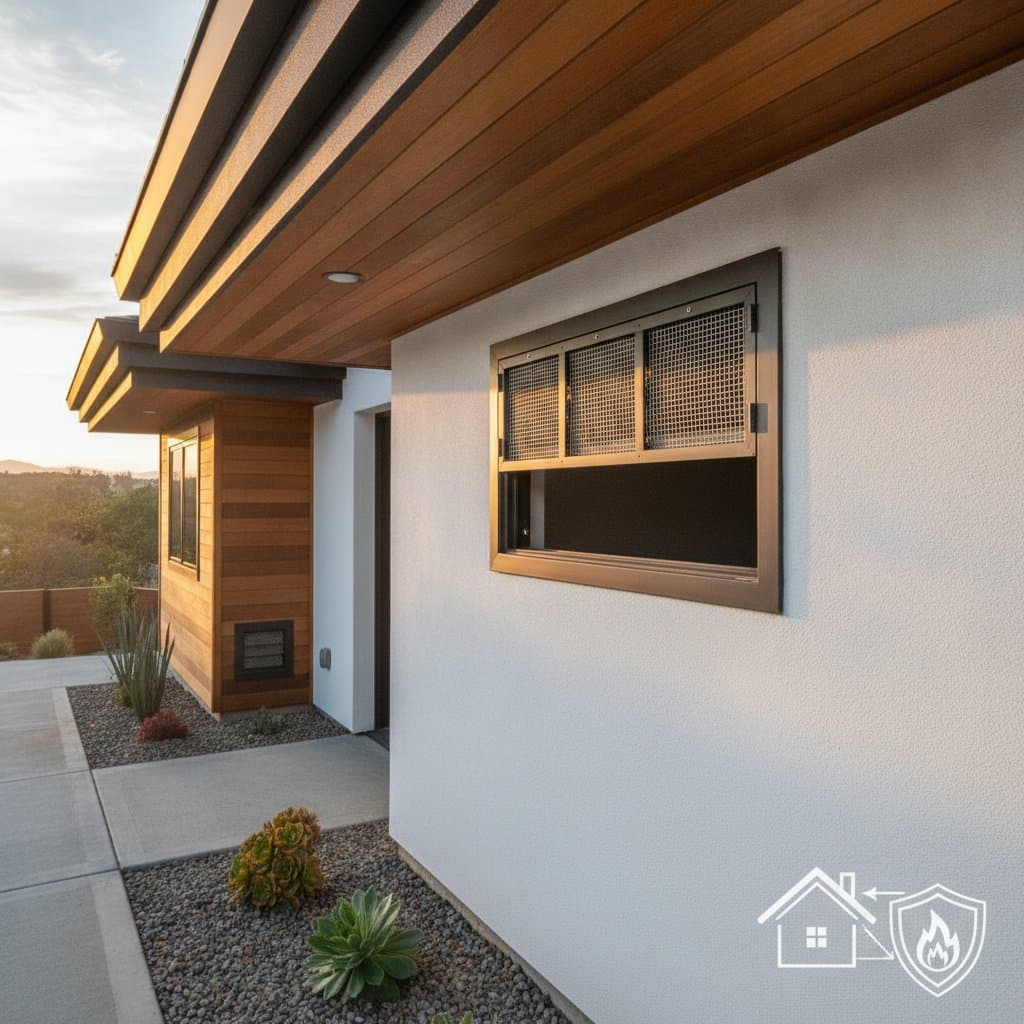
Good ember vents should feel nearly invisible once installed. Black, brown, and metallic finishes can blend with trim, roofing, or siding. Replacing a mismatched vent with a clean, consistent style may even sharpen the exterior.
The change is usually less disruptive than replacing windows or rebuilding roof sections. Installation can often be coordinated with exterior painting, roof maintenance, or crawlspace repairs. That timing may reduce labor overlap and keep the project organized.
Budget conscious homeowners can start with the most exposed vents, especially those near dense landscaping, wood decks, or open slopes. A premium approach covers every vented area and pairs the work with ember resistant attic screening, noncombustible landscaping, and sealed roof edges.
Does This Improve Home Value?
Ember vents will not guarantee a higher sale price, and no retrofit can promise complete wildfire safety. They can still make a home easier to explain, easier to maintain, and more attractive to buyers who value preparedness.
Resilience features may also support discussions with insurance providers, though coverage decisions depend on the property, carrier, and local requirements. Keep invoices, product details, permits, and installation photos in a home improvement file. Clear documentation helps buyers understand what was done and gives future owners a useful maintenance record.
Quick Takeaways
- Inspect every attic, crawlspace, soffit, and gable vent.
- Replace damaged or loosely fitted screens.
- Choose tested ember resistant products.
- Hire an installer who understands ventilation and moisture control.
- Clear leaves, needles, and debris around exterior openings.
- Pair vent upgrades with broader wildfire protection measures.
Living With the Upgrade
Ember vents do not demand much attention after installation. Inspect them during routine exterior maintenance, remove debris, and watch for corrosion or gaps. Their quiet presence offers something valuable: a home designed with real conditions in mind.
For homeowners in fire zones, this is a smart place to begin. The improvement protects hidden spaces, preserves the exterior's character, and gives the property a stronger resilience story.