2026 Flood-Proof Floors Earn Insurance Discounts
Choosing the wrong flooring in a flood-prone area can transform a minor water incident into a major structural issue. Flooring serves as more than a design element; it plays a critical role in resisting moisture, preventing mold, and enabling quick recovery after exposure. As insurance providers shift to risk-based pricing, certified flood-proof flooring systems gain recognition for reducing potential losses. Homeowners who opt for these verified installations often secure lower premiums and broader coverage.
System Overview
Technology Type: Flood-resistant flooring system
Efficiency Rating: Water absorption rate below 0.5 percent, certified to ASTM C373
Climate Zones: Best suited for DOE zones 2 through 5, including coastal and riverine flood areas
Average Capacity: Handles moisture exposure up to 72 hours of submersion
Typical Lifespan: 20 to 30 years with routine maintenance
Installation Complexity: Moderate to high, varying by substrate and sealing method
Code Compliance: Materials align with FEMA Technical Bulletin 2, plus ASTM D4068 and ANSI A137.1 standards
How Flood-Proof Flooring Functions
These systems combine non-porous materials, sealed underlayments, and built-in drainage or vapor barriers to block water entry. They counter capillary action and promote fast subfloor drying after floods recede. Common options include luxury vinyl tile, ceramic tile paired with epoxy grout, and polymer composite boards, all designed to withstand standing water and vapor.
Installation typically occurs over moisture-resistant membranes or sealed concrete bases. Waterproof adhesives secure the surface, holding firm against water pressure and temperature changes. When executed properly, the assembly keeps water uptake under 0.5 percent, minimizing flood damage risks.
Performance Across Regions
Flood-resistant flooring adapts to diverse climates. In humid coastal zones, high vapor pressure and humidity challenge standard adhesives. Systems with permeable membranes release moisture while preserving bond strength.
Inland areas face intense hydrostatic pressure from flash floods. Rigid polymer bases with interlocking edges form seamless barriers against subfloor seepage. Colder regions endure freeze-thaw cycles that threaten grout or cause separation. Flexible grouts or welded seams in these systems uphold integrity amid fluctuations.
Types of Flood-Resistant Flooring and Specifications
| Flooring Type | Water Absorption (%) | Installation Cost ($/sq ft) | Expected Lifespan (years) | Maintenance Level | Environmental Impact |
|---|---|---|---|---|---|
| Luxury Vinyl Tile (SPC core) | <0.1 | 5–8 | 25 | Low | Recyclable core options |
| Ceramic Tile with Epoxy Grout | <0.2 | 8–12 | 30 | Moderate | Higher embodied energy |
| Engineered Polymer Plank (EPP) | <0.05 | 7–10 | 30 | Low | Chemical-resistant durability |
| Rubberized Flooring Sheet | <0.3 | 6–9 | 20 | Low | Moderate sustainability |
Luxury vinyl tile with stone polymer composite cores provides exceptional stability and resists swelling. Ceramic tiles sealed with epoxy grout create impermeable, mold-resistant surfaces. Engineered polymer planks balance rigidity and flexibility, ideal for basements. Rubberized sheets suit utility spaces, offering traction and simple post-flood replacement.
Fitting into Home Systems
Before installation, assess the subfloor, vapor barriers, and drainage setup. Seal concrete slabs with penetrating waterproofers. For wood subfloors, apply cement backer boards and edge seals to block wicking.
Isolate in-floor electrical elements like radiant heating with waterproof conduits and sealed boxes. In homes with sump pumps or perimeter drains, design edges to direct water flow without surface disruption.
Weighing Costs Against Benefits
Flood-proof options cost 20 to 40 percent more initially than conventional materials. However, savings arise from lower repair bills and insurance reductions. Providers now factor in tested water resistance and recovery speed when setting rates.
Certified installations limiting absorption to under 0.5 percent qualify for 5 to 15 percent premium cuts, based on insurer and zone. These reductions typically offset extra costs within a decade. Post-flood repairs also drop sharply; resilient systems need only cleaning and minor reinstallation, unlike full replacements for wood or laminate.
Adhering to Codes and Installation Standards
These floors must meet local codes and federal floodplain rules. FEMA Technical Bulletin 2 specifies requirements for areas below base flood elevation, emphasizing non-absorbent materials, tight joints, and floodwater durability.
Engage certified professionals for layered setups with barriers or adhesives. Faulty seams undermine performance and invalidate warranties or insurance perks. Look for contractors trained through the National Floodproofing Certification Network to guarantee adherence.
Securing Insurance Perks and Proof
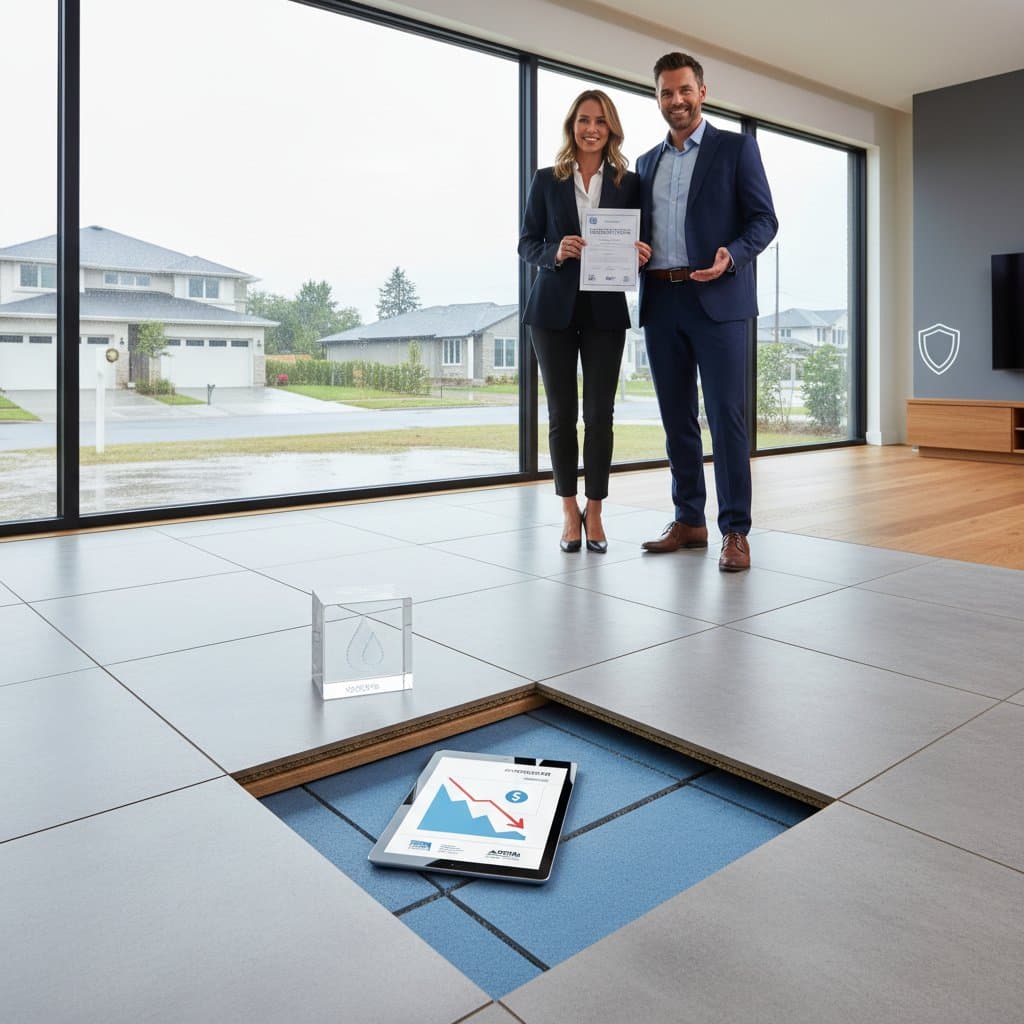
Carriers incorporate certification data into underwriting. Document FEMA-compliant installations with photos, receipts, and installer credentials.
At renewal, present this evidence for risk reassessment. Insurers adjust premiums or deductibles accordingly. Certain providers rebate fees for inspections by qualified flood experts after setup.
Upkeep for Durability
Routine checks of seals, transitions, and grouts suffice for maintenance. Use pH-neutral cleaners to avoid adhesive or coating damage.
After a flood, sanitize surfaces and dry with dehumidifiers and air circulation. Vinyl or polymer types reinstall easily once subfloor moisture normalizes. Consistent practices extend service beyond 25 years.
Comparing Key Metrics
| Metric | Standard Laminate | Flood-Proof SPC Vinyl | Epoxy-Grouted Tile | Engineered Polymer Plank |
|---|---|---|---|---|
| Water Resistance | Poor | Excellent | Excellent | Excellent |
| Mold Growth Potential | High | Low | Very Low | Low |
| Recovery Time After Flood | 2–4 weeks | 2–3 days | 3–5 days | 2–4 days |
| Insurance Discount Eligibility | No | Yes | Yes | Yes |
| Typical Premium Reduction | 0% | 10% | 12% | 8% |
Steps to Implement Flood-Proof Flooring
Start with a professional moisture audit of subfloors and foundations to pinpoint risks. Select materials and barriers tailored to findings.
Secure certifications from installers and manufacturers confirming ASTM and ANSI compliance. Forward records to your insurer for discount approval.
This upgrade fortifies your property while cutting long-term financial exposure. Technical reliability, precise installation, and thorough records yield enduring protection and savings.