AI Leak Sensors for Smarter Water Damage Prevention
A failed supply line can release hundreds of gallons of water before a homeowner notices the sound or sees a stain. AI leak sensors reduce that exposure by combining moisture detection, flow analysis, acoustic monitoring, and connected controls. The strongest systems do not merely report water. They evaluate patterns, identify unusual activity, and help stop damage before materials, furnishings, and electrical components are affected.
Artificial intelligence does not replace sound plumbing or routine inspections. It improves the information available between inspections. A sensor can identify a slow drip under a sink, recognize an unusually long shower, or detect flow while the property is unoccupied. When integrated with an automatic shutoff valve, it can also limit the volume released after a pipe rupture.
Technical Facts Box
| System characteristic | Typical specification |
|---|---|
| Technology type | Smart water leak sensor with machine learning and optional automatic shutoff |
| Efficiency rating | No SEER or AFUE rating, standby use commonly ranges from less than 1 watt to several watts |
| Climate zones | DOE zones 1 through 8, with enclosure and freeze protection selected for local conditions |
| Average capacity | Detection coverage from one room to whole building plumbing, shutoff valves commonly sized from 0.5 to 2 inches |
| Typical lifespan | Sensors often last 5 to 10 years, valves commonly last 10 to 15 years with maintenance |
| Installation complexity | Simple for battery sensors, moderate to complex for whole home valve systems |
| Code considerations | Plumbing code, electrical safety requirements, manufacturer installation instructions, and local permit rules |
How AI Leak Detection Works
A basic sensor uses two conductive contacts. Water bridges the contacts and closes an electrical circuit, triggering an alarm. These devices are inexpensive and useful under washing machines, water heaters, dishwashers, and sinks. Their weakness is limited context. They may detect water only after a puddle reaches the sensor, and they cannot determine whether a flow event is normal.
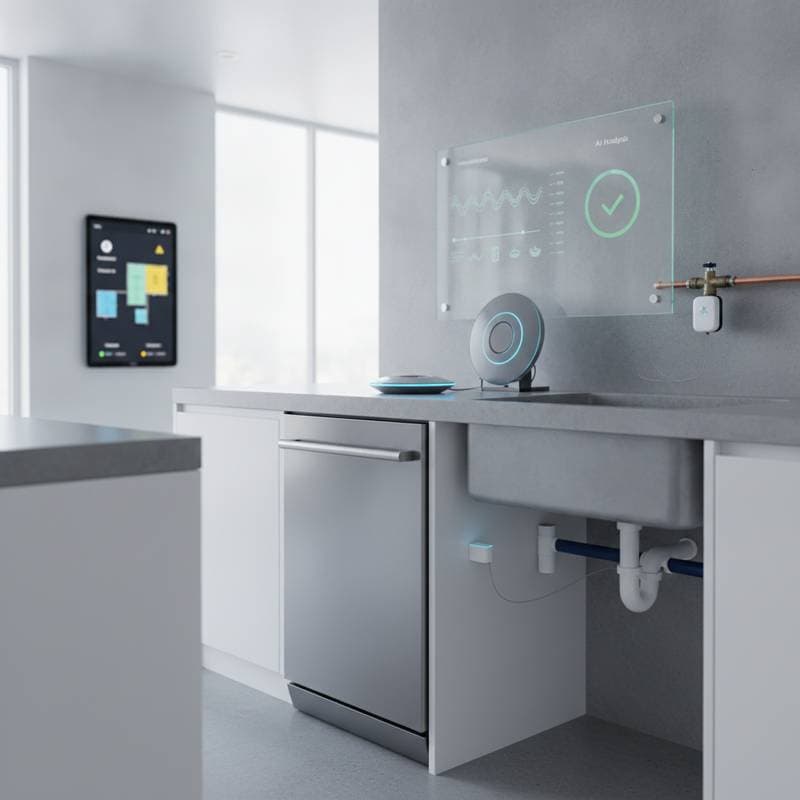
Smart leak detectors add temperature, humidity, pressure, acoustic, and flow data. A sensor positioned near a water heater may track ambient temperature and floor moisture. A whole home monitor installed on the main supply line may measure pressure changes and water movement without touching individual fixtures.
Machine learning compares current conditions with established household patterns. A brief flow during a toilet refill differs from continuous flow overnight. A repeating pressure drop may suggest a toilet flapper leak. A sharp acoustic signature combined with sustained flow can indicate a ruptured pipe. The quality of these conclusions depends on sensor placement, calibration, network reliability, and the amount of household data collected.
Sensor Types and Best Uses
Point Sensors
Point sensors sit on the floor near a potential failure. They work well under appliances and in cabinets. Many include a loud local alarm, a mobile notification, and a temperature warning for freeze conditions.
Their main advantage is low cost and simple installation. Their limitation is coverage. A sensor under a kitchen sink cannot detect a leak inside a wall or behind a refrigerator. Battery replacement also becomes an operational requirement.
Whole Home Flow Monitors
A flow monitor mounts on the main water line and measures water movement through ultrasonic or mechanical sensing. It can identify small continuous flows, unusual consumption, and major breaks. Installation usually requires access to the main supply and a qualified plumber.
Whole home monitoring provides broader coverage, but readings can be less precise when several fixtures operate together. Systems should be configured around household routines rather than generic assumptions.
Acoustic Sensors
Acoustic devices listen for the sound of pressurized water escaping from piping. They can assist with hidden leaks, especially in mechanical rooms and accessible wall cavities. Building materials, pumps, traffic, and HVAC equipment can create false signals, so acoustic monitoring works best when combined with pressure or flow data.
Automatic Shutoff Systems
An automatic shutoff uses a motorized ball valve or a specialized valve assembly. When the control system identifies a high risk event, it closes the main supply. Some products permit remote closure through a mobile application.
The valve must match the pipe diameter, pressure rating, water temperature, and connection type. A shutoff should also include a manual override and a dependable backup power strategy. Closing the valve can prevent damage, but it may also interrupt fire sprinkler or other dedicated plumbing systems if installed incorrectly.
Climate and Regional Performance
Water sensors operate in every DOE climate zone, yet climate changes the risks they must detect. Zones 1 and 2 have high cooling loads, warm humidity, and greater condensation potential around air conditioning equipment. Sensors near condensate pumps, drain pans, and chilled water lines need protection from routine splashing and should distinguish condensation from pressurized leaks.
Zones 3 and 4 experience wider seasonal changes. Homes may contain crawl spaces, basements, and exterior hose connections that create different moisture patterns. A humidity sensor can reveal rising dampness, while a floor probe detects an active release.
Zones 5 through 8 face greater freeze exposure. A temperature sensor near vulnerable piping can warn when conditions approach a manufacturer specified threshold. Yet a warning does not replace insulation, air sealing, heat cable where permitted, or adequate heat in the space. Outdoor sensors need an enclosure rated for the installation location, and battery performance can decline in cold conditions.
Local water pressure also matters. Excess pressure stresses supply lines, appliance hoses, and valves. Many plumbing authorities use pressure reducing valves when static pressure exceeds code limits. A leak detection system can reveal pressure anomalies, but it does not correct excessive pressure. Ask a plumber to verify pressure and install a regulator, expansion tank, or pressure relief components when required.
Performance Metrics That Matter
Detection speed depends on sensor placement and event type. A point sensor may respond within seconds after water reaches its contacts. A flow monitor may need several minutes of abnormal activity to distinguish a shower from a leak. That delay reduces false alarms but can allow some water release.
The key measurement categories include:
- Minimum detectable flow: Smaller values improve slow leak detection, especially at toilets and humidifiers.
- Pressure resolution: Better resolution helps identify cycling, pressure loss, and unusual demand.
- Temperature range: This determines whether a device can monitor crawl spaces, garages, and utility rooms safely.
- Battery life: Longer service intervals reduce missed alerts from depleted batteries.
- Connectivity: Wi Fi, cellular, and low power mesh systems each have different range and backup needs.
- Valve closure time: A fast valve limits released water after confirmation.
- False alarm rate: Excessive alerts encourage users to ignore notifications.
A whole home system should also record water use by hour and fixture pattern. These records help establish a baseline and support plumbing diagnostics.
Installation and System Integration
Point sensors require a level, clean surface and a location where water will collect first. Place units under appliances, near water heaters, beside sump pumps, and in cabinets containing valves or flexible hoses. Do not conceal them beneath insulation or stored materials.
A whole home monitor belongs on an accessible section of the main line. The installer must confirm flow direction, pipe material, valve orientation, service clearance, and electrical requirements. A motorized valve should remain accessible for testing and manual operation.
Integration with home automation allows alerts through an app, audible alarms, security panels, and building management platforms. Cellular backup can preserve notifications during an internet outage. A local alarm remains valuable when a homeowner is present and a cloud service is unavailable.
Plumbing modifications may require a permit. Work must follow the locally adopted plumbing code, manufacturer instructions, and any utility requirements. Never place a shutoff where it blocks required fire protection, emergency access, or code mandated equipment.
Cost, Savings, and Environmental Value
| Option | Typical installed cost | Primary benefit | Main limitation |
|---|---|---|---|
| Battery point sensors | 30 to 150 dollars each | Low cost, easy placement | Limited area coverage |
| Connected sensor group | 150 to 600 dollars | Room level alerts and temperature monitoring | Battery and network maintenance |
| Whole home monitor | 500 to 1,500 dollars | Flow analysis across the plumbing system | Requires suitable main line access |
| Monitor with shutoff valve | 900 to 2,500 dollars | Automatic water isolation | Professional installation and testing |
Prices depend on plumbing access, valve size, electrical work, and regional labor. The financial return comes from avoided damage, not energy savings. Water conservation is a secondary benefit. Identifying a toilet leak or irrigation problem can reduce water waste and lower utility costs.
Environmental value also comes from preventing damaged drywall, flooring, cabinets, insulation, and furnishings from entering the waste stream. A sensor that limits a pipe rupture can reduce drying equipment use, demolition, and replacement materials.
Maintenance and Troubleshooting
Test every sensor according to the manufacturer instructions. For point sensors, place a few drops of water across the contacts and confirm the local and remote alarms. Exercise automatic valves periodically so the motor and valve do not remain idle for long periods. Replace batteries before their low power alerts become routine background noise.
Common problems include weak Wi Fi, false alarms from condensation, blocked sensors, and valves that fail to close. Move a wireless hub closer, improve network coverage, or select a system with local communication. Raise sensors slightly above areas exposed to routine splashes, but keep them low enough to detect a real release. If a valve does not close fully, stop relying on automation and call a qualified plumber.
Making a Reliable Selection
Choose point sensors when the priority is inexpensive protection at known risk locations. Choose whole home monitoring when hidden leaks, vacant property, or high water pressure create larger concerns. Select automatic shutoff only after confirming plumbing compatibility, manual access, backup power, and code requirements.
Next Steps for Homeowners
Start by identifying the highest risk areas in your home. These typically include locations under sinks, behind washing machines, near water heaters, and in basements or crawl spaces. Map these locations and note any history of leaks or water damage.
Next, evaluate your plumbing system. Determine whether you have access to the main water line and whether your home has any special requirements such as fire sprinklers or dedicated irrigation systems. This information will guide whether point sensors, whole home monitoring, or automatic shutoff systems are appropriate.
Consider your household patterns and connectivity needs. Homes with frequent travel or rental properties benefit from whole home systems with cellular backup. Properties with reliable Wi Fi and regular occupancy may find point sensors sufficient for most situations.
Finally, consult with a qualified plumber about installation requirements and local codes. Professional installation ensures proper valve sizing, correct placement, and compliance with permit requirements. Schedule regular testing and maintenance to keep the system functioning reliably over time.