Secure $500 or More in Utility Rebates with Smart Thermostats
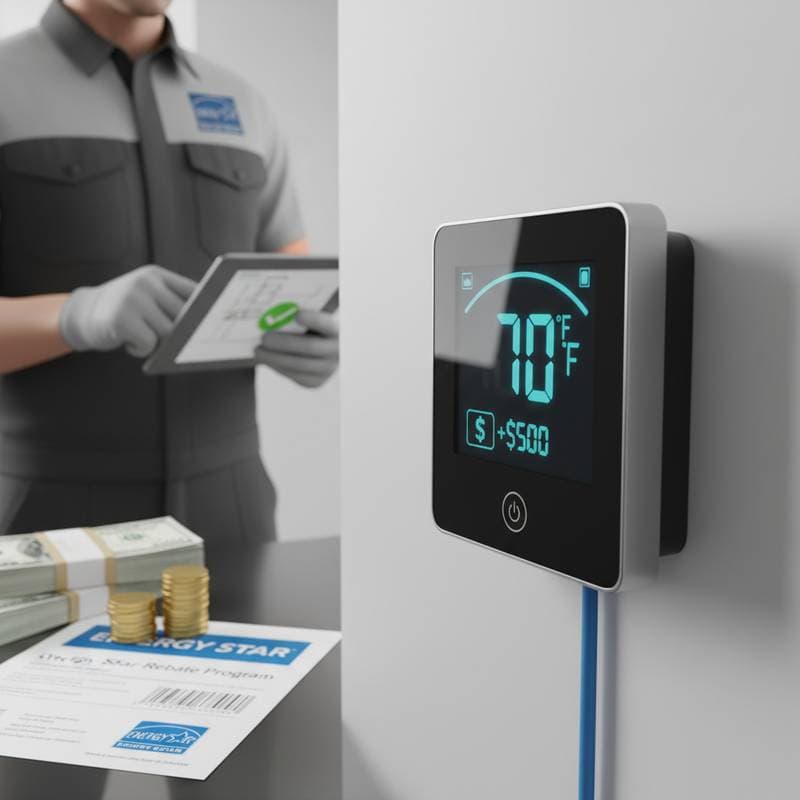
Homeowners now receive substantial financial incentives from utility providers for installing smart thermostats. These devices promote grid stability and reduce energy consumption in residences. By combining utility rebates with manufacturer offers, state initiatives, and federal programs, total incentives often surpass $500. Grasping the functionality of these systems, regional influences on their effectiveness, and the process for obtaining credits transforms an upgrade into a worthwhile investment.
Understanding the Mechanics of Smart Thermostats
Smart thermostats employ integrated sensors, cloud analytics, and adaptive algorithms to control heating and cooling with greater precision than traditional or programmable alternatives. They analyze occupancy patterns and temperature preferences within a household, then automate HVAC adjustments to sustain comfort while minimizing energy expenditure.
The device interfaces with the HVAC control board to regulate heating or cooling cycles. Models like the Ecobee Smart Thermostat Premium and Google Nest Learning Thermostat incorporate motion and humidity sensors for informed, real-time decisions. As usage accumulates, the thermostat develops a profile of the home's thermal dynamics, predicting warm-up or cool-down times to optimize cycles and eliminate excess energy use.
Utilities value these capabilities beyond basic convenience. They enable involvement in demand response initiatives, where the thermostat curbs usage during high-demand periods. Such participation stabilizes the power grid and provides homeowners with ongoing bill credits.
Evaluating Leading Smart Thermostat Models
Selecting a model involves considering connectivity, utility compatibility, rebate opportunities, and efficiency attributes. The table below outlines key options.
| Model | Connectivity | Utility Integration | Average Rebate Potential | Key Efficiency Features |
|---|---|---|---|---|
| Google Nest Learning Thermostat | Wi-Fi, app-based control | Broad support for demand response programs | $125 to $250 | Learning algorithms, airwave humidity control |
| Ecobee Smart Thermostat Premium | Wi-Fi, smart sensor network | Integration with Eco+ and community programs | $150 to $300 | Occupancy detection, adaptive scheduling |
| Honeywell Home T9 | Wi-Fi, geofencing | Compatibility with various utility incentives | $100 to $200 | Multi-room zoning, adaptive recovery |
| Emerson Sensi Touch | Wi-Fi, ENERGY STAR certified | Acceptance by regional utilities | $75 to $150 | Smart scheduling, humidity management |
Rebate amounts fluctuate with enrollment in supplementary optimization programs. Pairing these with state energy credits and federal incentives can push totals beyond $500.
Analyzing Costs and Returns
Initial purchases for smart thermostats span $120 to $300, influenced by model complexity and features. Installation remains straightforward for many DIY users, though professional services may add $150 for wiring adjustments.
Consider this breakdown of potential rebates and credits:
- Utility rebate for ENERGY STAR-certified installation: $100 to $200
- Annual credit for demand response participation: $50 to $100
- State or local energy efficiency rebate: $75 to $150
- Manufacturer promotional offer: $25 to $75
The combined value approaches $500 to $600, supplemented by persistent energy reductions. ENERGY STAR evaluations indicate HVAC savings of 8 to 15 percent with these devices. For an average household, this equates to $130 to $180 yearly. Across ten years, cumulative advantages, including incentives, frequently top $1,500.
Ensuring Long-Term Performance Through Maintenance
Efficiency and security in smart thermostats depend on regular software updates from manufacturers. These firmware enhancements refine control algorithms and add demand response functionalities. Updating promptly preserves rebate qualifications and program access.
Basic upkeep involves confirming Wi-Fi connections, testing sensor precision, and removing dust from vents or sensors. These steps uphold accurate readings and avert inefficiencies from faulty data. Schedule checks quarterly to sustain optimal operation.
Leveraging Professional Expertise for Optimal Setup
While self-installation suits most setups, intricate HVAC configurations benefit from specialist input. A certified technician or energy auditor performs essential tasks such as:
- Inspecting wiring and voltage compatibility.
- Tuning staging and balance points for heat pumps.
- Integrating software with zoning or humidity systems.
- Preparing documentation for rebate submissions.
This expertise proves essential in homes featuring multi-zone setups, hybrid heating, or variable-speed units, where tailored programming maximizes benefits.
Steps to Access Rebates and Enhance Energy Efficiency
Begin by identifying local utility programs through their websites or customer service lines; many list eligible smart thermostats and application forms. Purchase an ENERGY STAR-certified model and install it following manufacturer guidelines, retaining receipts and photos for verification.
Enroll in demand response via the device's app, then apply for state and federal incentives through designated portals. Track ongoing savings with built-in reporting tools to adjust settings for peak performance. This approach not only recovers costs swiftly but also fosters enduring reductions in energy use and expenses.