Essential Spring HVAC Maintenance to Avoid $3,000 Emergency Repairs
Spring marks the optimal period to ready your heating, ventilation, and air conditioning system for intensified summer demands. Dedicate a few hours to routine upkeep, and you avert abrupt malfunctions that trigger steep repair bills. Failures such as compressor replacements or blower motor overhauls frequently exceed $3,000, yet they often stem from overlooked minor concerns. Implement this structured spring HVAC maintenance plan to sustain seamless operation, elevate energy efficiency, and safeguard indoor comfort as temperatures climb.
The Importance of Spring HVAC Upkeep
Homeowners frequently overlook spring servicing, presuming last summer's performance suffices. Unbeknownst to them, accumulations of dust, frayed belts, and diminishing refrigerant occur progressively across seasons. During the initial heat surge, these subtle problems escalate into overheating, electrical faults, or compressor breakdowns. Consistent inspections ensure unobstructed air circulation, alleviate stress on vital parts, and enable early detection of issues prior to substantial costs.
Certified technicians evaluate refrigerant charges, assess airflow dynamics, and gauge overall system efficacy. Such diagnostics uncover concealed inefficiencies invisible to untrained eyes. Enhanced performance yields reduced utility expenses and diminished need for urgent interventions.
Beyond immediate benefits, spring maintenance aligns your system with seasonal shifts. Winter residues, including pollen and outdoor pollutants, infiltrate components during off-peak months. Addressing these now prevents amplified strain when cooling cycles intensify, promoting longevity and reliability.
Prevalent Issues Averted by Spring Servicing
Neglecting periodic care invites mechanical disruptions with hefty price tags. A proactive spring tune-up mitigates these frequent culprits:
- Compressor malfunction: Arises from insufficient refrigerant or excessively warm coils, leading to complete system shutdowns.
- Blower motor exhaustion: Stems from obstructed filters or impeded vents, causing uneven temperature distribution.
- Evaporator coil icing: Occurs due to restricted airflow or soiled filters, which hampers cooling capacity.
- Electrical disruptions: Develop from unsecured wiring or rusted connections, risking fire hazards.
- Condensate drainage overflows: Result from blocked lines, fostering mold growth and water damage.
Repair expenses for these scenarios span $800 to over $3,000, contingent on system complexity and location. In contrast, preventive measures cost a mere fraction and deliver seasonal tranquility.
Statistics from industry sources indicate that systems receiving annual tune-ups experience 15 to 20 percent fewer failures. This not only curtails downtime but also optimizes performance metrics, ensuring consistent comfort.
DIY Spring Maintenance Checklist
Empower yourself with hands-on tasks to complement professional efforts. These steps require basic tools and take under two hours, yet they significantly bolster system health.
- Inspect and replace air filters: Examine monthly; swap out if dirt obscures more than 50 percent of the surface. Opt for high-efficiency pleated filters rated MERV 8 to 13 for superior particle capture without impeding flow.
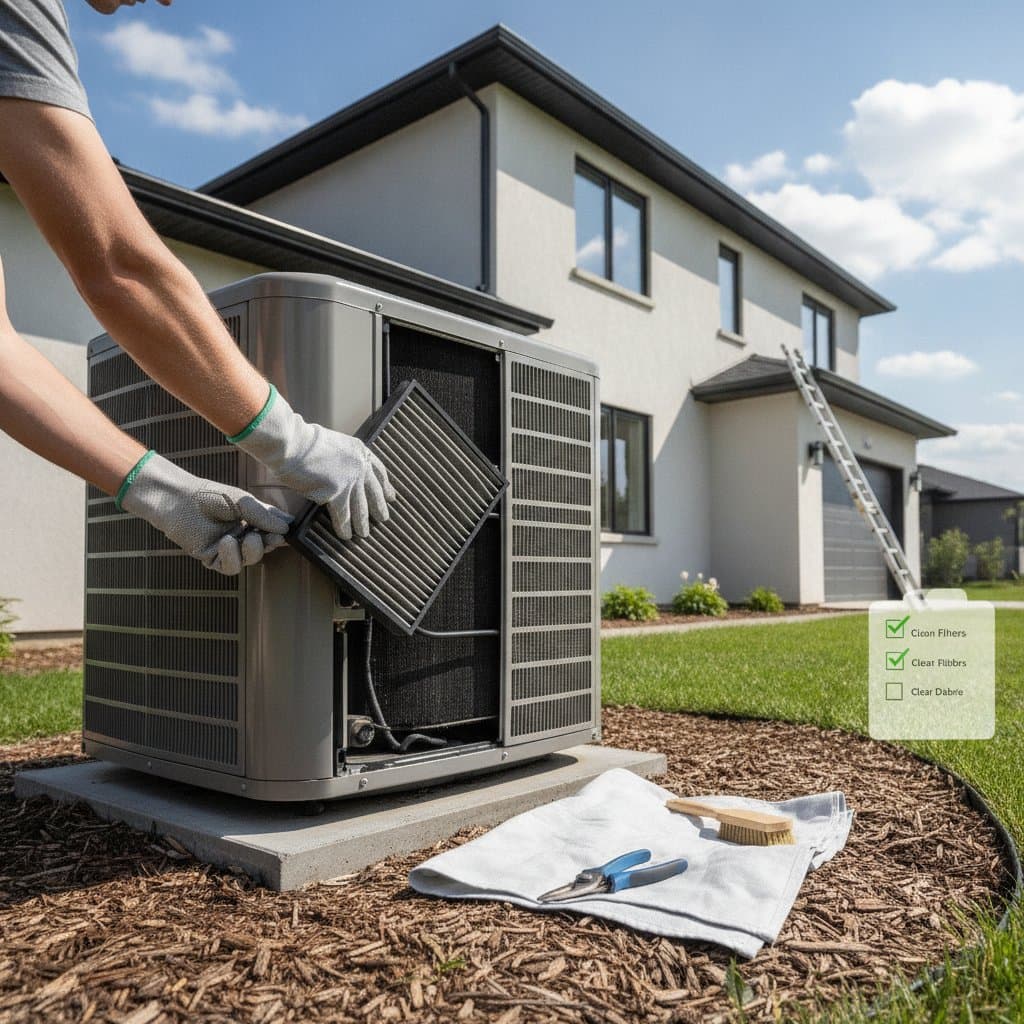
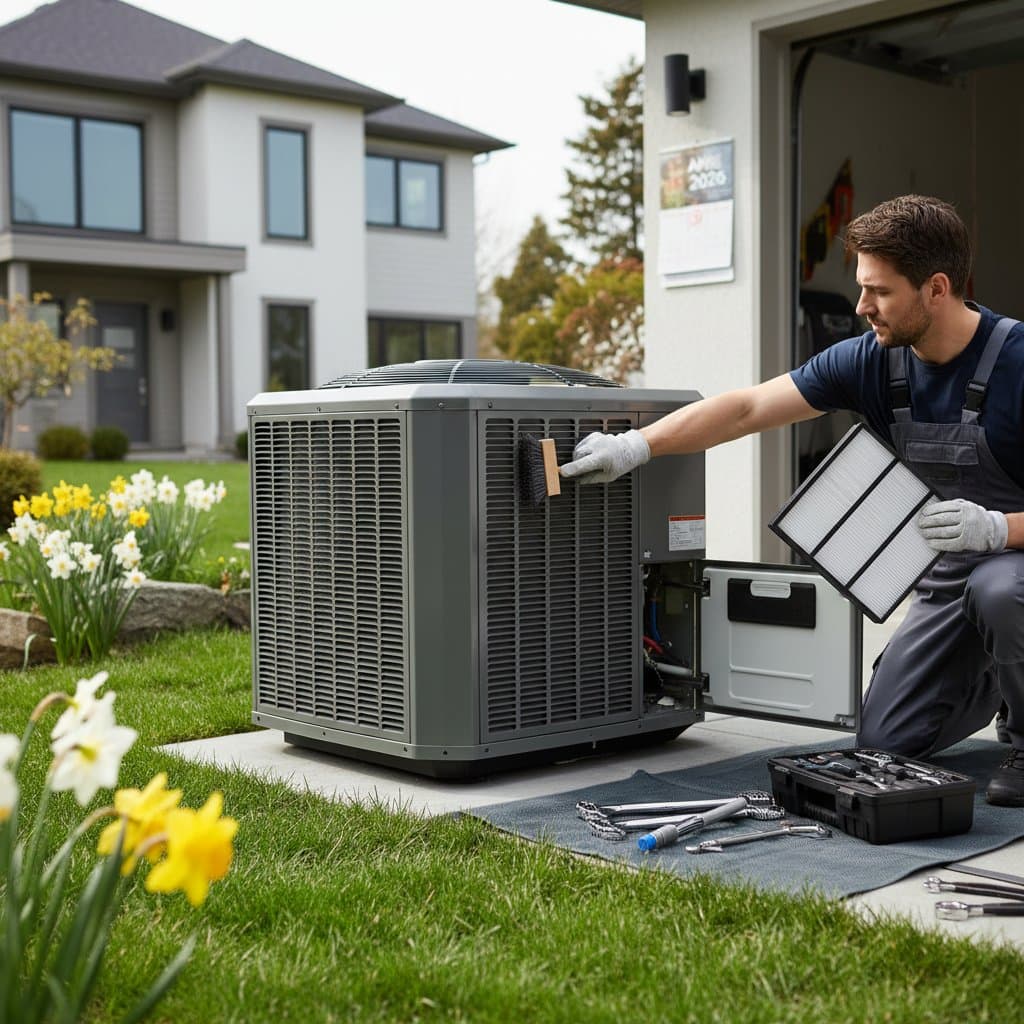
- Clear outdoor unit debris: Rake leaves, twigs, and grass clippings from the condenser coil. Maintain at least two feet of clearance around the unit to facilitate unrestricted airflow.
- Examine indoor vents and registers: Ensure none are blocked by furniture or rugs. Vacuum dust from grilles to promote even air distribution throughout your home.
- Test thermostat functionality: Verify accurate temperature readings and responsive controls. Consider programmable models to automate seasonal adjustments, saving up to 10 percent on energy.
- Check visible ductwork: Look for loose joints or insulation gaps in accessible areas. Seal minor leaks with mastic tape to prevent conditioned air loss.
Perform these actions before scheduling a pro visit. They address 70 percent of common efficiency drains, setting the stage for a thorough expert evaluation.
Key Elements of a Professional Tune-Up
While DIY efforts provide a strong foundation, expert intervention uncovers deeper concerns. Request a comprehensive inspection covering these critical areas:
- Refrigerant level verification and adjustment to manufacturer specifications.
- Coil cleaning to remove scale and debris, restoring heat transfer efficiency.
- Electrical component testing, including capacitors and relays, for safe operation.
- Lubrication of moving parts like fan motors to reduce friction and wear.
- System calibration for balanced pressure and optimal runtime cycles.
Technicians employ specialized tools, such as manometers and psychrometers, to quantify performance. This precision ensures your unit operates at peak capacity, potentially cutting energy use by 20 percent.
Schedule this service in early spring, ideally before May, to avoid peak-season delays. Confirm the provider holds relevant certifications, such as NATE, for quality assurance.
Strategies to Minimize Maintenance Expenses
Proactive upkeep need not strain your budget. Adopt these approaches to economize:
- Enroll in maintenance agreements: Providers frequently propose yearly contracts encompassing biannual visits and expedited repairs at a fixed fee, often under $200 annually.
- Time appointments strategically: Target off-peak periods like March or September, when labor rates dip 10 to 20 percent below summer highs.
- Leverage utility rebates: Many companies subsidize efficient components, such as variable-speed blowers or ECM motors, reimbursing up to $500 per upgrade.
- Bundle services: Coordinate HVAC checks with related systems, like duct sealing or thermostat installation, to consolidate travel charges.
These tactics transform routine care into a cost-saving investment. Over five years, they can offset initial outlays through extended equipment lifespan and reduced consumption.
Safeguarding Comfort and Savings Year-Round
Your HVAC installation constitutes a major home asset, warranting diligent protection. Spring maintenance fortifies this investment, refines indoor climate control, and trims operational costs. The effort invested in filter changes, debris clearance, and inspections yields substantial returns in reliability and efficiency.
If your system remains unserviced this season, contact a qualified HVAC specialist promptly. Inquire about their tune-up protocol, emphasizing refrigerant handling, electrical safety, and performance benchmarking. Proactive steps today forestall disruptive repairs tomorrow, securing serene summers ahead.
Embrace this routine, and you transform potential vulnerabilities into strengths. Reliable cooling follows, enhancing daily life without the shadow of unforeseen expenses.