Essential Spring HVAC Tune-Up for 2026 Regulations
Timing matters when servicing your HVAC system. A well-timed maintenance session prevents failures during extreme weather and aligns with seasonal demands. In 2026, new refrigerant rules and updated efficiency requirements elevate the importance of spring preparation. This tune-up goes beyond basic care to safeguard compliance, enhance durability, and maximize energy use.
The Core Functions of a Spring Tune-Up
HVAC systems rely on precise coordination among key parts like the compressor, coils, valves, and motors. During a spring tune-up, technicians verify that these elements meet factory standards ahead of intense cooling periods. Such checks maintain the system's overall efficiency.
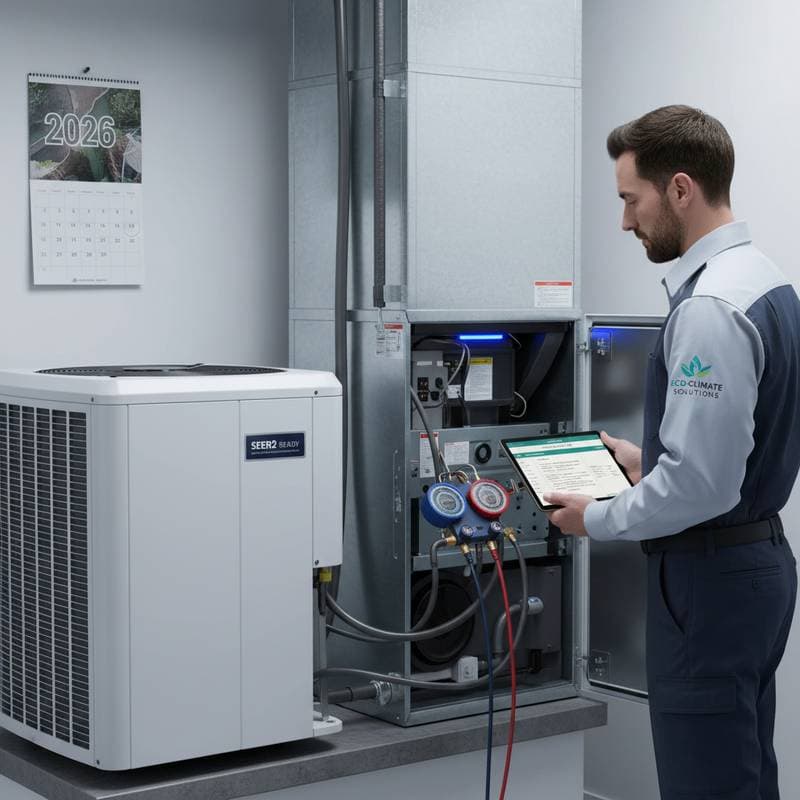
Technicians measure refrigerant levels, adjust airflow rates, and inspect electrical components. These steps directly impact ratings such as SEER for cooling and HSPF for heating. For instance, a refrigerant shortage of just 10 percent can cut efficiency by 20 percent, leading to higher bills and added wear.
Early identification of issues like unusual compressor draw or dirty coils proves invaluable. Cleaning these areas and swapping filters promotes smooth airflow over heat exchange surfaces. This process lowers operating pressures and improves thermal performance.
Navigating the Refrigerant Transition for Homeowners
The shift away from R-410A refrigerant reshapes maintenance approaches. New options like R-454B and R-32 offer lower global warming potential but demand specific handling due to varying pressures and oils.
Start by noting your system's refrigerant type from the unit's label. Incompatible mixtures risk severe damage and warranty loss. Technicians during tune-ups should:
- Confirm the refrigerant via the outdoor unit's markings.
- Detect leaks with approved EPA tools.
- Handle recovery and recharge per environmental guidelines.
Systems with R-410A can still receive service, though future refrigerant costs will rise. A spring evaluation helps decide on repairs, retrofits, or full replacements based on your setup.
Aligning HVAC with Home Systems
Tune-ups provide a chance to assess HVAC interaction with home features like ducts, insulation, and zoning. Leaky ducts or poor insulation can sap even high-efficiency units.
Static pressure tests reveal duct efficiency. Pressures exceeding limits signal blockages that hinder airflow and raise energy demands. In advanced variable-speed models, fans adjust to cope, but this boosts electricity use.
Consider adding smart thermostats or humidity controls that link to the system's board. Seamless integration minimizes short cycling, stabilizes temperatures, and elevates indoor comfort.
Adhering to Installation and Code Standards
Maintenance follows strict local codes and manufacturer protocols. Electrical work aligns with National Electrical Code rules, while refrigerant tasks meet EPA Section 608.
Certain areas mandate permits for line changes or coil updates. These measures promote safety and uniformity. Selecting certified contractors preserves equipment integrity and warranty terms.
Engaging Specialists for Complex Needs
Licensed contractors manage standard tune-ups, but intricate setups require more expertise. Multi-zone, VRF, or geothermal systems benefit from engineers who calculate loads and assess partial operations.
Commissioning verifies that airflow, refrigerant, and controls hit design goals. This step matches performance to local climate patterns, ensuring optimal results.
Steps to Ready Your System
- Book the tune-up early, before heat waves skew refrigerant assessments.
- Obtain records of pressures, temperatures, and airflow data.
- Verify refrigerant details and anticipate supply shifts.
- Request duct tests if uneven comfort persists.
- Check thermostat schedules and humidity adjustments.
Achieving Reliable Performance Year-Round
HVAC units function as precise energy managers when properly maintained. A comprehensive spring tune-up aligns your system with regulatory changes and efficiency goals. Homeowners who treat this as targeted optimization reap benefits in comfort, lower costs, and dependable operation.