Understanding Barrier-Free Bathroom Remodel Costs in 2026
Homeowners seeking to enhance accessibility often turn to barrier-free bathroom remodels. These projects eliminate physical obstacles, promoting safety and independence for all users, including those with mobility challenges. In 2026, costs reflect advancements in materials, labor rates influenced by inflation, and a growing emphasis on sustainable, smart technologies.
The average total expense for a standard 50- to 75-square-foot barrier-free bathroom remodel ranges from $15,000 to $30,000. This figure varies based on location, project scope, and material choices. Urban areas like New York or San Francisco may see costs 20 to 30 percent higher due to elevated labor and permitting fees, while rural regions offer more affordable options.
Key budget components include plumbing, fixtures, finishes, and labor. Homeowners can control expenses by selecting mid-range materials and planning for phased installations. Long-term savings emerge from energy-efficient features that lower utility bills and reduce future maintenance needs.
Detailed Cost Breakdown
Plumbing relocation forms a foundational expense in barrier-free designs. Expect to pay $2,000 to $4,000, depending on the complexity of accessing drains and supply lines. For instance, shifting a bathtub to accommodate a curbless shower requires precise pipe rerouting to maintain water pressure and prevent leaks.
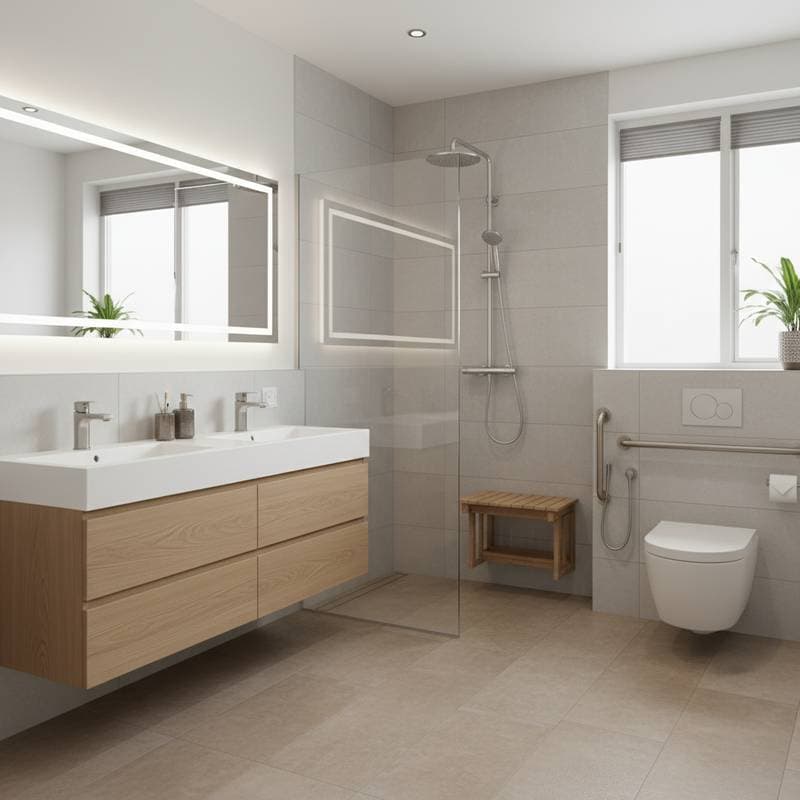
Fixtures and accessories represent another significant investment, typically $3,000 to $6,000 for ADA-compliant options. High-mounted sinks with lever handles, comfort-height toilets, and roll-in showers ensure usability. Opt for durable, corrosion-resistant models to avoid replacements within a decade.
Finishes and tiling contribute $2,500 to $7,000, influenced by material selections. Porcelain tiles with high slip-resistance ratings provide safety without excessive cost, while luxury natural stone elevates aesthetics at a premium. Waterproof membranes under tiles prevent moisture damage, a critical step in humid climates.
Labor costs, often the largest portion at $7,000 to $12,000, cover specialized trades for a full remodel. Electricians install reinforced grab bars and low-voltage lighting, while plumbers handle drainage slopes for showers. Coordinating these professionals streamlines the process, potentially cutting timelines by two to four weeks and minimizing disruptions.
Navigating Building Codes and Compliance
Compliance with building codes ensures a remodel meets safety standards and avoids costly revisions. Most jurisdictions align with ADA guidelines and the International Residential Code (IRC) for residential accessibility. Familiarize yourself with these requirements early to guide design choices.
Doorway width must provide at least 32 inches of clear opening, allowing easy passage for wheelchairs or walkers. A 60-inch diameter turning radius in the room facilitates smooth navigation, particularly in compact spaces. These dimensions prevent bottlenecks and support daily routines.
Fixture placement follows precise specifications for usability. Position the toilet centerline 16 to 18 inches from the side wall to offer adequate transfer space. Grab bars require reinforcement to support a minimum 250-pound load, often achieved through wall blocking installed during framing.
Shower areas demand minimum 36-by-36-inch dimensions for transfer-type stalls, with roll-in options expanding to 30-by-60 inches for greater comfort. Floors slope gently toward drains to eliminate standing water, enhancing safety. Permits prove essential for plumbing and electrical changes, with processing times varying from one to six weeks.
Many municipalities provide incentives for accessible renovations. Grants or tax credits may offset 10 to 20 percent of costs for projects certified under ADA standards. Consult local housing authorities to identify eligible programs and streamline applications.
Integrating Future-Proofing and Smart Technologies
Barrier-free bathrooms in 2026 emphasize longevity through sustainable and technological integrations. These elements not only address current needs but also adapt to evolving requirements, such as aging in place or family expansions.
Digital shower systems preset water temperatures to avoid scalding risks, integrating with thermostats for consistent comfort. Voice-activated lighting adjusts brightness levels hands-free, reducing strain for users with limited mobility. Hands-free faucets minimize contamination, promoting hygiene in shared spaces.
Emerging trends elevate functionality without overwhelming budgets. Variable flow fixtures detect user proximity and adjust water output, conserving resources during short uses. Smart mirrors incorporate motion-sensor lighting and defogging features, aiding low-vision individuals with clear reflections.
Heated floors with zonal controls warm specific areas, optimizing energy use in cooler regions. Touchless toilets combine bidet functions with automatic flushing, enhancing cleanliness and ease. These additions typically increase costs by $1,000 to $3,000 but deliver measurable returns through reduced energy consumption and enhanced user satisfaction.
Select technologies compatible with home automation systems for seamless control via apps or voice commands. Professional installation ensures reliability, with warranties covering five to ten years on most components.
Steps to Plan and Execute Your Remodel
Effective planning transforms a barrier-free remodel from overwhelming to achievable. Begin with a thorough assessment of your current bathroom layout, noting structural elements like load-bearing walls and existing plumbing. Determine if a retrofit suffices for minor adjustments or if a full conversion better serves comprehensive accessibility.
Gather quotes from at least three licensed contractors experienced in ADA-compliant work. Review portfolios for similar projects and verify certifications in universal design principles. Discuss timelines, typically four to eight weeks, and contingency funds covering 10 to 15 percent of the budget for unforeseen issues.
Prioritize safety features like non-slip flooring with a coefficient of friction above 0.6, water-efficient fixtures reducing usage by 30 percent, and robust waterproofing systems. These choices safeguard against slips and water damage while aligning with sustainability goals.
For those committed to aging in place, focus on modular elements that allow future adaptations. This approach preserves independence, minimizes repeated disruptions, and elevates property appeal in resale markets.
Realizing Lasting Benefits Through Integrated Design
View the barrier-free bathroom as an interconnected system rather than isolated updates. Structural reinforcements support grab bars without compromising aesthetics, while efficient layouts optimize space for multiple users. This holistic perspective yields a resilient environment that supports daily independence and well-being for decades.
Homeowners report increased property values of 5 to 10 percent post-remodel, alongside tangible improvements in quality of life. By investing thoughtfully, you create a space that adapts to needs, conserves resources, and endures changing circumstances.