Why Natural Elements Reduce Stress at Home
Biophilic design integrates natural elements into living spaces to foster a deeper connection with the environment. This approach draws from the innate human affinity for nature, promoting relaxation and mental clarity. By incorporating aspects such as plants, natural light, and organic materials, homeowners can create environments that counteract the stresses of daily life.
The Foundations of Biophilic Design
Biophilic design emerges from research in environmental psychology, which highlights how exposure to nature influences well-being. Studies indicate that elements reminiscent of the natural world lower cortisol levels, the hormone associated with stress. In a home setting, this design philosophy transforms ordinary rooms into sanctuaries that support emotional resilience.
The core principles include direct experiences with nature, such as viewing greenery, and indirect cues like natural patterns in decor. These elements work together to mimic outdoor serenity indoors. Homeowners benefit from reduced anxiety and improved focus without major renovations.
How Nature Influences Stress Reduction
Human physiology responds positively to natural stimuli. For instance, the presence of green hues and foliage activates the parasympathetic nervous system, which promotes rest and digestion. This counteracts the fight-or-flight response triggered by urban stressors.
Air quality improves with plants that filter toxins, leading to better sleep and concentration. Natural light regulates circadian rhythms, enhancing mood stability throughout the day. Over time, these factors contribute to a sustained sense of calm and vitality.
Harnessing Natural Light for Serenity
Natural light serves as a foundational element in stress reduction. Sunlight streaming through windows elevates serotonin production, which stabilizes emotions. Position furniture to maximize exposure during morning hours, when light is most beneficial for alertness.
Sheer curtains allow diffused light to enter without glare, creating a soft ambiance. In rooms with limited windows, mirrors strategically placed can reflect light deeper into the space. This simple adjustment fosters an uplifting atmosphere that eases tension.
Consider skylights or light tubes for darker areas, ensuring even illumination. Such features not only brighten the home but also align daily routines with natural cycles, promoting restorative rest at night.
Integrating Greenery and Plants
Plants introduce life and freshness to indoor spaces. Species like snake plants or peace lilies purify air while adding visual tranquility. Place them in clusters on shelves or windowsills to simulate a natural landscape.
The act of tending to plants provides a mindful routine that distracts from worries. Foliage softens hard edges in rooms, creating a more inviting flow. Select low-maintenance varieties to ensure sustained presence without added pressure.
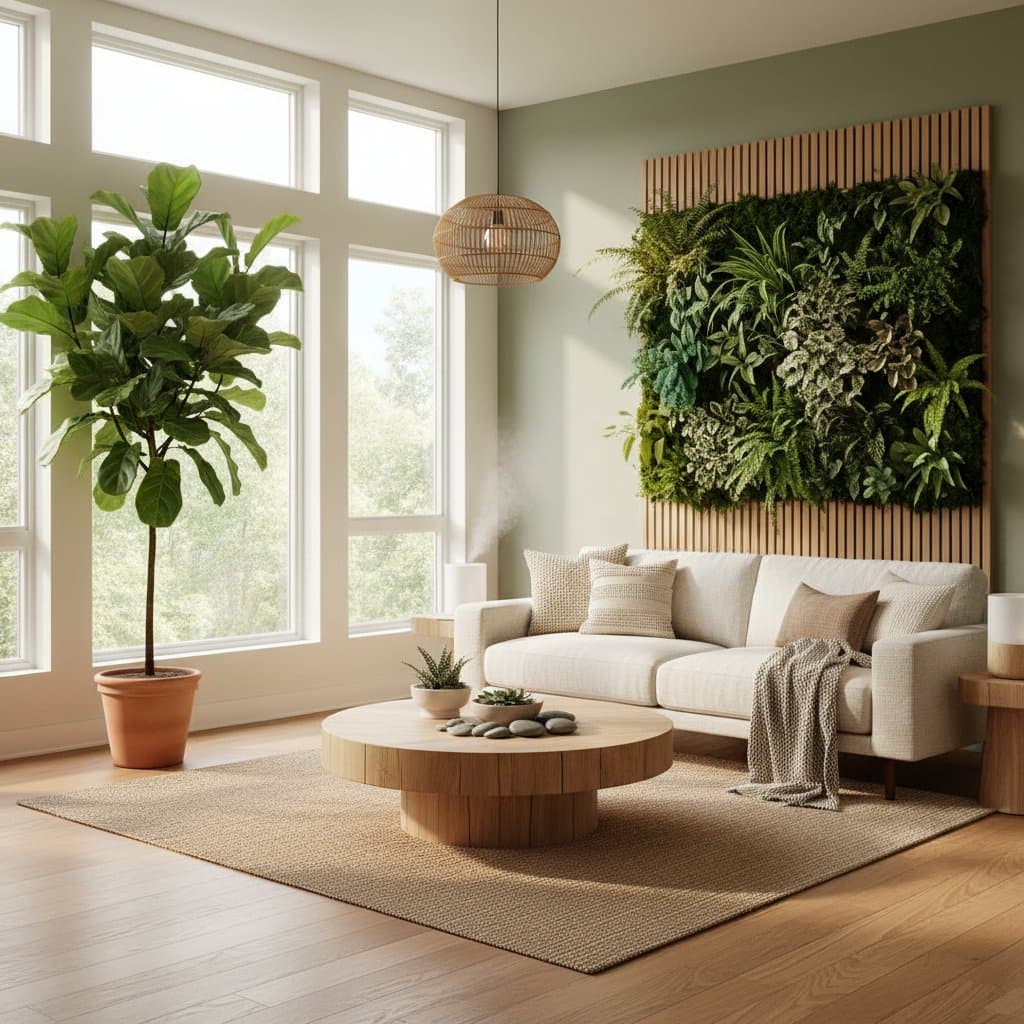
Vertical gardens on walls expand greenery in small areas, enhancing the biophilic effect. This integration not only beautifies but also instills a sense of nurturing that bolsters mental health.
Incorporating Organic Materials and Textures
Organic materials such as wood, stone, and linen evoke the earth's textures, grounding inhabitants. Wooden furniture with visible grain patterns connects users to natural forms. Stone accents, like a pebble mosaic backsplash, add subtle durability and calm.
Fabrics in earth tones provide tactile comfort, inviting relaxation on sofas or beds. Avoid synthetic finishes; opt for untreated surfaces that age gracefully. These choices create a sensory experience that soothes the nervous system.
Layer textures mindfully: a wool rug underfoot paired with cotton throws. This variety stimulates gentle sensory engagement, reducing overstimulation from modern, sleek designs.
Actionable Steps to Bring Nature Indoors
Start with an assessment of current spaces. Identify areas lacking natural elements, such as dim corners or sterile kitchens. Introduce one change per room to build momentum without overwhelm.
- Install adjustable blinds to control light flow, optimizing for seasonal variations.
- Acquire three to five plants suited to your light conditions and care level.
- Replace plastic or metal accents with wooden equivalents, like frames or trays.
- Add water features, such as a tabletop fountain, to mimic natural sounds.
- Use nature-inspired art, depicting landscapes, to fill blank walls.
Track progress by noting mood shifts after implementations. Adjust based on personal responses to refine the sanctuary further.
Lasting Benefits for Home Wellness
Embracing natural elements yields profound wellness advantages. Residents report heightened productivity alongside diminished fatigue. Families experience stronger bonds in harmonious settings that encourage presence.
Long-term, these designs support immune function through cleaner air and balanced light exposure. The home evolves into a resilient haven, buffering against external pressures. Ultimately, this investment in nature fosters enduring peace and rejuvenation.