Key Takeaways
- Power outages occur more often and without warning, making comprehensive home battery systems a necessity for modern households.
- Selection of the ideal system hinges on daily energy consumption, financial constraints, and integration possibilities with solar installations.
- By 2026, preferences lean toward scalable, space-efficient batteries equipped with advanced monitoring for enduring performance.
- These systems promote cleaner energy practices and reduce dependence on fossil fuels compared to traditional alternatives.
Selecting the Optimal Battery Chemistry for Residential Whole-Home Use
Quick Answer: Lithium-ion batteries serve as the preferred option for the majority of residences, thanks to superior efficiency and extended service life.
Various battery chemistries exist, yet only select types prove practical for home applications. Each option presents distinct advantages in terms of durability, performance, and environmental impact.
| Battery Type | Typical Lifespan | Efficiency | Ideal For |
|---|---|---|---|
| Lithium-ion | 10–15 years | 90–95% | Standard residential needs |
| Lead-acid | 5–8 years | 70–80% | Cost-sensitive small-scale |
| Saltwater | 10–12 years | 85–90% | Environmentally focused |
Lithium-ion batteries command the residential market with their ability to store substantial energy within minimal space. These units recharge rapidly, maintain consistent output, and demand minimal intervention over time. Homeowners appreciate their lightweight design, which simplifies placement in garages or utility rooms.
Lead-acid batteries appeal to those prioritizing affordability, though they occupy more room and deliver lower returns on energy. Their weight often requires reinforced mounting, and efficiency losses accumulate faster during repeated cycles. Still, they suit occasional use in modest configurations.
Saltwater batteries draw interest from sustainability advocates due to non-flammable, toxin-free composition. Production costs have decreased, improving accessibility, yet supply chains remain developing. For residences emphasizing green credentials, this chemistry balances reliability with reduced ecological footprint.
Ultimately, lithium-ion configurations deliver optimal performance and value for comprehensive home protection, aligning with evolving energy demands.
Comparing Home Battery Systems to Traditional Generators
Short Answer: Battery systems provide emission-free, silent operation, whereas generators offer unlimited duration through continuous fueling.
Home batteries and generators address outage challenges differently, each with strengths suited to specific scenarios. Understanding these differences aids in informed decision-making for energy security.
Advantages of Home Battery Systems
- Seamless activation occurs within milliseconds, eliminating any interruption in power supply.
- Operation remains free of exhaust, eliminates fuel handling risks, and produces no audible disturbance.
- Recharging draws from solar arrays or utility lines, enhancing flexibility.
- Maintenance involves simple monitoring, sparing owners from complex servicing.
Drawbacks of Home Battery Systems
- Initial purchase prices exceed those of basic generators.
- Duration depends on stored capacity, extending fully with solar supplementation.
- Achieving whole-home support may necessitate stacking multiple modules.
Advantages of Generators
- Entry-level models cost less at outset.
- Fuel replenishment enables operation for days or weeks without limits.
Drawbacks of Generators
- Ongoing care includes fuel management and component checks.
- Audible operation and pollutant release disrupt surroundings.
- Activation demands manual intervention or costly automatic mechanisms.
Homeowners pursuing hassle-free, eco-friendly backups increasingly select batteries. In regions facing prolonged disruptions, combining a battery core with a supplemental generator ensures comprehensive coverage, blending immediacy with endurance.
The Role of Intelligent Batteries in Transforming Residential Energy Control
Short Answer: Absolutely, intelligent batteries elevate storage to dynamic energy orchestration.
Contemporary battery installations transcend mere accumulation of electricity. Embedded software examines consumption trends, tracks rate fluctuations, and optimizes charging cycles to minimize expenses. Integration with home automation ecosystems permits timed operation of power-intensive devices during optimal solar generation windows.
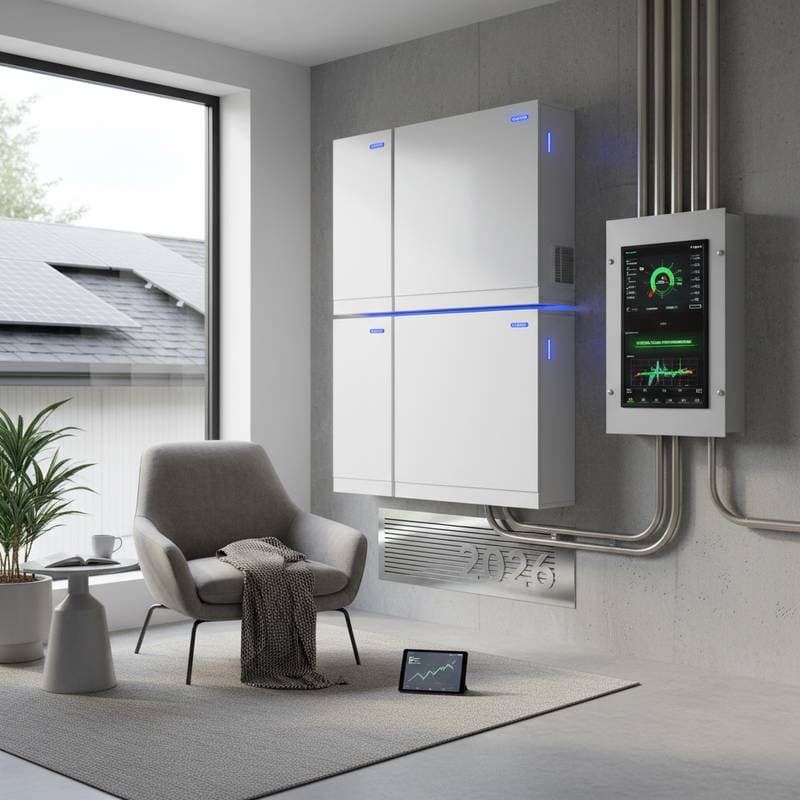
By 2026, scalable battery architectures gain prominence, permitting incremental additions without full system overhauls. Sleek, wall-affixed units facilitate straightforward retrofits in compact spaces, from urban apartments to suburban sheds. This adaptability accommodates growing household needs over time.
Furthermore, intelligent batteries contribute to broader grid stability by dispatching reserves during peak loads, sometimes earning utility incentives. Such participation accelerates return on investment while fostering community-wide resilience. Homeowners benefit from data-driven insights that refine daily habits, promoting efficiency beyond emergencies.
Frequently Asked Questions for Homeowners
Does Installing a Home Battery Enhance Property Appeal?
Indeed, energy storage ranks as a desirable enhancement among prospective buyers. It conveys reduced utility bills and heightened outage resistance, elevating market position in buyer-saturated areas. Appraisals often reflect this value, particularly in storm-vulnerable locales.
Is Full Off-Grid Living Feasible with Batteries Alone?
Complete disconnection requires solar pairing and customized sizing for self-sufficiency. The majority maintain grid ties for reliability and effortless recharging. This hybrid approach delivers independence without isolation from infrastructure support.
What Is the Expected Durability of Home Batteries?
Lithium variants endure 10 years or longer under routine conditions. Capacity fades incrementally, yet sufficient reserve persists for critical functions well past warranty terms. Factors like temperature control and cycle frequency influence longevity.
Do Batteries Perform Reliably on Overcast Days?
They function effectively if pre-charged adequately. Solar input diminishes under clouds, underscoring the importance of ample storage to bridge low-production periods. Grid connectivity further safeguards against extended gloom.
How Demanding Is Upkeep for These Systems?
Routine tasks prove straightforward, limited to firmware refreshes and exterior checks. Unlike mechanical alternatives, no fluid replacements or sound mitigation arise. Professional servicing occurs infrequently, preserving owner time.
Securing Everyday Comfort Through Strategic Power Solutions
Home battery systems evolve from optional add-ons to indispensable assets for uninterrupted living. Residents in outage-prone zones or those desiring assurance find these installations pivotal for maintaining routines. Prioritize essential devices like refrigeration, lighting, and communication in your planning to maximize effectiveness.
A well-chosen battery array empowers cooking, remote work, and relaxation amid disruptions. It safeguards perishables and sustains productivity, all while advancing sustainable energy adoption. This investment not only fortifies the home but also aligns with forward-thinking resource management.