HELOC vs. Construction Loans: Financing Your 2026 Granny Flat
Home renovation costs continue to rise due to tariffs on building materials and ongoing supply chain disruptions. These factors complicate funding for accessory dwelling units, such as granny flats. As an experienced builder of my own granny flat, I know that selecting the appropriate financing can prevent delays and ensure completion. The primary options include a home equity line of credit (HELOC) and a construction loan, each suited to different financial scenarios, equity levels, and project needs.
Key Features of Each Financing Option
A HELOC draws on your home's equity as collateral. It operates as a revolving line of credit, allowing you to borrow funds as required during the draw period, repay them, and borrow again. Interest rates typically vary with market conditions, providing ongoing access without fixed repayment schedules.
In contrast, a construction loan targets new builds or major renovations. Lenders disburse funds in increments, known as draws, upon verification of completed project milestones. Upon finishing construction, this loan usually converts to a permanent mortgage or requires refinancing for long-term terms.
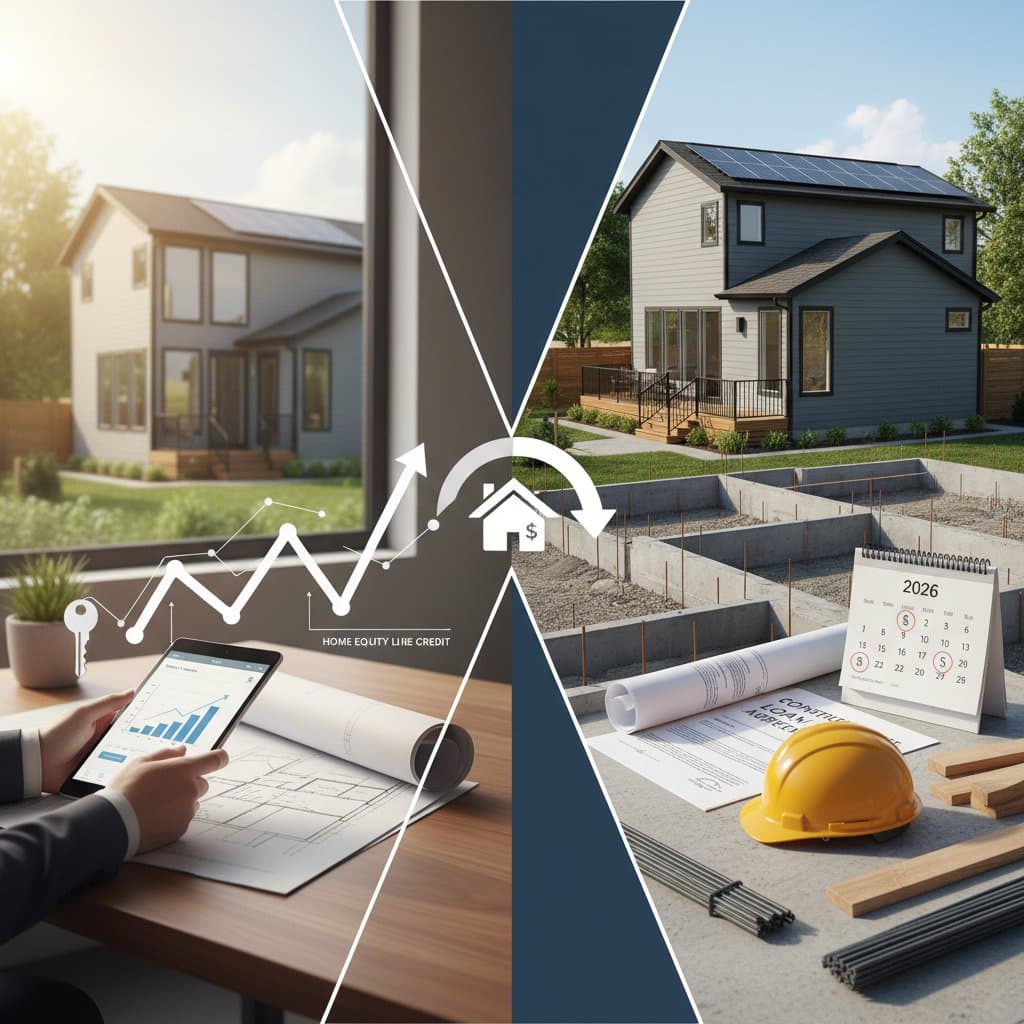
During my granny flat project, I utilized a HELOC initially for preliminary expenses like architectural designs and permits. As construction advanced, I transitioned to a construction loan for the main build phase. This approach maintained early flexibility while establishing disciplined payments later.
Decision Criteria: Selecting the Best Option
Opt for a HELOC When:
- Your home holds at least 30 percent equity, calculated as the difference between market value and outstanding mortgage divided by market value.
- Total project expenses fall below $200,000, enabling straightforward borrowing without extensive oversight.
- You require adaptability for phased work, including site preparation or interior finishing.
- Direct control over disbursements appeals to you, avoiding third-party inspections.
Select a Construction Loan When:
- Home equity remains below 20 percent, limiting access to traditional lines of credit.
- Progress-based funding aligns with your builder's schedule, ensuring payments match verified advancements.
- The budget surpasses $200,000 or involves coordination among several subcontractors.
- Interest-only options during the build phase help manage cash flow effectively.
Current market demands, including contractor backlogs, emphasize the need for financing that synchronizes with construction timelines. A construction loan enforces this alignment through required progress reports. Meanwhile, a HELOC demands greater personal oversight but offers unmatched autonomy.
Essential Professional Support
Online financing tools simplify applications, yet nuances like local zoning laws often complicate approvals. Engage a mortgage broker or loan officer experienced in accessory dwelling unit financing. These professionals navigate draw processes, appraisal adjustments, and regulatory hurdles specific to granny flats.
Integrate your contractor into discussions from the outset. Request detailed cost estimates, timelines, and proof of insurance to meet lender criteria. In my experience, facilitating direct communication between the builder and lender accelerated approvals by half the usual time.
Mid-Article CTA: Get three free quotes from local contractors.
Assessing Return on Investment and Future Benefits
A quality granny flat enhances property value by 25 to 35 percent of its build cost, based on location and finishes. It also opens avenues for rental income or multigenerational living arrangements. For instance, financing at a 7 percent rate while securing $1,800 in monthly rent could cover principal and interest payments shortly after completion.
In high-demand rental markets, this setup transforms the investment into a revenue stream. Verify compliance with municipal rental bylaws, including occupancy limits and safety standards, prior to marketing the unit.
Steps to Secure and Execute Financing
A granny flat expands living options and property equity, yet success hinges on tailored financial strategy amid market volatility. HELOCs deliver quick access and adaptability, whereas construction loans impose necessary discipline. Base your decision on current equity assessments, prevailing rates, and tolerance for administrative involvement.
Begin by obtaining a professional home appraisal to quantify equity. Consult lenders specializing in accessory dwelling units for personalized rate quotes. Align your contractor's proposal with the chosen financing to synchronize funding releases and milestones.
Investment Outlook: Expect 70 to 90 percent cost recovery upon resale, supplemented by sustained rental yields.