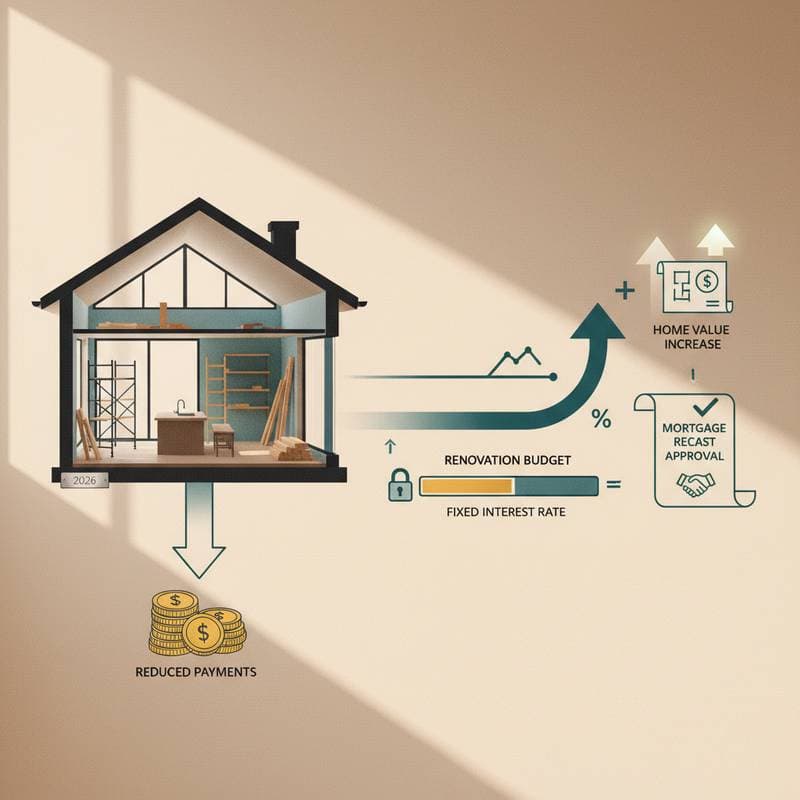
Unlock Savings Through Mortgage Recasting for Home Upgrades
Homeowners frequently seek efficient methods to finance renovations without disrupting their financial plans. Mortgage recasting emerges as a strategic option that reduces monthly payments and reallocates funds toward improvements. This process maintains the original interest rate and loan term, providing stability while enabling enhancements to living spaces.
Individuals who accumulate savings or receive windfalls often find recasting particularly advantageous. The approach allows for targeted investments in property value, such as modernizing outdated features or expanding usable areas, all while preserving predictable housing expenses.
Understanding the Mechanics of Mortgage Recasting
Mortgage recasting involves submitting a substantial lump-sum payment directly to the principal balance of an existing loan. The lender then adjusts the monthly payment calculation to reflect this reduced balance. The interest rate remains unchanged, as does the remaining loan duration, resulting in immediate relief from higher payments.
For instance, consider a homeowner with a $300,000 mortgage at 4% interest over 30 years, facing $1,430 monthly payments. A $50,000 principal payment could lower those payments to approximately $1,144, freeing $286 monthly for renovation projects. This method bypasses the complexities of refinancing, including origination fees that often exceed 2% of the loan amount.
Lenders typically require a minimum lump-sum payment, ranging from $5,000 to $10,000, depending on their policies. Upon verification, the recast process completes within weeks, offering a streamlined path to financial flexibility.
Scenarios Where Recasting Outperforms Refinancing
Refinancing introduces a new loan agreement, often aimed at securing a lower rate or altering terms, but it entails extensive documentation and potential rate fluctuations. In contrast, recasting simplifies adjustments by working within the existing mortgage framework. Homeowners avoid the need for updated credit evaluations, property appraisals, or title searches, which can prolong the process by months.
Opt for recasting in these situations:
- The current interest rate proves competitive, making a new loan unnecessary.
- Payment reduction serves as the primary goal without desire to extend the repayment period.
- Long-term residency in the property aligns with gradual equity building.
For extensive renovations requiring additional capital beyond available savings, alternatives like cash-out refinancing or home equity lines of credit may suit better. However, when cash reserves exist, recasting delivers efficiency and cost savings, often with fees limited to $250 or less.
Advantages and Limitations of Mortgage Recasting
Key Advantages
- Reduced Monthly Obligations: Payments decrease proportionally to the principal reduction, enhancing cash flow.
- Streamlined Process: Elimination of credit checks and appraisals conserves time and resources.
- Rate Preservation: The original favorable interest rate endures, shielding against market increases.
- Low Associated Costs: Fees remain nominal compared to refinancing expenses.
Potential Drawbacks
- Upfront Capital Demand: A significant cash outlay proves essential to initiate the recast.
- Unchanged Loan Duration: The overall term persists, potentially extending total interest paid.
- Lender Variability: Availability depends on the mortgage servicer, with some conventional loans ineligible.
These factors highlight recasting as a targeted tool rather than a universal solution. Homeowners benefit most when aligning it with specific financial circumstances.
Steps to Implement a Mortgage Recast
Begin by reviewing your loan documents to confirm recast eligibility, as not all mortgages qualify, particularly government-backed ones like FHA or VA loans. Contact your lender to inquire about minimum payment requirements, processing fees, and timelines. Gather necessary funds, ensuring they apply solely to principal.
Submit the payment through official channels, followed by a formal recast request. The lender recalculates and issues an updated amortization schedule. Monitor the first adjusted statement to verify the changes take effect.
To maximize value, calculate potential savings using online mortgage calculators. For example, redirect freed monthly funds toward a $20,000 kitchen update, potentially recouping costs through increased home equity upon resale.
Achieving Balance: Recasting for Lasting Home Value
Mortgage recasting empowers homeowners to harmonize debt management with property enhancement. This strategy not only alleviates immediate budgetary pressures but also fosters long-term appreciation through thoughtful upgrades. By lowering payments with existing resources, individuals invest in spaces that enhance daily life and future marketability.
Evaluate personal finances against renovation priorities to determine the optimal path. Whether pursuing a recast or exploring complementary options, informed decisions elevate both comfort and financial security.