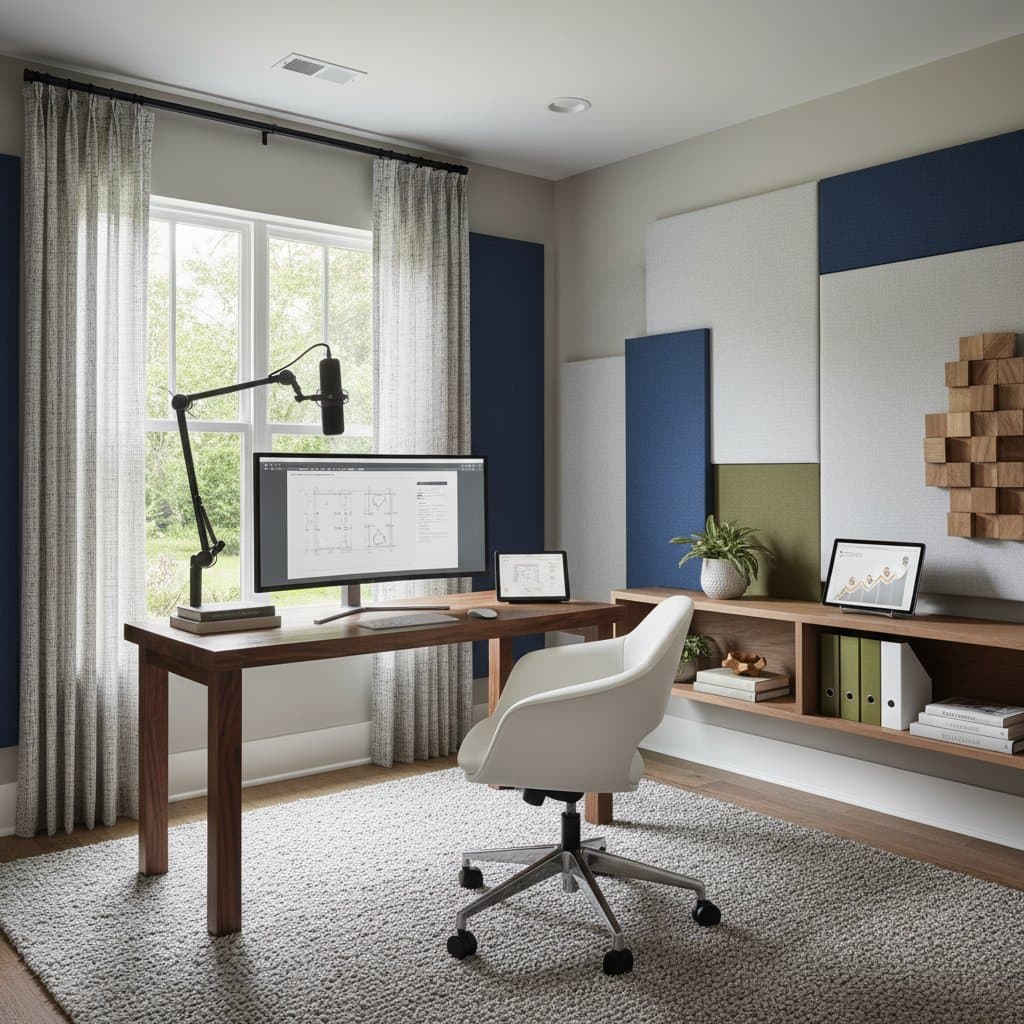
Introduction to 2026 Home Office Soundproofing
Remote work has transformed homes into professional hubs, making soundproofing essential for concentration and privacy. In 2026, expect total project costs between $2,800 and $9,200 for a standard 150–250 square foot office, influenced by material selections, room size, and installation complexity. These investments yield daily benefits in productivity and long-term property value. This guide details cost breakdowns, prioritized upgrades, and practical steps to create an effective quiet zone.
Key Factors Influencing 2026 Costs
Rising raw material prices, driven by global supply chain issues and potential tariffs on imports, add 10–15 percent to baseline expenses compared to prior years. Labor shortages in skilled trades push hourly rates to $75–$125, extending timelines and costs for custom work. Emerging acoustic technologies, such as smart damping systems, offer efficiency but increase upfront spending by 20–30 percent. Homeowners can offset these through phased projects or sourcing locally produced insulation and panels. Early budgeting accounts for permits in urban areas, which may add $200–$500.
Room-by-Room Soundproofing Strategies
Tailor upgrades to your office layout for maximum noise reduction with minimal disruption. Focus on high-impact areas first to optimize budget allocation. Each approach combines materials, installation techniques, and performance metrics for reliable results.
Walls
Walls serve as the primary barrier against airborne sounds like voices or traffic. Adding a layer of double drywall with damping compounds, such as Green Glue, achieves 45–50 percent noise reduction by decoupling layers and absorbing vibrations. For new constructions or major renovations, fill stud cavities with mineral wool insulation, which provides superior sound absorption and fire resistance while improving energy efficiency. Costs range from $2.50 to $5.00 per square foot, including labor; measure your space precisely to avoid overbuying materials.
Floors
Offices over active areas, such as kitchens or playrooms, benefit from floor treatments that isolate impact noises like footsteps. Install cork or recycled rubber underlayment beneath flooring for resilient cushioning at $1.25–$2.75 per square foot. Premium options, including mass-loaded vinyl integrated underlay, reach $4.00 per square foot and excel in multi-story homes. Hire professionals for subfloor access to ensure even application and sealed edges, preventing sound leaks; this step alone can elevate overall room STC ratings by 20–30 points.
Ceilings
Ceilings transmit upstairs noises effectively in multi-level dwellings, demanding targeted isolation. Use resilient channels to suspend acoustic ceiling tiles or panels, paired with fiberglass or rockwool insulation for broad-spectrum dampening. Material and labor expenses fall between $3.50 and $6.00 per square foot, with DIY-friendly kits available for smaller spaces. Test post-installation by playing audio from above to verify reduction in transmitted vibrations.
Doors and Windows
Entry points undermine wall efforts if left unaddressed, allowing sound infiltration. Opt for solid-core interior doors with automatic door bottoms and magnetic seals to block 80–90 percent of airborne noise. For windows, upgrade to double- or triple-pane laminated glass units, which cut external sounds by 25–35 percent through added mass and air gaps. A complete replacement for a 10x10 foot office typically costs $1,800–$2,500; prioritize energy-efficient models to qualify for potential rebates.
Essential Questions for Professional Consultations
Selecting the right installer ensures quality and cost control. Prepare targeted inquiries to evaluate expertise and alignment with your needs.
- Inquire about material origins: Confirm if suppliers provide tariff-free domestic options to avoid unexpected surcharges.
- Request STC rating details: Aim for 50+ ratings in offices to achieve noticeable quietness against typical household sounds.
- Clarify warranty terms: Seek at least five years on labor, covering issues like material settling or joint cracks.
- Discuss climate adaptations: In humid regions, insist on vapor barriers with insulation to prevent mold and maintain acoustic integrity.
Verify licensing through state boards and insurance for liability protection. For projects over $5,000, engage acoustic specialists who apply principles like mass-air-mass decoupling for superior outcomes. Obtain three detailed quotes outlining breakdowns for materials, labor, and timelines to identify value-driven proposals.
Strategies for Long-Term Maintenance
Soundproofing systems perform best with routine care to preserve effectiveness. Schedule biannual checks on seals and gaskets around doors and windows, replacing any that show wear. Acoustic caulk and perimeter strips may require reapplication every three to five years to seal gaps from seasonal expansion.
Fabric panels and soft furnishings collect dust, which diminishes absorption; use a soft brush vacuum attachment monthly. Refrain from unnecessary wall modifications, as new holes introduce pathways for sound; consult professionals for any additions like shelving. Store excess materials in a dry area with labels for quick repairs, ensuring sustained STC performance over a decade.
Realizing Lasting Value from Your Soundproofed Workspace
A well-executed soundproofing project transforms daily work routines by minimizing distractions and fostering deep focus. Beyond immediate comfort, these enhancements appeal to future buyers seeking adaptable home features. Begin assessment by mapping noise sources in your current setup and drafting a phased budget. Contact specialized contractors for personalized plans that integrate your priorities, securing a serene office that supports professional success and family harmony.