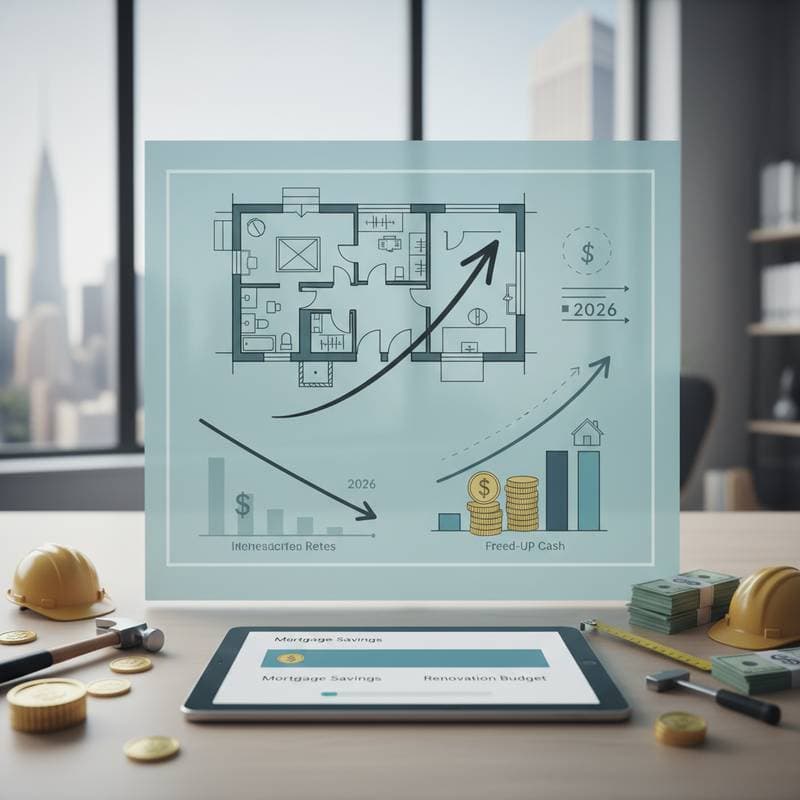
Funding Home Upgrades with Mortgage Rate Buydowns in 2026
Homeowners often face high interest rates that limit renovation budgets. Mortgage rate buydowns address this challenge by lowering effective interest rates through upfront payments, which creates immediate relief on monthly obligations. This approach allows individuals to allocate more funds toward essential improvements, such as modernizing living areas or enhancing energy efficiency, while preserving financial stability.
Consider a scenario where renovation expenses strain cash reserves. By integrating a buydown into the mortgage structure, borrowers gain flexibility to invest in projects that elevate home functionality and appeal. The result extends beyond temporary savings; it positions properties for stronger market performance over time.
The Mechanics of Rate Buydowns in Renovation Financing
A mortgage rate buydown involves prepaying points to decrease the interest rate on a loan, either for a limited period or the entire term. Each point represents one percent of the principal amount, so for a $400,000 loan, one point equates to $4,000. Lenders or sellers typically cover these costs to facilitate transactions, making the option accessible without excessive personal expenditure.
Temporary buydowns reduce rates for the initial one to three years, ideal for renovation phases when cash flow demands peak. For instance, dropping a 6.5 percent rate to 4.5 percent on a $300,000 loan could save approximately $250 monthly during that time, redirecting funds to cover contractor fees or material purchases. Permanent buydowns, in contrast, lock in the lower rate indefinitely, suiting long-term plans where sustained affordability supports ongoing equity building.
Homeowners select buydowns when renovation timelines align with expected financial shifts, such as salary increases or market rate declines. This tactic avoids the need for immediate refinancing and minimizes disruption during construction. Consulting a lender early reveals personalized scenarios, including break-even analyses that compare upfront costs against cumulative savings.
Key Factors Influencing Buydown and Renovation Expenses
Multiple elements determine the overall financial commitment when combining buydowns with home upgrades. Understanding these helps in crafting a realistic budget and avoiding surprises.
-
Loan Amount: Higher principal balances amplify buydown benefits through greater absolute savings, yet they demand larger point investments. A $500,000 loan buydown might yield $400 monthly reductions, far exceeding smaller loans, but requires careful assessment of long-term affordability.
-
Borrower Creditworthiness: Excellent credit scores qualify individuals for subsidized buydown programs from lenders, potentially offsetting up to 50 percent of point costs. This advantage reduces initial outlays, allowing more allocation to renovation essentials like appliances or flooring.
-
Local Construction Variations: Costs for labor and permits differ by location; urban coastal areas often incur 10 to 20 percent premiums over inland regions due to higher demand and regulatory hurdles. Researching regional averages ensures accurate projections for projects involving plumbing or electrical work.
-
Scope of Renovations: Simple cosmetic updates cost less than structural modifications, which necessitate engineering reviews and could add 15 to 25 percent to expenses. Prioritizing high-impact changes, such as open-concept layouts, balances complexity with value addition.
-
Timing of Execution: Scheduling work in off-peak seasons, like winter for exterior projects, secures discounts of 5 to 15 percent on labor. Monitoring material price trends, such as seasonal lumber fluctuations, further optimizes spending.
Proven Strategies for Optimizing Buydown Benefits
Integrating a rate buydown requires alignment with broader financial planning to yield maximum returns. These targeted approaches enhance both immediate cash flow and future asset growth.
-
Secure Seller Contributions: In buyer-friendly markets, negotiate for sellers to finance one or two points, potentially saving $8,000 to $10,000 on a $400,000 mortgage. This tactic shifts costs without impacting personal reserves, preserving liquidity for unforeseen renovation needs.
-
Utilize Integrated Loan Products: Opt for renovation-specific loans that merge purchase financing, repair funds, and buydown features into a single package. This consolidation streamlines the process, eliminates redundant closing costs, and often includes flexible draw schedules for phased construction.
-
Redirect Savings Strategically: Channel monthly payment reductions from the buydown into principal payments or bulk material buys during the first year. For example, $3,000 in annual savings could accelerate equity accumulation or secure premium fixtures that boost resale appeal.
-
Compare Lender Offerings: Regional institutions frequently provide buydown incentives tied to local economic conditions, such as reduced points during low-volume periods. Obtaining quotes from at least three sources highlights variations in terms and fees.
-
Align Projects with Market Cycles: Initiate renovations when supply chain stabilizations lower costs for items like cabinetry or roofing. This timing not only cuts expenses but also positions completions before peak selling seasons for optimal value realization.
Before finalizing plans, obtain quotes from three vetted contractors. Evaluate proposals based on comprehensive criteria, including warranties, supplier partnerships, and adherence to timelines, to ensure quality execution.
Realizing Lasting Value from Buydown-Supported Renovations
A well-executed buydown-renovation combination transforms housing costs into investments that appreciate over time. Begin by defining clear objectives, such as improving daily livability or preparing for future sales, then model lender projections for buydown impacts versus baseline rates.
Focus on upgrades with proven return potential; kitchen remodels often recoup 60 to 80 percent of costs through increased property values, while energy-efficient insulation yields ongoing utility savings. Allocate a contingency reserve of 10 to 15 percent of the project budget to address discoveries like hidden wiring issues during demolition.
Engage only certified professionals with active licenses and insurance coverage. Adhere to permitting requirements from the outset, and incorporate regular inspections to maintain compliance and structural integrity. This disciplined approach not only safeguards investments but also elevates homes into more comfortable, valuable assets through 2026 and beyond.