Detect Roof Issues Promptly with Spring Drone Inspections
Homeownership involves safeguarding substantial investments, including the residence itself. Roof maintenance often receives insufficient attention until visible problems arise, such as leaks, at which point the underlying damage proves extensive and expensive to remedy. Spring presents an opportune moment for thorough roof assessment, and drone inspections facilitate this task in a manner that enhances safety, efficiency, and accuracy, particularly for those hesitant to ascend ladders.
Reasons Spring Excels for Roof Assessments
Following periods of harsh winter conditions, including freezing temperatures, fierce winds, and persistent precipitation, roofs endure considerable stress that may remain undetected. The arrival of spring brings temperate conditions and unobstructed visibility, making it the prime interval to examine potential vulnerabilities prior to impending summer storms or intense heat. Early detection of minor defects averts the development of leaks, compromises to structural integrity, and the proliferation of mold within the home.
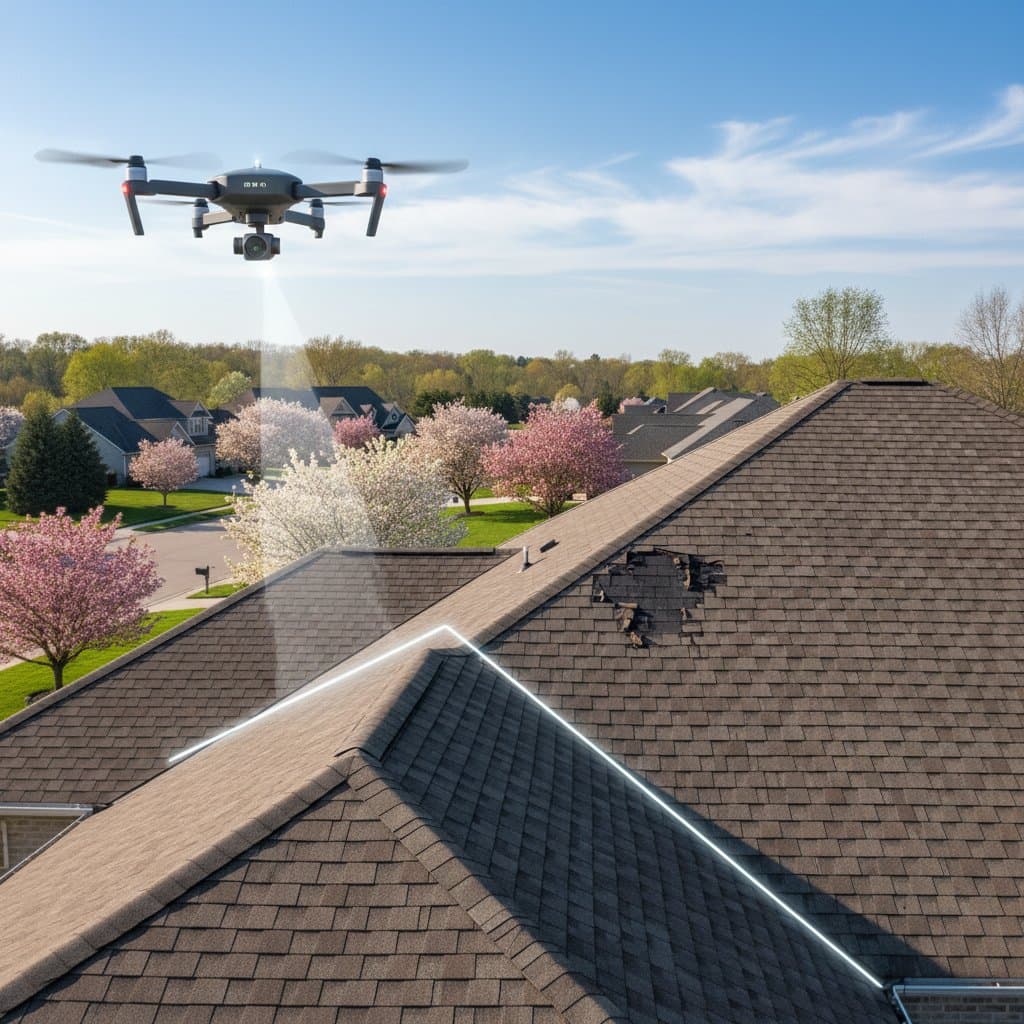
Drone-based inspections provide comprehensive views of the roof surface without requiring physical access, which proves invaluable for novice homeowners lacking familiarity with ladder safety protocols or specialized gear. These devices capture high-definition photographs and video recordings that reveal critical details, such as displaced shingles, areas of subsidence, or accumulations of debris, all while eliminating the hazards associated with elevated work.
Key Roof Maintenance Checks for Spring
Roof inspections extend beyond mere damage identification; they form an integral component of comprehensive seasonal upkeep. As you analyze footage from drone scans, focus on these specific elements to ensure thorough evaluation:
- Shingles: Examine for signs of curling edges, fractured surfaces, or absent sections. Such impairments permit moisture infiltration beneath the roofing layers.
- Flashing: Inspect the metal seals surrounding chimneys, ventilation pipes, and perimeter edges for deformation, detachment, or corrosion.
- Gutters: Verify absence of obstructions from foliage or sediment buildup. Blocked channels lead to water overflow, eroding the roof's supporting fascia.
- Downspouts: Ensure unobstructed pathways direct runoff distant from the building's foundation to prevent soil erosion and water pooling.
- Moss or Algae Accumulation: Note any discolorations or growths that erode material durability over extended periods. Schedule removal for affected zones to prolong roof lifespan.
Addressing these observations at an early stage mitigates the risk of water intrusion or foundational instability, preserving the home's overall condition.
Options for Conducting Drone Roof Inspections
Homeowners face the decision of performing drone inspections independently or engaging certified experts. Each approach offers distinct advantages tailored to varying levels of expertise and requirements.
Independent Drone Inspections: Individuals possessing a drone or proficiency in its operation can execute fundamental scans without external assistance. This method supports frequent monitoring, enabling the documentation of progressive deterioration across multiple seasons.
Expert-Led Drone Inspections: Professionals deploy advanced equipment, including ultra-high-resolution lenses and thermal sensors, to uncover issues like thermal inefficiencies or subsurface dampness. Their trained analysis discerns nuanced indicators of wear that casual observers might overlook.
A hybrid strategy suits many situations: conduct routine self-assessments during clement weather, supplemented by professional evaluations biennially or immediately following extreme meteorological events.
Indicators Requiring Professional Roofing Intervention
Certain roof anomalies demand expertise beyond homeowner capabilities due to inherent dangers or technical complexity. Drone imagery revealing substantial shingle loss, pronounced sagging, or compromised flashing warrants immediate consultation with a qualified roofer. Attempting self-repairs on elevated surfaces heightens injury risks and may exacerbate existing defects.
Specialists assess interconnected systems, including structural supports, insulation layers, and airflow mechanisms, to optimize energy conservation and indoor climate control. Such evaluations ensure repairs align with long-term durability and compliance standards.
Strategies for Year-Round Roof Monitoring
Following a spring drone inspection, establish a systematic archive of findings to facilitate ongoing oversight. Capture still images or brief video segments, annotate them with timestamps, and organize digitally for sequential reviews. This practice illuminates patterns of degradation, prompting timely interventions.
In intervals between formal scans, implement ground-level surveillance techniques. Post-storm, survey the landscape for dislodged roofing fragments or gutter overflows. During rainfall, attend to auditory cues like attic drips that signal potential breaches. These vigilant habits sustain roof integrity across seasons.
Establish Lasting Habits for Roof Longevity
For new homeowners, the prospect of roof care may appear daunting, yet drone technology simplifies the process into accessible steps that foster empowerment. Repeated visual examinations build intuition for recognizing optimal conditions versus emerging threats, transforming maintenance into a routine that enhances property value and personal assurance.