Grab Bars: Essential Upgrades for Safety and Home Value
Bathroom upgrades influence safety and property value more than many homeowners recognize. Grab bars stand out as a practical choice often overlooked. These features extend beyond support for older adults; they serve as structural elements that safeguard all household members and enhance market appeal. Homeowners benefit from exploring how grab bars provide mechanical stability, with considerations for placement, strength, and materials guiding informed choices that yield safety and financial returns.
How Grab Bars Provide Support
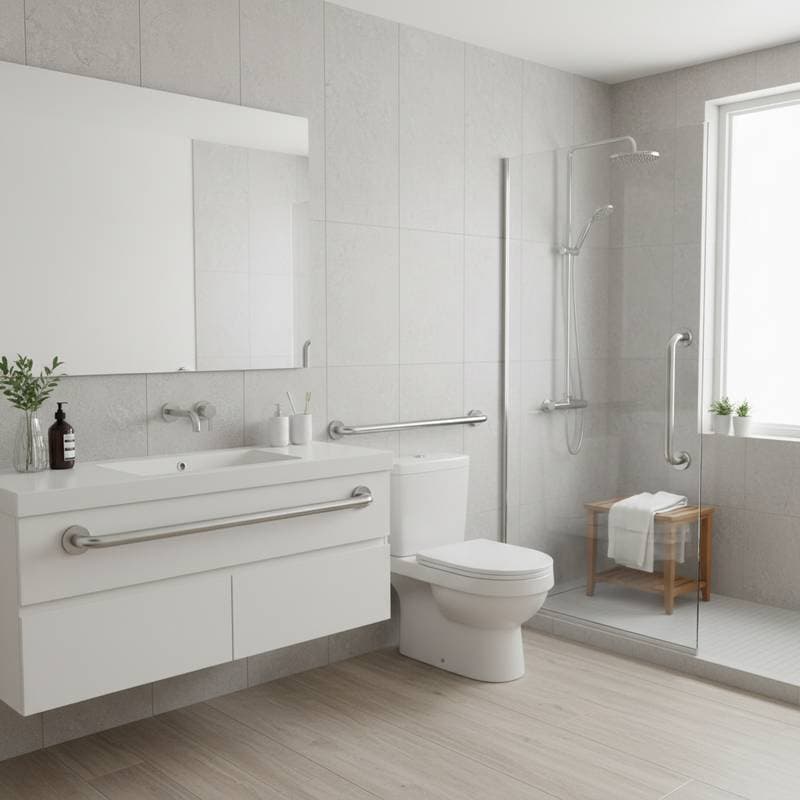
Grab bars act as anchored safety devices that secure to wall framing. Users rely on them for balance during activities like stepping into a shower, rising from a toilet, or navigating wet floors. Engineered differently from towel bars, grab bars endure significant forces. Standard models handle at least 250 pounds of pull, while premium options support up to 500 pounds when fastened to studs or blocking.
Performance hinges on anchoring method, material quality, and grip design. Stainless steel in 304 or 316 grades withstands moisture without rusting. Knurled or textured surfaces enhance hold in wet conditions. Bar diameter and wall clearance affect usability; aim for 1.5 inches of space to accommodate various hand sizes securely.
Types of Grab Bars and Their Applications
Different grab bar designs suit specific needs and spaces. The table below outlines key options.
| Grab Bar Type | Material | Load Rating | Surface Finish | Best Use Scenario |
|---|---|---|---|---|
| Standard Wall-Mount | 304 Stainless Steel | 250-500 lb | Brushed or polished | General bathrooms, showers |
| Flip-Up Bar | Aluminum with locking hinge | 250-300 lb | Powder-coated | Beside toilets or small spaces |
| Floor-to-Ceiling Pole | Steel with pressure mount or flange | 250 lb | Chrome or matte | Transitional spaces or open layouts |
| Integrated Shelf-Bar | Stainless steel with tempered glass shelf | 250 lb | Brushed | Modern bathrooms needing dual function |
Wall-mounted bars offer maximum stability for everyday use. Flip-up versions fold away in tight areas without compromising strength. Shelf-bars combine utility and style, appealing to those seeking seamless integration. Select based on space constraints, support availability, and design preferences.
Evaluating Costs and Returns
Grab bars deliver strong value as a budget-friendly enhancement. Expect to pay 40 to 100 dollars for a durable stainless steel bar, plus 150 to 300 dollars for professional installation per spot. Studies show these additions cut fall risks by up to 60 percent, potentially avoiding high medical expenses and legal issues.
In terms of resale, accessibility elements attract diverse buyers, including those preparing for aging in place or multigenerational households. Properties with integrated grab bars convey proactive planning, leading to quicker sales and price premiums. The table summarizes financial aspects.
| Cost Category | Typical Range | Long-Term Benefit |
|---|---|---|
| Material | $40-$100 per bar | 20+ year lifespan |
| Installation | $150-$300 per bar | Avoids future extensive remodels |
| Maintenance | Minimal | Simple annual checks for security |
| Resale Impact | 3-5% premium | Expands appeal to more buyers |
Comparing Grab Bars to Alternatives
Grab bars outperform common substitutes in reliability. The following comparison clarifies distinctions.
| Factor | Grab Bar | Towel Bar | Suction Cup Handle |
|---|---|---|---|
| Load Capacity | 250-500 lb | 15-30 lb | 50-70 lb |
| ----------------- | -------------- | -------------- | ------------------- |
| Lifespan | 20+ years | 5-10 years | 1-2 years |
| ----------------- | -------------- | -------------- | ------------------- |
| Maintenance | Low | Moderate | High |
| ----------------- | -------------- | -------------- | ------------------- |
| Code Compliance | Yes | No | No |
| ----------------- | -------------- | -------------- | ------------------- |
| Safety Reliability | High | Low | Low |
Towel bars and suction handles fail under real stress due to inadequate anchoring. Grab bars distribute forces effectively to the building structure, ensuring dependable performance.
Steps for Effective Installation
Successful installations involve input from homeowners, licensed contractors, and accessibility experts like occupational therapists. Assess needs to identify high-risk areas, such as near showers or toilets. Professionals evaluate wall composition to choose anchors that suit tile, drywall, or masonry.
Secure bars into studs or add blocking for reinforcement. Follow ADA guidelines for height and positioning: place vertical bars 33 to 36 inches above floors, horizontal ones 33 to 36 inches from the ground. Test each installation for stability before use. These measures ensure grab bars integrate smoothly, providing peace of mind and elevating home worth.