Understanding the 2026 FEMA Codes for Flood Vents and Wet-Proofing
Selecting an appropriate flood protection system prevents extensive structural damage that often exceeds the expense of initial mitigation efforts. The 2026 FEMA code updates specify requirements for flood vents and wet-proofing in new builds and retrofits alike. Homeowners in flood-prone areas gain critical insights by grasping the rationale behind these standards, which promote compliance, enhance safety, and support enduring structural strength.
System Overview
Technology Type: Flood vent assemblies combined with wet-proofing measures
Efficiency Rating: Measured by flow capacity in cubic feet per second per square inch of vent opening
Applicable Zones: FEMA-designated flood areas including A, AE, AO, VE, and Coastal A
Standard Capacity: 200 to 1,200 square inches of net open area for every 100 square feet of enclosed area below flood level
Expected Lifespan: 25 to 40 years, assuming routine maintenance
Installation Difficulty: Ranges from moderate for basic setups to complex for integrated systems
These specifications ensure systems handle flood forces without compromising the building envelope. Homeowners should verify that chosen products align with these parameters to meet regulatory demands.
Technical Details of Flood Vents and Wet-Proofing
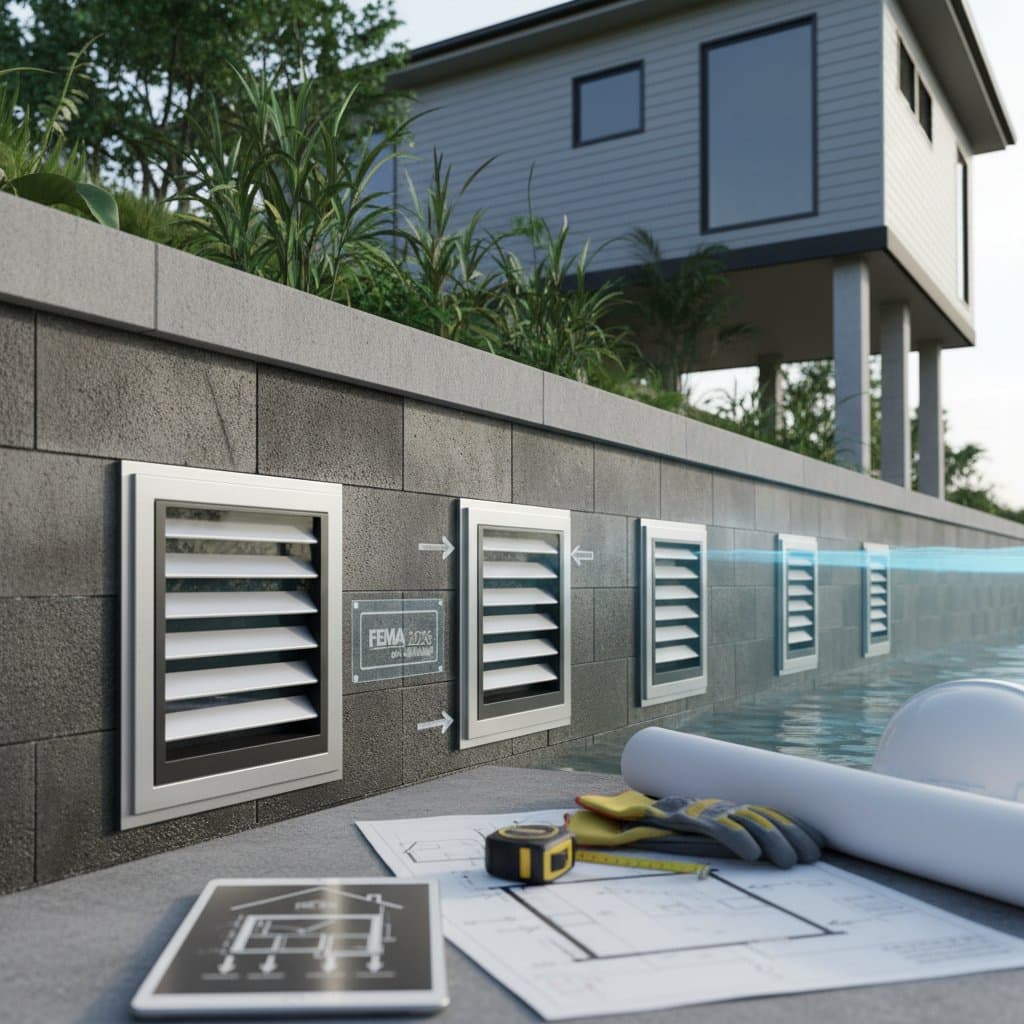
Flood vents consist of engineered openings placed in foundation walls, crawl spaces, or below-grade enclosures. These vents equalize hydrostatic pressure during floods by permitting water to enter and exit freely, thereby averting wall failure. Wet-proofing involves techniques such as employing flood-resistant materials, sealing electrical systems, and raising mechanical equipment above potential water levels.
Together, these approaches mitigate collapse risks and simplify post-flood recovery. For instance, vents reduce pressure differentials that could otherwise exert forces equivalent to several tons on foundation elements. Wet-proofing ensures that any water intrusion causes minimal harm to non-structural components.
Analyzing Performance Across Flood Regions
Flood dynamics differ markedly between coastal and inland settings, influencing vent selection. In coastal zones with high-velocity waves and debris, automatic vents that activate under water pressure comply with FEMA Technical Bulletin 1. Inland areas prone to slower-rising waters benefit from passive vents offering expansive openings for efficient drainage.
Flow rate serves as the primary indicator of effectiveness, dictating pressure equalization speed. Undersized or poorly positioned vents can amplify foundation loads by as much as 50 percent, leading to cracks or shifts. Testing vents in simulated conditions reveals their ability to handle debris without clogging, a common issue in debris-heavy environments.
Comparing Key Flood Vent Systems
| System Type | Average Cost per Unit | Maintenance Needs | Flow Efficiency | Best Suited For |
|---|---|---|---|---|
| Passive Flood Vent | $150–$300 | Low | 85% | Inland Floodplains |
| Automatic Float Vent | $400–$700 | Moderate | 90% | Coastal A and AE |
| Engineered Smart Vent | $800–$1,500 | Low | 95% | VE and Coastal A |
This table highlights trade-offs in cost, upkeep, and performance. Select based on local flood characteristics to optimize protection.
Integrating Flood Vents with Building Design
Flood vents integrate seamlessly when aligned with foundation configurations. In slab-on-grade homes, position vents on opposing walls to facilitate balanced water movement. For crawlspace structures, install vents within 12 inches of the ground surface on different sides to distribute pressure evenly.
Enhance overall efficacy by pairing vents with sump pumps for active water removal, vapor barriers to control moisture, and sensors for early detection. Wet-proofing reinforces this setup through the use of materials like pressure-treated wood, closed-cell spray foam, and corrosion-resistant hardware. Such combinations withstand prolonged submersion while preserving building functionality.
Evaluating Costs and Long-Term Benefits
Advanced flood vents and certified wet-proofing involve higher initial investments, yet they substantially cut post-flood repair bills, often by thousands of dollars per event. Insurance providers frequently reduce premiums for properties featuring verified FEMA-compliant features, such as those certified by ICC-ES.
Consider a 20-year horizon: Compliant systems lower total ownership costs compared to repeated repairs from non-compliant setups. Factor in reduced downtime and preserved property value when assessing return on investment. Homeowners recover expenses faster through these savings and potential rebates from flood management programs.
Steps for Installation and Achieving Compliance
Adhere to local codes that incorporate FEMA and National Flood Insurance Program guidelines during installation. Enclosed spaces below the base flood elevation demand at least two vents on separate walls, providing a total net open area of one square inch per square foot of the area.
Wet-proofing materials must satisfy ASTM standards for flood resistance, including treatments that prevent rot and electrical shorts. Engage licensed professionals to conduct site assessments, ensuring vents avoid blockages from landscaping or utilities. Document installations with photos and specifications for insurance and inspection purposes.
Strategies for Ongoing Maintenance and Compliance
Periodic checks maintain system reliability over time. Inspect vents quarterly for obstructions like sediment, vegetation, or insect nests that impede flow. After floods, examine wet-proofing for signs of material breakdown, such as swelling in insulation or rust on fixtures.
Schedule annual professional reviews to confirm alignment with evolving codes. Replace components showing wear, like degraded seals or bent louvers, promptly. These habits extend system life and uphold compliance status.
Steps to Implement Effective Flood Protection
Homeowners elevate property resilience by prioritizing FEMA standards in flood planning. Consult certified experts to tailor solutions to specific site conditions and budget. Track all upgrades to support insurance claims and resale value. This proactive approach transforms flood risks into manageable elements, securing homes against future events.