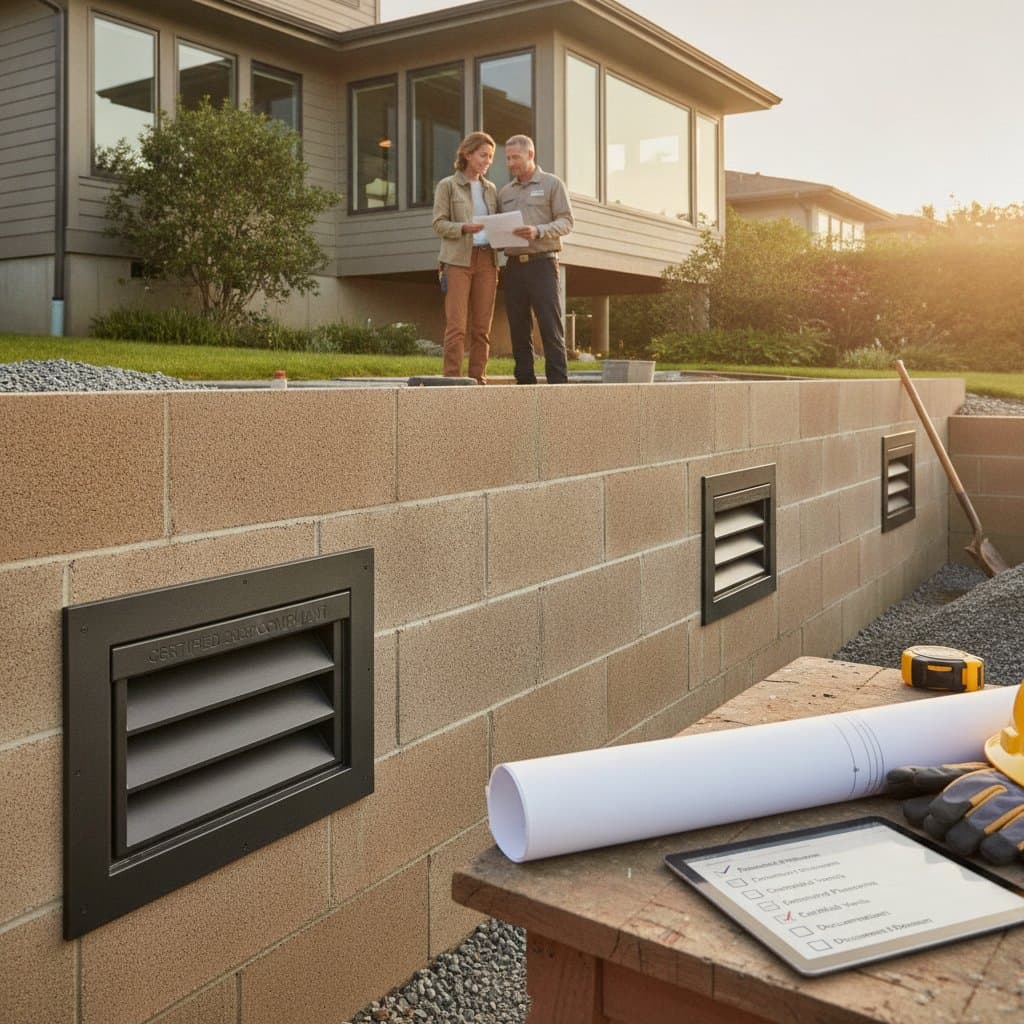
Prepare for 2026: Understanding Flood Vents and FEMA Requirements
Homeowners in flood-prone regions confront stricter regulations and rising insurance costs. The Federal Emergency Management Agency emphasizes floodplain management, rendering flood vents essential for compliance and structural integrity. For properties located in special flood hazard areas, proactive preparation prevents unexpected challenges from emerging.
Elevation certificates and FEMA documentation often involve complex processes. Proper flood vent installation streamlines these requirements, conserves resources, and alleviates potential complications. The assurance that enclosed spaces such as crawl spaces or garages can manage water ingress provides substantial long-term benefits.
The Importance of Flood Vents in Flood Protection
Flood vents facilitate regulatory adherence. Absent these features, floodwaters accumulate against foundations, generating hydrostatic pressure capable of fracturing walls or displacing supports. FEMA-certified vents permit water to pass through enclosures, equalizing pressure across walls and mitigating severe structural harm.
Insurers consider such compliance when determining flood insurance rates. Homes with verified venting systems qualify for reductions in premiums reaching 30 percent. Recent flood zone remappings underscore the urgency of aligning properties with prevailing FEMA guidelines to secure these advantages.
Flood vents also preserve property value by preventing water-related deterioration. In high-risk areas, these upgrades demonstrate responsible ownership to appraisers and buyers. Early adoption positions homeowners ahead of mandatory enforcement schedules.
Analyzing Costs and Current Market Factors
Supply chain variations and localized demand influence pricing for materials like stainless steel and durable plastics. A typical stainless steel flood vent costs between $200 and $300 per unit. Plastic alternatives begin at $100, though they must satisfy FEMA's rigorous certification to qualify for benefits.
Most residential foundations necessitate four to six vents, scaled to the enclosed area's dimensions and perimeter. Professional labor ranges from $150 to $400 per vent, leading to a total project expense of approximately $1,000 when including materials and permits. Foundations constructed from concrete blocks or featuring non-standard crawl spaces may require supplementary masonry, adding $300 to $600.
Obtain estimates from at least three local specialists to compare options. Regional construction trends can accelerate price changes, so timely inquiries yield the best results.
Deciding Between DIY Installation and Professional Services
Individuals skilled in masonry work and sealing techniques may undertake installation independently. Key considerations include precise placement and adherence to FEMA's specifications, which mandate one square inch of net open area per square foot of enclosed space. Deviations risk invalidating compliance and forfeiting insurance incentives.
Engage a licensed contractor for properties within designated flood zones or those with concrete block foundations. Experts provide documentation essential for updating elevation certificates, a prerequisite for FEMA approvals and premium adjustments.
Professional involvement ensures durability and code conformity. Contractors often identify ancillary issues, such as drainage improvements, enhancing overall flood resilience.
Optimal Scheduling for Flood Vent Upgrades
Spring emerges as the preferred season for these projects. Dry soil conditions simplify access, while contractor availability remains high before seasonal weather intensifies. Completion prior to summer rains allows thorough testing and adjustments.
Delays into late summer or autumn coincide with heightened demand, elevating both costs and wait times. Coordinate with local authorities if an elevation certificate revision or inspection proves necessary. Advance planning accommodates these steps without disruption.
Ensuring Longevity Through Regular Maintenance
Conduct annual inspections of vents to detect debris accumulation, corrosion, or blockages from nests. Clear pathways promote unimpeded water flow during inundation events. Prompt replacement of compromised units sustains certification status.
Incorporate these checks into spring routines alongside broader home assessments. Such diligence averts minor issues from escalating into significant repairs.
Securing Benefits with Strategic Flood Vent Implementation
FEMA compliance extends beyond administrative tasks to encompass genuine property safeguarding, cost efficiencies, and enduring asset protection. Initiate your planning process today, consult qualified professionals as required, and integrate flood vents into a comprehensive risk management approach. These measures deliver resilience against flooding while optimizing financial outcomes.