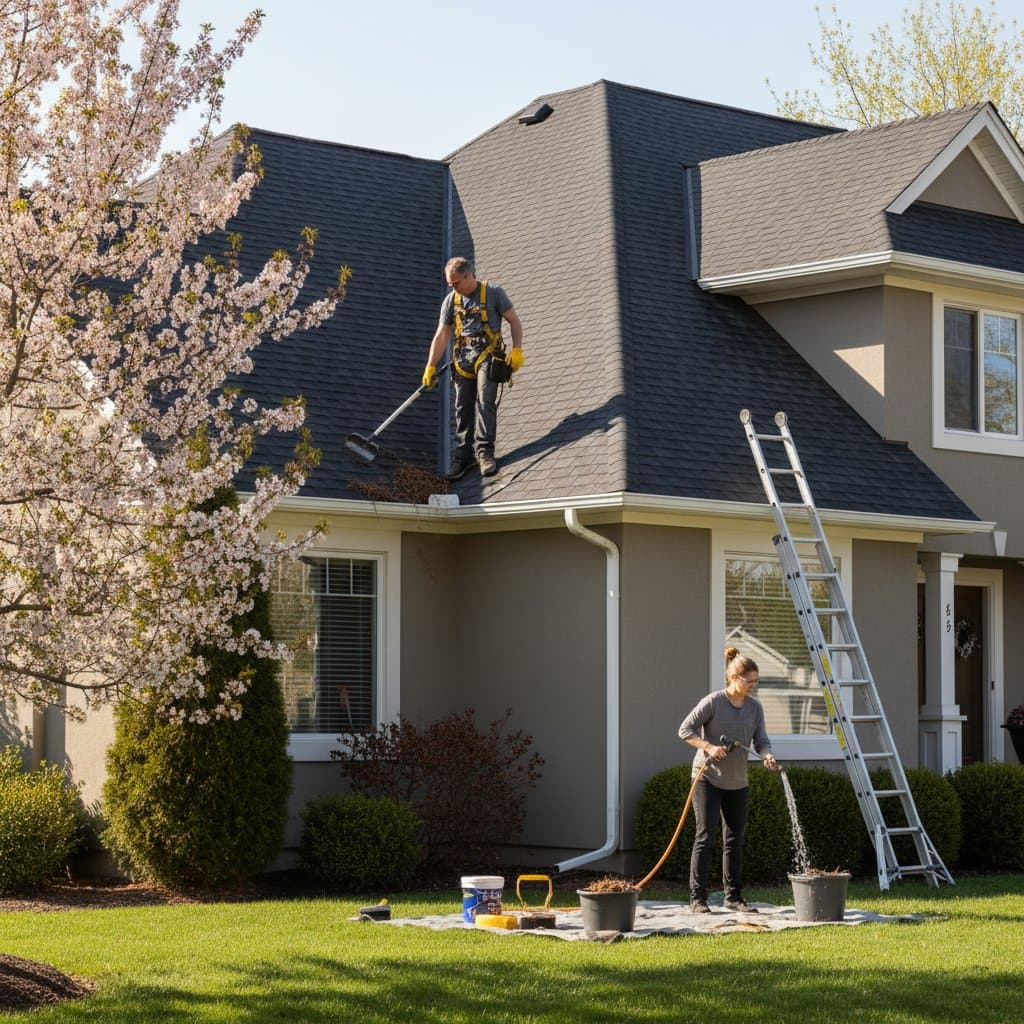
Why Spring Marks the Ideal Time for Roof and Gutter Checks
Winter weather often leaves hidden damage on roofs and gutters. Snow, ice, and freeze-thaw cycles can loosen shingles, crack seals, and clog drainage systems. Addressing these issues in spring prevents small problems from turning into major repairs that strain budgets and disrupt lives.
Homeowners who inspect early gain peace of mind. Early detection allows for targeted fixes that extend the lifespan of roofing materials. In addition, proper maintenance preserves energy efficiency and boosts property value.
This guide outlines key inspection areas, practical steps, and cost considerations. Whether you tackle tasks yourself or hire experts, proactive care pays dividends.
Inspecting Your Roof: Key Areas to Focus On
Start with a visual roof survey from the ground using binoculars. Look for missing or curling shingles, which expose underlayment to moisture. Check for granular loss on asphalt shingles, a sign of aging that accelerates in harsh winters.
Examine flashing around chimneys, vents, and skylights. These metal strips seal joints where the roof meets vertical surfaces. Cracked or lifted flashing invites water entry, leading to rot in underlying wood.
Assess the roof's overall slope and valleys. Debris accumulation in valleys can cause backups during rain. If you spot sagging sections, this indicates structural weakness that requires immediate professional attention.
For safety, avoid walking on the roof unless you have experience. Hire a contractor for close-up evaluations if damage appears extensive.
DIY Shingle Repair Steps
Gather basic tools: a pry bar, roofing nails, hammer, and sealant. Lift damaged shingles gently to avoid further tearing. Slide new shingles into place, or patch with asphalt cement if replacement is not feasible.
Secure edges with nails placed just above the sealant strip. Press firmly to ensure adhesion. Work in dry conditions to allow proper curing.
Materials: Pry bar, roofing nails, hammer, asphalt sealant
DIY Difficulty: 4 out of 5
Professional Repair: $200 to $500 for minor shingle work
Gutter Maintenance: Ensuring Proper Drainage
Gutters direct water away from your foundation and siding. Neglected gutters overflow, causing erosion and interior leaks. Spring cleaning removes leaves, twigs, and ice remnants that accumulate over winter.
Position a ladder securely on level ground. Use gloves to scoop debris into a bucket. Flush remaining sediment with a garden hose from the downspout end.
Inspect for loose hangers, which cause sagging. These fixtures attach gutters to the fascia board. Misaligned gutters direct water toward the house instead of away.
Materials: Drill, screws, brackets, sealant
DIY Difficulty: 3 out of 5
Professional Repair: $200 to $400 for tightening and resealing joints
Tighten loose hangers with a screwdriver or drill. Check alignment using a level, aiming for a quarter-inch slope per ten feet toward the downspout. Apply exterior-grade silicone sealant to joints after adjustments.
For gutters over ten years old with corrosion, consider full replacement. Seamless aluminum options resist rust and require less maintenance. Installation costs range from $8 to $12 per linear foot.
Downspout and Accessory Checks
Downspouts channel water from gutters to ground level. Inspect for dents, loose sections, or blockages. Straighten bent pipes and secure with brackets to maintain flow.
Materials: PVC pipe, elbows, brackets
DIY Difficulty: 2 out of 5
Professional Repair: $75 to $150
Extend downspouts if they discharge too close to the foundation. Splash blocks or buried lines prevent soil saturation near walls.
Gutter guards prevent debris buildup. Mesh or screen types fit over gutters, allowing water passage while blocking leaves. Installation involves measuring sections and securing with clips.
Materials: Gutter guards, clips, screws
DIY Difficulty: 3 out of 5
Professional Installation: $600 to $1,200
Cost Breakdown with Market Insights
Understanding expenses helps plan effectively. DIY approaches save on labor but require time and tools. Professionals offer warranties and handle heights safely.
| Task | DIY Cost | Professional Cost | Market Notes |
|---|---|---|---|
| Gutter cleaning | $25 to $50 | $150 to $300 | Labor rates rise with seasonal demand |
| Roof inspection | $0 (DIY) | $200 to $400 | Contractors schedule weeks in advance |
| Downspout repair | $15 to $40 | $75 to $150 | Material prices remain stable post-inflation |
| Gutter guard installation | $150 to $400 | $600 to $1,200 | Supply chains improve, reducing wait times |
| Minor shingle repair | $30 to $100 | $200 to $500 | Shingle costs increase 10 percent from tariffs |
These figures reflect 2026 averages. Local variations apply based on region and home size.
Long-Term Benefits and Return on Investment
Investing in spring maintenance yields measurable returns. Prevented water damage avoids mold growth, which remediation costs thousands to address. Dry attics maintain insulation effectiveness, reducing heating and cooling expenses by up to 30 percent.
Real estate data shows maintained roofs correlate with higher sale prices. Properties with clean gutters and intact shingles fetch 2 to 5 percent more than those showing neglect. Documentation of inspections strengthens buyer confidence.
Energy savings compound over time. Sealed roofs minimize drafts, stabilizing indoor temperatures. This efficiency lowers utility bills and environmental impact.
Steps to Schedule and Track Maintenance
Create a seasonal checklist for consistency. Note dates, findings, and actions taken in a home log. This record aids future decisions and proves diligence to insurers.
If DIY limits your comfort, seek certified roofers through local directories. Request quotes from multiple providers to compare services. Early booking avoids summer rush.
Annual vigilance extends roof life from 20 to 30 years or more. Simple habits like these protect your largest asset without overwhelming effort.
Securing Your Home for Seasons Ahead
Spring actions fortify your home against coming storms. Regular checks catch issues before they escalate, preserving structure and serenity. Commit to this routine, and enjoy a resilient home year after year.