Key Takeaways
- Solar batteries have evolved from optional add-ons to essential safeguards against frequent grid disruptions in residential settings.
- Top-performing models integrate substantial storage capacity, intelligent energy management features, and effortless compatibility with existing solar arrays.
- Selecting an appropriate system enables sustained power supply during blackouts and contributes to decreased energy expenditures over the years.
Selecting the Optimal Solar Battery for Outage Resilience
The ideal solar battery for protecting against outages strikes a balance among storage capacity, operational longevity, and compatibility with your home's energy infrastructure. Prioritize lithium-ion or lithium iron phosphate technologies, as they deliver superior efficiency in a compact form factor.
Such batteries capture surplus energy generated during daylight hours and transition seamlessly to reserve mode upon grid failure. They also support rapid recharging under returning sunlight conditions to restore full functionality quickly.
| Feature | Ideal Specification | Why It Matters |
|---|---|---|
| Capacity | 10–20 kWh | Sustains critical appliances, including refrigerators, lighting, and internet routers, for one to two full days. |
| Cycle Life | 5,000+ cycles | Promotes extended durability and maximizes financial returns on the initial investment. |
| Power Output | 5–10 kW | Manages simultaneous operation of several household devices without performance degradation. |
| Warranty | 10 years | Safeguards the investment against premature failures and ensures long-term reliability. |
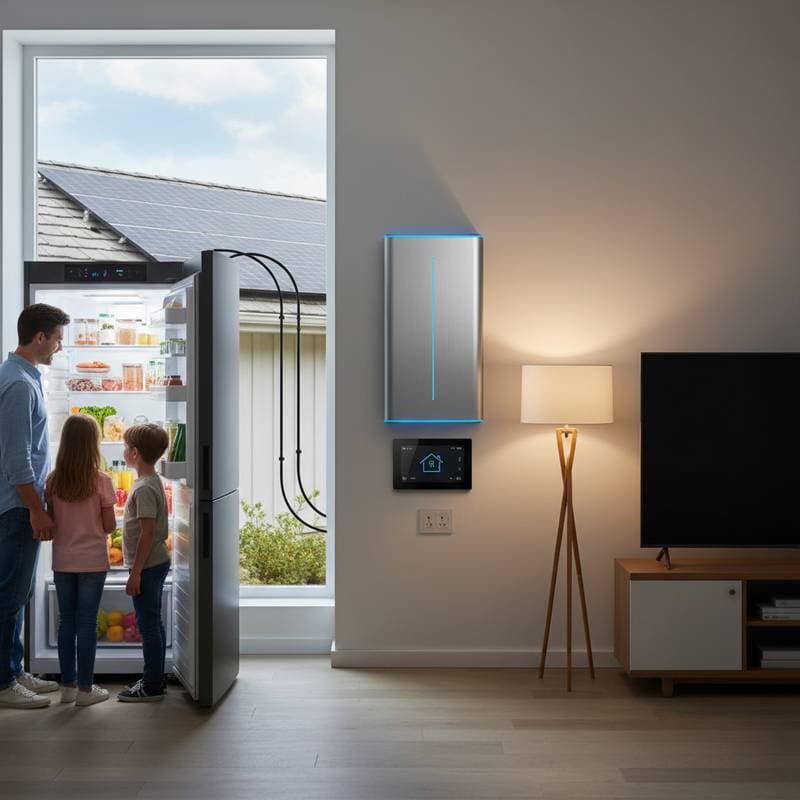
Advanced configurations incorporate intelligent load prioritization, which allocates power to vital circuits first. For instance, this approach keeps freezers and life-support medical devices active while temporarily suspending non-essential items like entertainment systems, thereby extending overall runtime.
Weighing the Advantages and Limitations
Solar batteries represent a significant home upgrade, complete with inherent benefits and considerations.
Advantages:
- Dependable electricity supply amid blackouts.
- Reduced electricity bills accumulated over time.
- Silent functionality with minimal upkeep requirements.
- Promotion of environmental sustainability and self-sufficient energy use patterns.
Limitations:
- Elevated initial expenses relative to conventional generator alternatives.
- Constrained storage for expansive residences without deploying additional units.
- Necessity for aligned solar inverters and expert installation services.
Despite these factors, the tangible advantages frequently surpass the challenges for families prioritizing uninterrupted service. A prolonged blackout risks food spoilage or disruption to professional obligations conducted remotely. An integrated backup solution fosters ongoing security and ease within the household.
Estimating Investment Costs
System pricing fluctuates based on manufacturer, storage volume, and supplementary features, yet typical mid-range installations range from $8,000 to $15,000, encompassing professional setup. Expansive or luxury variants may exceed $20,000, scaled to the desired energy retention levels.
Although the outlay appears considerable, recoupment occurs via accumulated energy efficiencies, diminished grid reliance, and available financial incentives. Homeowners often observe enhanced property appraisals following installation, particularly in regions prone to power instability.
For those with pre-existing solar panels, battery integration proves straightforward and more economical than comprehensive overhauls. Always direct your installer to verify inverter synchronization prior to finalizing the acquisition.
Solar Batteries: Emerging Standard or Enduring Strategy?
Adoption of solar batteries points toward sustained integration rather than fleeting popularity. As residential energy autonomy gains momentum, these systems emphasize robust construction and sophisticated oversight capabilities.
Contemporary designs facilitate accelerated charging, prolonged service life, and fluid synchronization with smart home ecosystems. Beyond emergency roles, they function as everyday assets, enabling avoidance of elevated utility charges during peak demand periods.
Modular architectures in recent iterations permit scalable growth. Begin with a single unit and incorporate expansions as household consumption evolves, avoiding the need for wholesale system overhauls.
Frequently Asked Questions
Do solar batteries function independently of solar panels?
Solar batteries operate without solar panels, yet they achieve peak efficacy when coupled with them. Absent solar generation, grid charging becomes necessary, which diminishes the advantages of autonomy.
Is it possible to power an entire residence using a solar battery?
These systems reliably energize essentials such as illumination, cooling units, and connectivity tools. Continuous operation of high-demand features like heating, ventilation, and air conditioning demands multiple batteries or integrated hybrid approaches.
How extended is the runtime of a solar battery during an outage?
Standard setups maintain essential operations for 12 to 36 hours, contingent on consumption rates and storage size. Strategic device management prolongs this duration effectively.
What maintenance does a solar battery require?
Requirements remain limited: perform routine cleaning, verify adequate airflow, and track system metrics via the accompanying mobile application.
Are financial incentives or rebates accessible?
Numerous locales provide rebates and tax credits for renewable storage installations, substantially offsetting overall expenses.
Achieving Sustained Energy Security
A solar battery extends beyond mere reserve capacity to instill tranquility amid disruptions, stabilize utility costs, and minimize ecological impact.
When evaluating options, emphasize storage volume, warranty terms, and alignment with your solar configuration. Assess priority appliances and calibrate the battery scale to match those needs precisely.
This strategic choice redefines residential power dynamics, rendering your living space more robust, optimized, and prepared for grid uncertainties ahead.