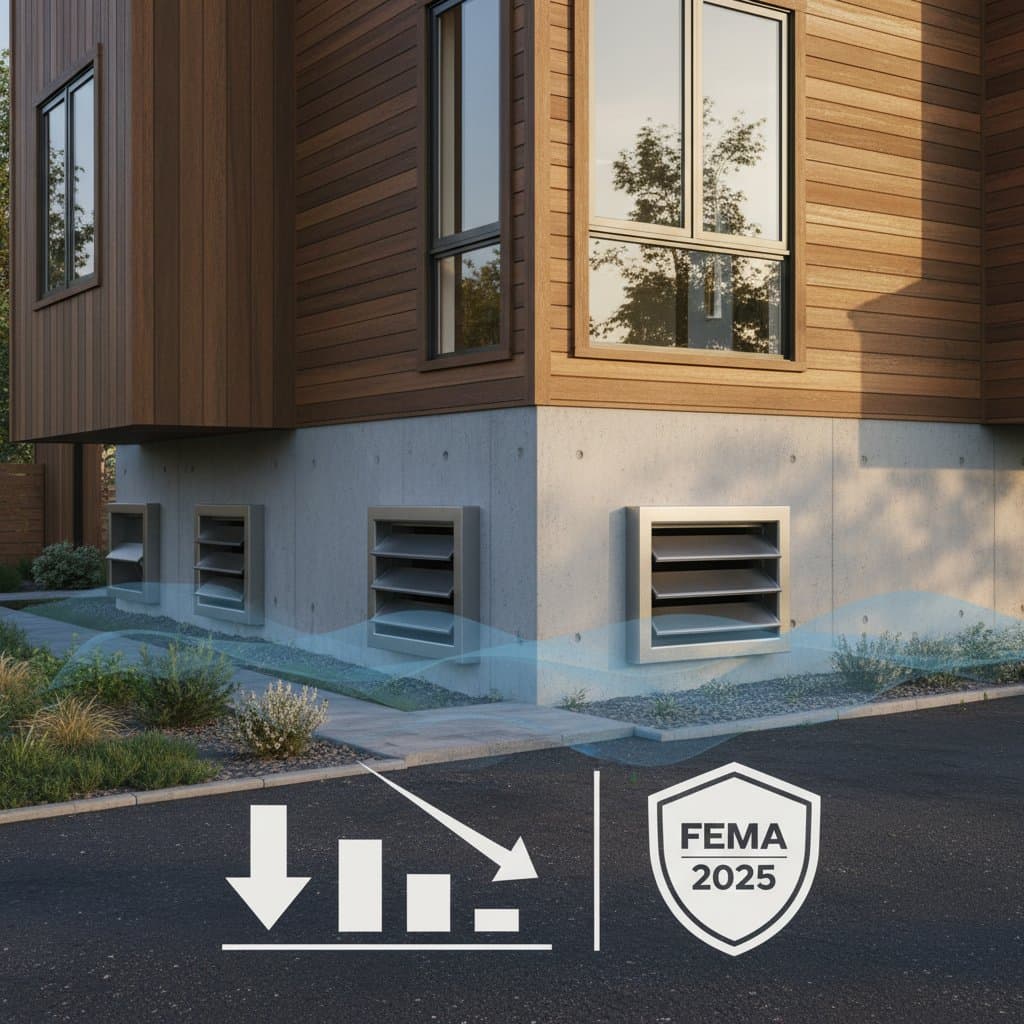
Lower Insurance Premiums Through Flood Vents and FEMA's 2025 Regulations
Homeowners in flood-prone regions must adopt effective flood protection measures. FEMA's updated 2025 regulations impose stricter standards on building elevation and wet-proofing. Flood vents stand out as a reliable solution that ensures compliance, minimizes structural risks, and qualifies properties for substantial insurance premium reductions. Property owners benefit from grasping the mechanics of these vents, their evaluation processes, and their impact on insurance calculations to achieve both safety and economic advantages.
The Role of Flood Vents in Building Design
Flood vents, or flood openings, serve as pressure equalization mechanisms integrated into the walls of enclosed foundation areas. In a flood event, external water pressure mounts against foundation walls. Absent equalization, this pressure causes wall collapse and extensive structural harm. Flood vents permit water entry or passage to balance hydrostatic forces, thereby preserving the building's overall integrity.
Flood vents fall into two primary types:
- Non-engineered flood vents, which consist of basic openings or grilles.
- Engineered flood vents, tested and certified to meet FEMA Technical Bulletin 1 for precise flow rates and performance.
Only engineered flood vents qualify for insurance premium discounts due to their documented and reliable operation. Companies such as Smart Vent and Flood Flaps provide certified flow area specifications that insurers rely on to assess and adjust risk levels.
Adapting Flood Vents to Regional Flood Risks and Climate Variations
The effectiveness of flood vents depends on local flood dynamics. FEMA classifies regions into flood zones according to water flow patterns, surge risks, and terrain features. These zones dictate specific installation and design approaches.
Inland Zones A and AE
Inland zones feature prolonged flooding with slow water rise and sediment accumulation. Flood vents in these areas require designs that handle gradual inundation and debris passage. Stainless steel vents equipped with broad louvers excel here, as they minimize clogging risks.
Coastal Zones VE and Coastal A
Coastal environments contend with rapid storm surges and wave impacts. Vents must withstand corrosion and remain firmly attached. Options tested for debris resistance and saltwater durability, including marine-grade stainless steel models, offer superior performance in these demanding conditions.
Moderate-Risk Zone X
Properties in moderate-risk zones gain value from flood vents even without mandatory requirements. Installation elevates a home to preferred insurance categories and bolsters enduring flood resistance.
Incorporating Flood Vents into Foundation Structures
Retrofitting existing foundations with flood vents involves assessing wall materials, load distribution, and height relative to the base flood elevation. For concrete block walls, installers remove one block and frame the opening using rust-resistant materials. Poured concrete foundations demand core drilling followed by reinforcement to uphold stability.
Strategic vent positioning proves essential. FEMA mandates vents on a minimum of two walls to facilitate cross-flow of water. Position each vent no more than one foot above exterior grade level. Faulty placement diminishes functionality and disqualifies certification advantages.
Properties with enclosed crawl spaces or basements must evaluate interactions between vents, vapor barriers, and insulation layers. In high-humidity climates, select mechanical vents featuring automatic seals that block moisture in dry periods yet activate during floods.
Guidelines for Installation and Regulatory Adherence
Adhere to manufacturer guidelines alongside FEMA Technical Bulletin 1 during installation. Qualified professionals execute the following steps:
- Confirm the property's base flood elevation.
- Measure the enclosed area below that elevation.
- Compute necessary vent area at one square inch per square foot of enclosed space.
- Position vents uniformly across at least two exterior walls.
- Seal gaps to deter pests without obstructing floodwater flow.
- Record the process with photographs and certification documents for insurance purposes.
Local authorities often require inspection summaries or engineer approvals to validate compliance. Such records prove crucial for obtaining premium adjustments from insurers.
Upkeep and Durability of Flood Vents
Flood vents demand straightforward maintenance, with inspections recommended biannually. Essential tasks encompass:
- Removing accumulated debris or sediment from vent areas.
- Testing mechanical components for smooth operation.
- Inspecting for corrosion, particularly in coastal or saline settings.
- Confirming absence of insect or rodent infestations within vents.
Periodic gasket or seal replacements every few years sustain performance in non-flood scenarios. With diligent care, these vents endure for decades of reliable service.
Steps to Implement Flood Vents Effectively
Essential Considerations
- Verify Flood Zone: Review your property's official FEMA flood zone status.
- Select Certified Vents: Opt for ICC-ES approved engineered models with verified flow documentation.
- Document Thoroughly: Retain all manufacturer certifications and installation imagery.
- Engage Insurers: Submit records to your provider to request premium recalculations.
Engaging Experts
Complex foundations, diverse materials, or enclosed substructures warrant consultation with mechanical or civil engineers. These specialists conduct pressure analyses and verify that vent configurations preserve structural soundness.
Sustained Advantages of Flood Vent Adoption
Investing in flood vents yields ongoing protections beyond initial compliance. Homeowners secure lower insurance rates, enhanced property resilience, and peace of mind against evolving flood threats. This proactive approach transforms potential vulnerabilities into fortified assets, supporting long-term financial and structural security.