Unlock Lower Premiums: Flood Vents for FEMA 2026
Flooding ranks among the costliest natural disasters for homeowners. Rising waters damage foundations, destroy interiors, and trigger substantial insurance claims. In flood-prone regions, flood insurance becomes essential, yet premiums often prove burdensome. One proven strategy to lower these costs involves installing FEMA-compliant flood vents. These devices permit water to flow through enclosed spaces during floods, safeguarding foundations and qualifying properties for reduced insurance rates.
Key Facts
| Category | Details |
|---|---|
| Average Cost | $200 to $600 per vent, plus installation |
| Typical Project Cost | $1,200 to $3,000 for most homes |
| Installation Time | 1 to 2 days |
| Lifespan | 20 to 30 years with minimal maintenance |
| DIY vs Pro Difficulty | Moderate to high; professional installation recommended |
This preventive measure frequently recoups its expense through diminished premiums and avoided repair bills following floods.
How Flood Vents Work
Flood vents, or flood openings, function by equalizing hydrostatic pressure amid rising waters. External water accumulation exerts force on foundation walls, potentially leading to cracks or collapse without relief. Vents enable water entry and exit in crawl spaces or garages, thereby balancing internal and external pressures.
Two primary types serve homeowners:
- Engineered vents: These undergo testing and certification to satisfy rigorous performance criteria.
- Non-engineered vents: Basic openings that frequently fail to align with FEMA or insurer mandates.
Individuals seeking compliance and savings should select engineered options for dependable results.
Cost Breakdown
Installation expenses depend on home dimensions, foundation configuration, and required vent quantity. FEMA stipulates one square inch of net open area per square foot of enclosed space.
| Home Area | Estimated Vents Needed | Average Installed Cost |
|---|---|---|
| 600 sq. ft. crawl space | 4 vents | $1,200 to $1,800 |
| 1,000 sq. ft. crawl space | 6 vents | $1,800 to $2,400 |
| 1,500 sq. ft. garage or basement | 8 vents | $2,400 to $3,000 |
Additional expenses include:
- Permits: $100 to $300, varying by local authorities.
- Masonry work: $200 to $500 for creating new apertures.
- Upgraded materials: Stainless steel variants incur higher costs yet endure longer.
Projects integrated during new builds or extensive foundation repairs incur lower fees, as vents integrate seamlessly into the structure.
FEMA Requirements and Compliance
To secure insurance discounts, vents must adhere to FEMA Technical Bulletin 1. Openings require:
- Automatic operation for water entry and exit without manual aid.
- Placement in at least two walls per enclosed area.
- Positioning with the lower edge no more than one foot above adjacent ground level.
- Provision of adequate venting area proportional to enclosure dimensions.
Properties in Special Flood Hazard Areas must demonstrate compliance for National Flood Insurance Program eligibility. Certified vents, accompanied by detailed documentation, directly influence premium calculations.
How Flood Vents Lower Insurance Costs
Insurers assess flood vulnerability by potential damage extent. Vents mitigate foundation failure risks by facilitating water passage rather than resistance. FEMA reports indicate up to 80 percent reduction in structural harm within vulnerable zones.
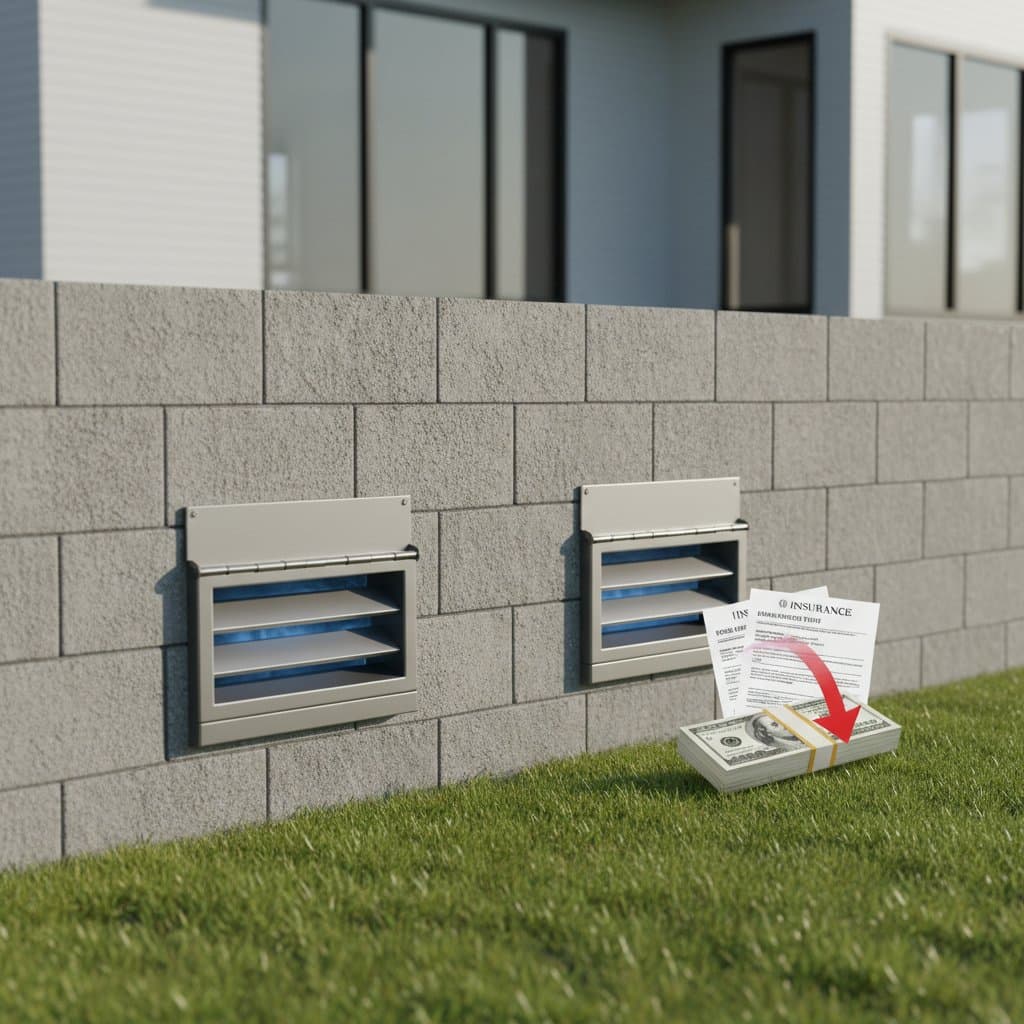
Numerous providers offer premium reductions of 10 to 25 percent for such installations. On a $2,000 annual policy, this translates to $200 to $500 in yearly savings. Accumulated over ten years, these reductions surpass initial outlays.
Factors That Influence Price and Performance
Multiple elements shape expenses and efficacy:
- Foundation Type: Retrofitting crawl spaces and garages proves simpler than basements, which demand advanced solutions.
- Material Quality: Stainless steel and marine-grade aluminum outperform plastic in corrosion resistance.
- Vent Design: Automatic engineered models, though pricier, fulfill FEMA and NFIP criteria.
- Local Flood Zone: Elevated-risk locales necessitate additional vents and thorough records.
- Labor Costs: Installers bill $75 to $150 hourly, influenced by geography.
Soliciting several estimates clarifies costs and ensures regulatory adherence prior to proceeding.
DIY vs Professional Installation
While installation appears simple, precision governs compliance.
DIY Installation
- Best for skilled individuals versed in masonry or carpentry.
- Demands accurate measurements and leveling to uphold vent elevation.
- Necessitates unobstructed, debris-free openings.
Professional Installation
- Advisable for the majority, particularly in governed flood areas.
- Encompasses permit acquisition, documentation, and oversight.
- Guarantees alignment with FEMA Bulletin 1 and municipal codes.
Engaging certified experts minimizes errors that might invalidate discounts or invite future complications.
Ways to Save on Flood Vent Installation
Strategic approaches curb upfront and ongoing costs:
- Integrate with existing work: Incorporate vents during foundation repairs or waterproofing to economize on labor.
- Select certified products: FEMA-approved units alone qualify for rebates, averting ineffective expenditures.
- Pursue grants or rebates: Certain communities provide funding for mitigation initiatives.
- Combine upgrades: Merge with sump pumps or drainage enhancements for discounted rates.
- Obtain multiple bids: Secure at least three from FEMA-savvy contractors.
Such tactics optimize financial outcomes immediately and over time.
Maintenance and Inspection
Vents demand little maintenance, yet regular evaluations sustain functionality. Examine openings biannually for accumulations of debris, mud, or nests. Verify that screens or louvers operate without hindrance.
Post-flood, clear sediment or salts promptly. Address corrosion through repainting or part replacement to preserve integrity and aesthetics. Annual reviews secure ongoing eligibility for insurance benefits.
Common Mistakes to Avoid
Oversights undermine even careful efforts. Position vents no higher than one foot above grade. Employ solely engineered models compliant with FEMA.
Avoid encumbering vents with insulation, lattice, or plants. Distribute vents across opposing walls for optimal pressure relief. Such lapses jeopardize discounts and compromise flood resilience.
When to Consult a Professional
Properties in designated floodplains warrant expert input before alterations. Floodplain managers or contractors assist by:
- Determining precise vent numbers and locations.
- Preparing insurance documentation.
- Evaluating prerequisite foundation fixes.
- Arranging requisite inspections.
Early involvement averts expensive corrections and confirms discount qualifications.
Long-Term Benefits
Insurance reductions represent one facet of flood vents advantages. They lessen foundation fractures and wall shifts through pressure equilibrium. Compliant features enhance resale appeal to prospective buyers.
Diminished moisture in enclosed areas curbs mold proliferation and upkeep demands. Alignment with FEMA standards fosters confidence amid severe weather. These elements position vents as prudent investments for at-risk residences.
Taking Action
Residents in moderate- to high-risk zones benefit from prompt vent adoption. First, ascertain your flood zone status and study FEMA Technical Bulletin 1. Contact specialists in floodproofing for tailored estimates.
Post-installation, compile specifications and forward to your insurer for review. Anticipate premium adjustments at renewal. This initiative not only fortifies your foundation but also preserves equity, trims expenses, and upholds federal safeguards for enduring security.