Key Takeaways
- FEMA compliance mandates flood vents in flood-prone zones to protect property and maintain insurance eligibility.
- Flood vents mitigate hydrostatic pressure on walls during floods, enabling structures to withstand inundation and satisfy wet-proofing requirements.
- Proper installation of compliant vents reduces flood insurance premiums and preserves home value over time.
Functions of Flood Vents in Home Protection
Quick Answer: Flood vents safeguard structural integrity by permitting floodwater to flow through enclosed areas, thereby equalizing hydrostatic pressure.
Key Benefits
- Minimize damage to foundations and walls amid flooding events
- Facilitate adherence to FEMA wet-proofing guidelines
- Potentially decrease flood insurance rates
- Maintain enduring structural stability
Floodwater accumulates outside a home and exerts substantial pressure on foundation walls. A vented enclosure allows water to enter and exit freely, balancing internal and external forces. This approach prevents catastrophic failure, such as the collapse of a wall, which might otherwise result from resisting water ingress.
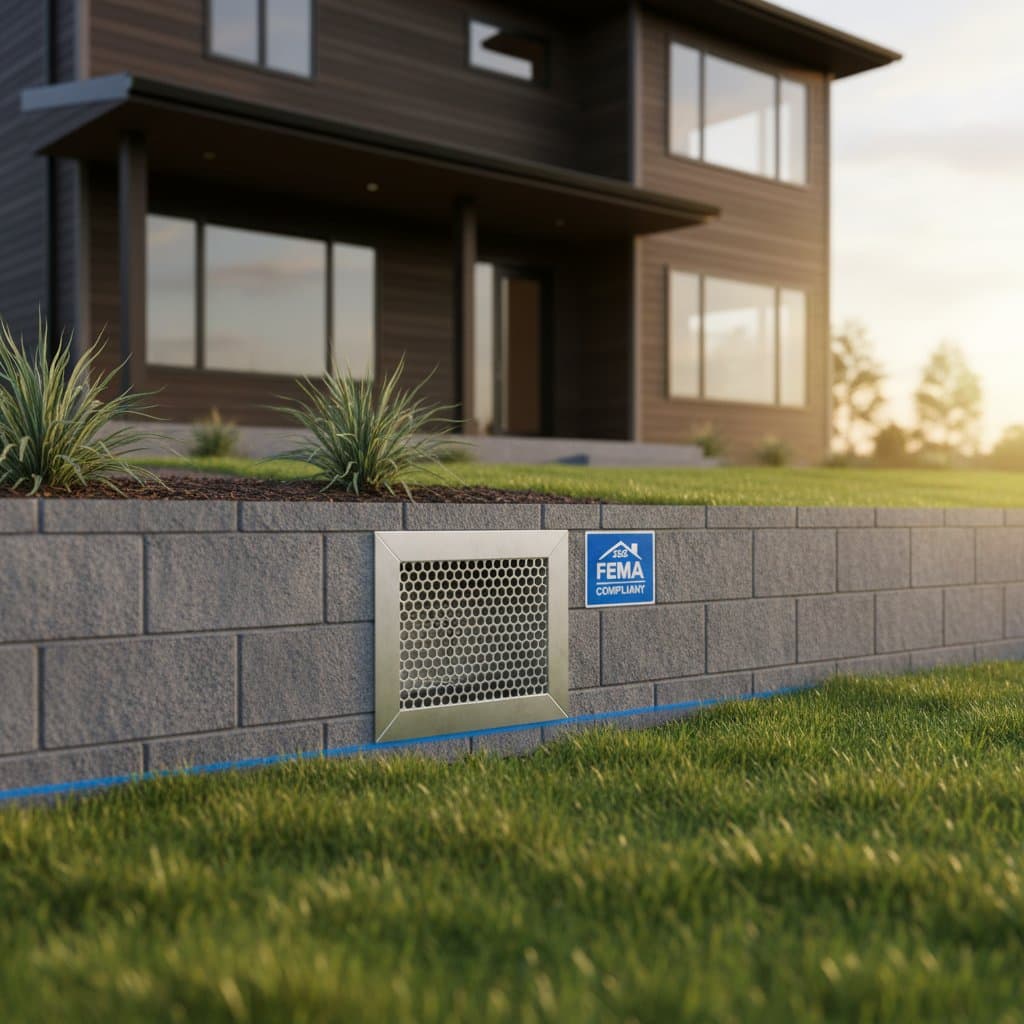
Structures in flood-prone locations must incorporate flood vents in any enclosed space situated below the Base Flood Elevation. FEMA specifies a minimum vent area relative to the enclosed volume, calculated at one square inch per square foot, to promote unrestricted water movement.
Homes That Gain the Most from Flood Vents
Short Answer: Residences in designated flood zones, particularly those featuring enclosed crawl spaces, garages, or basements below flood levels, realize substantial advantages from flood vents.
Older constructions frequently lack these vents, exposing them to heightened risks from pressure buildup. Contemporary builds in coastal or riparian areas integrate vents directly into foundation designs as a standard precaution.
These installations provide reassurance beyond regulatory needs. Climate variability or modifications to local drainage systems can unexpectedly redirect water flows, even for properties bordering flood zones. Preemptive venting simplifies subsequent insurance updates or regulatory approvals.
Variations Among Flood Vents
Short Answer: Flood vents differ significantly; selecting certified models ensures optimal functionality and regulatory approval.
Flood vents divide into two primary types:
- Engineered Vents: These undergo rigorous testing by accredited laboratories to verify compliance with FEMA and National Flood Insurance Program criteria. They feature mechanisms for automatic activation and reliable operation.
- Non-Engineered Vents: Basic apertures or grates that might suffice in certain scenarios but often fail to secure insurance discounts due to lacking certification.
Engineered options typically employ buoyant floats or adjustable louvers that activate upon water contact and seal post-recession to exclude rodents and sediment. Constructed from corrosion-resistant materials like galvanized steel or reinforced composites, they endure repeated exposure and impacts.
Verify ICC-ES certification on products to confirm FEMA alignment; this mark signifies independent validation of performance standards.
Consequences of Non-Compliance with FEMA Flood Vent Regulations
Short Answer: Failure to comply risks insurance rejection, elevated premiums, or complications with local permitting processes.
Local governments enforce FEMA floodplain criteria for communities enrolled in the National Flood Insurance Program. During assessments, non-conforming properties face mandates for retrofitting or forfeiture of coverage.
Insurance implications extend to marketability. Prospective purchasers and financiers demand proof of FEMA conformity in vulnerable areas. Absent such verification, transactions may stall or require expensive corrections.
Frequently Asked Questions from Homeowners on Flood Vents
Do Flood Vents Prevent Water Entry into the Home?
No. These devices intentionally permit water passage to balance pressures. The objective centers on structural preservation rather than exclusion, allowing temporary inundation without compromise.
Are Flood Vents Necessary for Homes Elevated on Piers?
Generally not. Open foundation systems on piers facilitate natural water flow underneath. Vents apply specifically to confined sub-levels like crawl spaces or attached garages.
Is Self-Installation of Flood Vents Feasible?
Individuals skilled in masonry or foundational modifications can undertake installation. Professional consultation remains advisable to validate vent sizing, positioning, and adherence to FEMA specifications.
How Frequently Should Flood Vents Undergo Inspection?
Examine vents biannually and immediately following significant flooding. Remove accumulations of foliage, sediment, or nesting materials to guarantee operational readiness.
Do Flood Vents Impact Aesthetic Appeal?
Minimal disruption occurs with contemporary models. Low-profile enclosures or customizable finishes blend seamlessly with exterior elements, occasionally enhancing design subtlety.
Enduring Advantages for Property Owners
Flood vents transcend mere regulatory adherence; they form a robust defense against physical deterioration and economic setbacks. Properties so equipped facilitate swifter post-flood restoration, circumventing extensive foundational overhauls.
Alignment with FEMA wet-proofing elevates individual security while fostering neighborhood durability. Proactive adoption of flood vents represents a strategic enhancement for personal assets and collective preparedness.
Integrating Flood Vents into Home Resilience Strategies
Though unassuming, flood vents counter elemental threats with efficiency. They uphold compliance, insurance viability, and safety, enabling homeowners to navigate flood hazards confidently.