2026 Flood-Proof Flooring: Reducing Insurance Claims and Building Home Resilience
When water rose last spring, the Johnsons observed their living room carpet become a saturated, mud-laden mess. They believed they had prepared adequately, yet the flooring failed immediately. The subsequent cleanup exceeded the cost of their furniture. This ordeal led them to adopt a more robust alternative: flooring capable of enduring floods while retaining its appearance.
Nationwide, homeowners reevaluate their flooring choices. Flood-proof options evolve from specialized products to essential components of resilient home design. These solutions conserve funds, inhibit mold development, and limit insurance claims. Advanced materials repel water entirely, facilitate rapid drying, resist deformation, and decrease the frequency of full replacements following inundation.
At a Glance
Home types: Coastal residences, low-elevation properties, contemporary dwellings, basements, and ground-level spaces
Primary objectives: Minimize water damage, avert mold, decrease insurance claims, and preserve aesthetic appeal
Principal materials: Luxury vinyl plank, waterproof laminate, ceramic tile, polished concrete, and engineered stone composite
Floors Engineered for Resilience
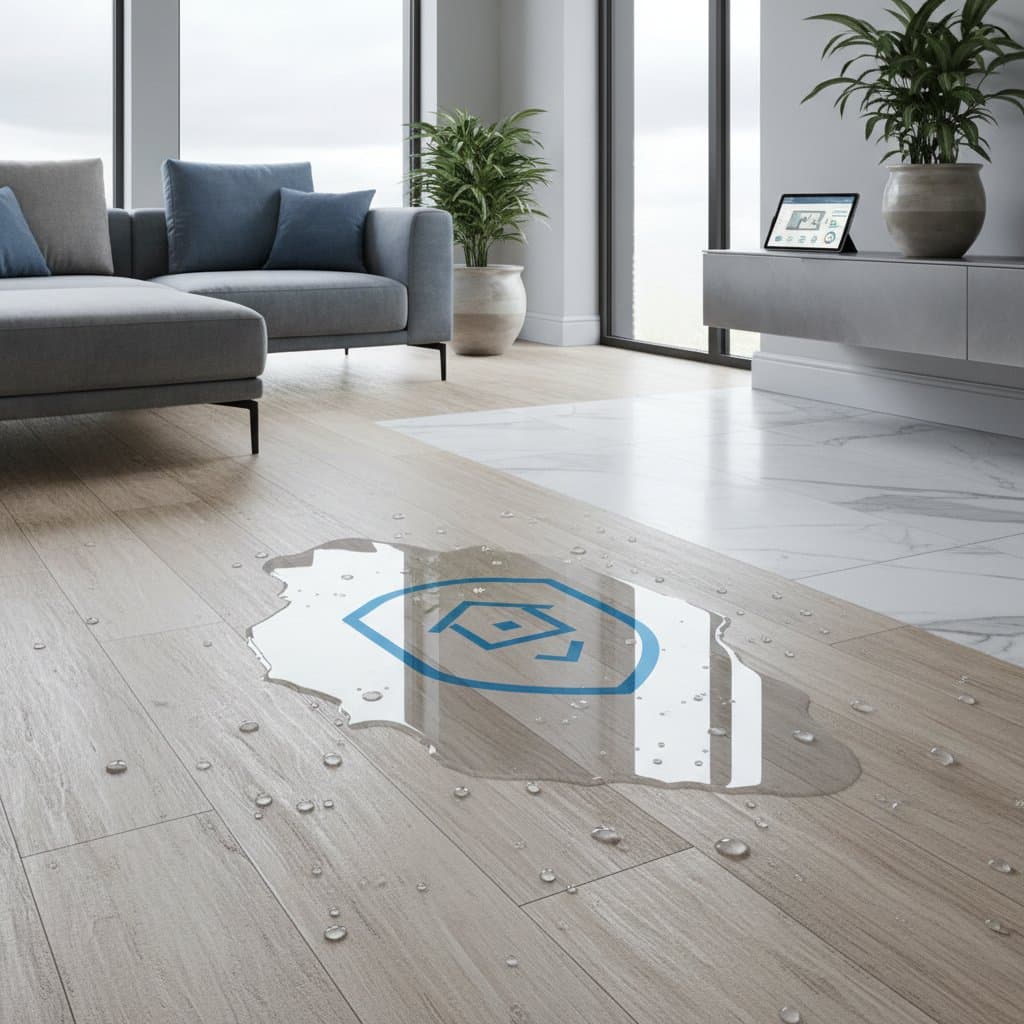
Contemporary flood-proof flooring redefines durability and design. These products balance visual elegance with structural fortitude. They withstand prolonged submersion, prevent expansion, and recover without distortion. Unlike outdated utilitarian surfaces, current selections replicate premium finishes such as white oak, weathered barnwood, or authentic stone, complete with tactile realism and subtle tonal shifts.
The Johnsons installed luxury vinyl plank featuring interlocking seams and a fully impermeable core in place of their former carpet. During a subsequent intense rainfall, water intruded once more, but remediation proved straightforward. They extracted the water with a vacuum, cleaned the surface, and employed a dehumidifier. The floor exhibited no deformation, odor, or need for an insurance filing.
Leading Flood-Proof Flooring Choices
1. Luxury Vinyl Plank (LVP)
Luxury vinyl plank emerges as the preferred selection for residences in water-vulnerable locales. This material achieves complete water resistance while emulating diverse natural textures. A protective top layer guards against abrasions, and the foundational core defies bloating even under immersion.
Advantages:
- Cost-effective relative to hardwood or tile installations
- Simplifies individual plank replacement for localized damage
- Provides greater thermal comfort than tile surfaces
- Integrates seamlessly with underfloor heating mechanisms
Considerations: Select variants certified as entirely waterproof, incorporating rigid stone polymer composite cores. Steer clear of lower-cost options reliant on fiberboard substrates, which retain moisture.
2. Waterproof Laminate
Earlier laminate versions swelled upon moisture exposure, but updated waterproof iterations employ resin-saturated cores to exclude water penetration. The upper layer receives a sealed finish, and click-lock joints incorporate impermeable coatings.
Advantages:
- Delivers convincing wood-like visuals
- Resists scratches and cleans effortlessly
- Offers economical pricing versus vinyl or tile alternatives
Considerations: Although the exterior repels water, extended standing pools may infiltrate seams. This suits environments with intermittent flood threats or as an element within comprehensive waterproofing strategies.
3. Ceramic and Porcelain Tile
Tile stands as a cornerstone of flood-resistant materials. Glazed ceramic and porcelain variants prove non-absorbent and tolerate total immersion. Proper application with epoxy grout establishes an unbroken, moisture-proof barrier.
Advantages:
- Demonstrates exceptional durability over time
- Inhibits mold and mildew proliferation
- Presents vast arrays of patterns and surface treatments
Considerations: Grout lines represent potential vulnerabilities; routine sealing or epoxy formulations block ingress. Tile surfaces feel cool, so incorporate subfloor warming or supplementary rugs for enhanced comfort.
4. Polished Concrete
Concrete transitions from warehouse applications to residential settings for valid reasons. Sealed concrete withstands water assaults with minimal impact. It deters mold, evaporates swiftly, and accepts staining or polishing for refined aesthetics.
Advantages:
- Exhibits unparalleled toughness
- Demands little upkeep
- Accommodates color infusions or decorative motifs for customization
Considerations: Structural shifts or sealer degradation may cause fissures. Achieve optimal flood resistance through expert polishing to yield a seamless finish.
5. Engineered Stone Composite
This innovative blend fuses pulverized stone with binding resins, yielding a compact, water-repellent expanse that conveys opulence. Though weightier than vinyl, it excels in severe scenarios.
Advantages:
- Ensures total water impermeability
- Delivers substantial tactile feedback
- Replicates stone aesthetics absent inherent absorbency
Considerations: Its mass complicates installation; engage specialists versed in composite systems for precise execution.
Essential Installation Factors
Material selection forms one aspect of flood preparedness. Installation techniques profoundly influence performance amid water exposure.
Underlayment: Opt for flood-specific vapor barriers that promote drainage and ventilation below the surface, avoiding moisture entrapment.
Baseboards and seams: Apply silicone or impermeable caulk to all perimeters. Minute openings permit subfloor access to water.
Subfloor preparation: Treat concrete bases with deep-penetrating sealants; coat wooden subfloors with impermeable membranes.
Drainage and slope: Incorporate gentle inclines directing toward drains or boundaries to expedite water evacuation from occupied zones.
These elements elevate standard products into integrated flood mitigation frameworks.
Cost Analysis and Durability
Flood-proof flooring varies in expense, yet extended service life justifies initial outlays.
Price overview:
- Luxury vinyl plank: Moderate pricing with extended usability
- Waterproof laminate: Economical with fair longevity
- Ceramic or porcelain tile: Elevated expense paired with superior endurance
- Polished concrete: Mid-to-high investment with near-indefinite lifespan
- Engineered stone composite: Luxury pricing matched by exceptional resilience
Initial expenditures may surpass traditional choices, but diminished insurance obligations and maintenance demands yield rapid returns.
Implementing Flood-Proof Upgrades
To pursue flood-proof flooring, follow this structured approach:
- Evaluate exposure: Determine flood frequency and humidity levels in your region.
- Choose materials: Align selections with desired aesthetics and risk intensity.
- Engage qualified professionals: Resistance hinges on meticulous sealing and precise placement.
- Consult insurers: Record modifications to negotiate policy adjustments and premium discounts.
- Establish upkeep routines: Plan periodic resealing and assessments to sustain performance.
Flooring transcends mere covering; it serves as protective shielding, financial prudence, and stylistic expression.
With evolving climate dynamics, flood-proof solutions ascend from recommendations to necessities in forward-thinking residences.
Consider your forthcoming flooring initiative: prioritize ease or assurance enduring tempests? Progressive designs affirm both remain attainable.