Prepare Your HVAC for the R-454B Refrigerant Switch
Choosing the right refrigerant for your HVAC system affects efficiency, performance, and long-term maintenance. The industry is transitioning to R-454B, a lower global warming potential refrigerant that will replace R-410A in many new systems. Homeowners benefit from understanding how R-454B works, how it affects existing equipment, and what steps to take before the change becomes standard.
Understanding the R-454B Transition
R-454B is an HFO-based refrigerant designed to reduce environmental impact while maintaining similar performance to R-410A. It has a GWP of around 466, roughly 78 percent lower than R-410A. Although efficiency and capacity are nearly identical, the chemical composition of R-454B introduces new handling and compatibility requirements. It is classified as an A2L refrigerant, meaning it has low toxicity but mild flammability. This classification affects system design, installation procedures, and building code compliance.
The transition is driven by global and national regulations targeting lower-GWP alternatives. HVAC manufacturers have already begun redesigning compressors, expansion valves, and coils to accommodate the new refrigerant pressure and temperature properties.
Regional Performance Analysis
In warm and humid climates such as DOE zones 2 and 3, R-454B systems provide consistent cooling performance with slightly improved energy efficiency. In colder zones, performance remains similar to R-410A but with reduced environmental emissions. Because R-454B maintains stable thermodynamic behavior across temperature extremes, it works well in both heat pumps and straight-cool systems.
For homeowners in coastal or high-humidity areas, R-454B improved oil return characteristics help maintain compressor reliability. In dry, high-altitude regions, systems must be carefully pressure-tested to confirm proper charge levels due to the refrigerant slightly different vapor pressure curve.
Integration with Existing Systems
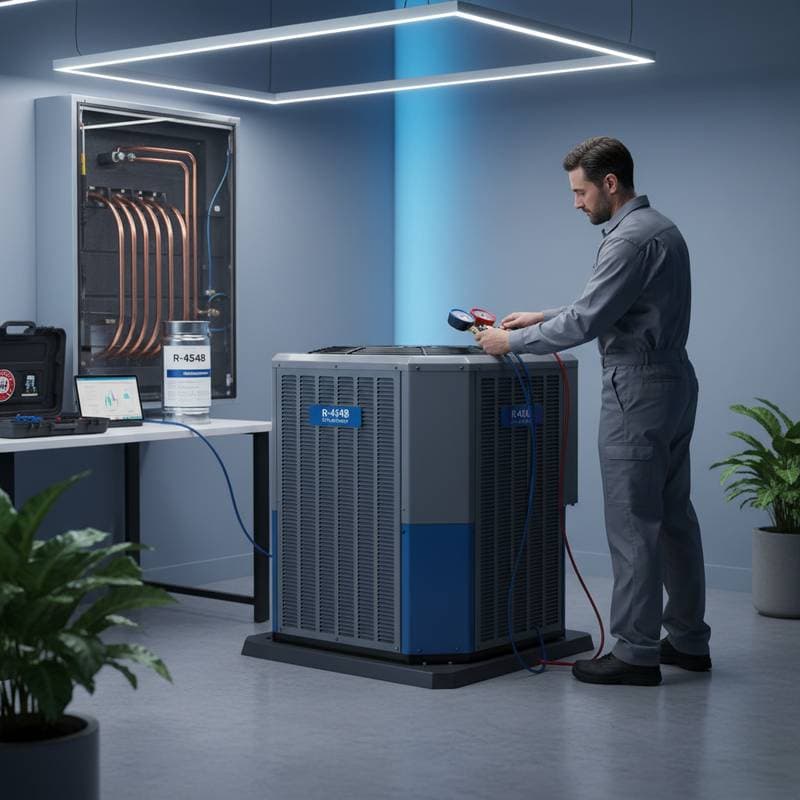
R-454B is not a drop-in replacement for R-410A. Mixing the two can cause compressor damage and void warranties. New systems must be specifically rated for R-454B, with compatible compressors, expansion devices, and line sets. If you plan to upgrade, check that your indoor coil and refrigerant lines are rated for A2L use. Electrical components like contactors and sensors may also need replacement.
Contractors must use recovery equipment certified for A2L refrigerants and follow updated ventilation and leak detection requirements during installation.
Key Performance Comparisons
| System Type | Refrigerant | Efficiency (SEER2) | Approx. Operating Cost (Moderate Climate) | Environmental Rating (GWP) |
|---|---|---|---|---|
| Legacy Split System | R-410A | 14-16 | Medium | 2088 |
| New Split System | R-454B | 15-18 | Lower | 466 |
| Variable-Speed Heat Pump | R-454B | 18-22 | Lowest | 466 |
Preparing for the Upgrade
Homeowners planning spring HVAC maintenance should start by confirming their system refrigerant type. Schedule a professional inspection to evaluate compatibility with future R-454B models. If your system is nearing the end of its lifespan, replacement with an R-454B-ready unit will ensure long-term compliance and efficiency.
Also verify that your contractor is certified to handle A2L refrigerants and follows proper leak testing and evacuation procedures. Upgrading thermostats or controls can further enhance efficiency once the new refrigerant system is installed.
Steps for a Smooth Transition
Schedule an assessment with a certified technician to review your current setup. Confirm all components meet A2L standards before any refrigerant change. Monitor system performance after installation to verify energy savings and reliability.