2026 Insurance Changes Prompt Basement Flood Protection
Choosing not to address basement flooding risks before new insurance policy updates take effect can lead to higher premiums and limited coverage. Homeowners across flood-prone regions are beginning to realize that insurance providers are tightening requirements for water damage claims. These adjustments are designed to encourage proactive mitigation.
Basements without proper flood protection could soon be seen as uninsurable or extremely costly to cover. Understanding how flood insurance is evolving and how basement waterproofing fits into this system is key. Flood proofing is no longer a recommendation for homeowners in moderate to high risk zones.
How Flood Insurance Assessments Are Changing
Insurance companies are revising how they assess risk for properties with below grade living spaces. The new evaluation models focus less on broad flood maps and more on property specific data such as foundation elevation, drainage design, and soil permeability. If your home basement sits near or below the local water table, insurers may classify it as high risk unless specific mitigation measures are verified.
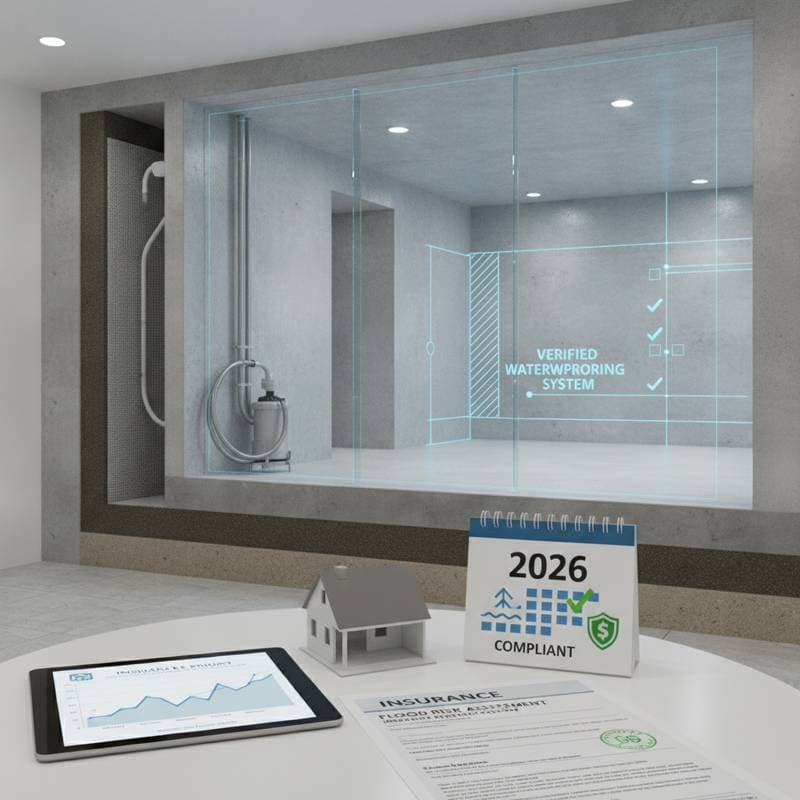
These changes are tied to updated flood modeling tools that incorporate rainfall intensity, urban drainage performance, and basement water ingress probability. In practice, this means insurers want proof that your basement can manage water intrusion through engineered systems rather than relying solely on sump pumps or sealants.
Key Flood Proofing System Types
Interior Drainage Systems
These systems capture water at the basement perimeter before it reaches the floor surface. A perforated drain tile directs water to a sump basin where a submersible pump discharges it to an exterior drain or storm system. High efficiency pumps like the Zoeller M98 or Liberty 257 operate at roughly 43 gallons per minute.
Exterior Waterproofing Membranes
Exterior membranes block water infiltration before it contacts the concrete structure. Polymer based membranes with elongation ratings above 1200 percent can handle soil movement without cracking. Insurers often consider these systems a premium mitigation step because they prevent deterioration of the structural substrate.
Backflow Prevention Valves
In areas with combined sewer systems, backflow valves keep wastewater from backing up into basements during heavy rain. These devices are becoming mandatory in several municipalities. Valves with a 4 inch PVC body and stainless steel flapper assembly can handle up to 80 psi of back pressure.
Sump Pump Redundancy Systems
A secondary pump or water powered backup ensures operation during power outages. Some battery backup models can provide continuous pumping for up to 7 hours. Insurance inspectors may require written confirmation that the backup has been tested within the past year.
Efficiency and Cost Comparisons
| System Type | Average Efficiency Rating | Installation Cost | Annual Maintenance | Typical Energy Use | Estimated Insurance Discount |
|---|---|---|---|---|---|
| Interior Drainage + Sump | High | $5,000 - $8,000 | $150 | 400 kWh | 10-15% |
| Exterior Membrane | Very High | $8,000 - $15,000 | $200 | Minimal | 15-20% |
| Backflow Valve | Moderate | $800 - $1,200 | $50 | None | 5-10% |
| Dual Pump Redundancy | High | $2,000 - $3,000 | $100 | 600 kWh | 10-15% |
Insurers typically evaluate these systems not only by their cost but by their capacity to reduce claim probability. A well designed setup that integrates multiple layers of protection can cut the likelihood of a major water claim by more than half.
Integration with Existing Infrastructure
Flood proofing measures must be compatible with your home foundation, drainage slope, and electrical system. In older homes, the foundation may lack a vapor barrier, which requires interior excavation to install a new drain tile. Homes with existing sump pits should have electrical circuits rated for continuous pump operation.
If your basement includes finished living space, vapor management becomes more complex. Waterproofing materials must be non permeable yet allow for controlled drying to prevent mold growth. Closed cell spray foam insulation and mechanical ventilation can maintain balanced humidity levels around 45 to 55 percent.
Balancing Costs and Long Term Value
While flood proofing upgrades can be expensive, they often pay for themselves through reduced insurance premiums and avoided damage. The average cost of a single basement flood cleanup can exceed $25,000. Insurance providers are beginning to factor verified waterproofing into premium calculations.
Energy efficiency also plays a role. A drier basement requires less dehumidification, which can lower HVAC operating costs by up to 10 percent each year. Over the lifespan of the waterproofing system, this operational efficiency contributes to a lower total cost of ownership.
When to Involve Professionals
Flood proofing involves a network of systems that interact with structural, electrical, and plumbing components. Homeowners should consult a licensed structural engineer if foundation cracks exceed one eighth of an inch or show horizontal displacement. A mechanical contractor can evaluate sump pump capacity relative to local groundwater levels.
Scheduling a Professional Assessment
Upgrading your basement waterproofing before insurance requirements tighten avoids rushed installations and higher costs. Start by scheduling a professional inspection to identify vulnerabilities such as floor joint leaks, failed sealants, or inadequate drainage slopes. Flood proofing protects more than property value. It preserves the structural integrity of your home and secures access to affordable insurance coverage.