Breakdown of 2025 Mini-Split AC Costs for Homeowners
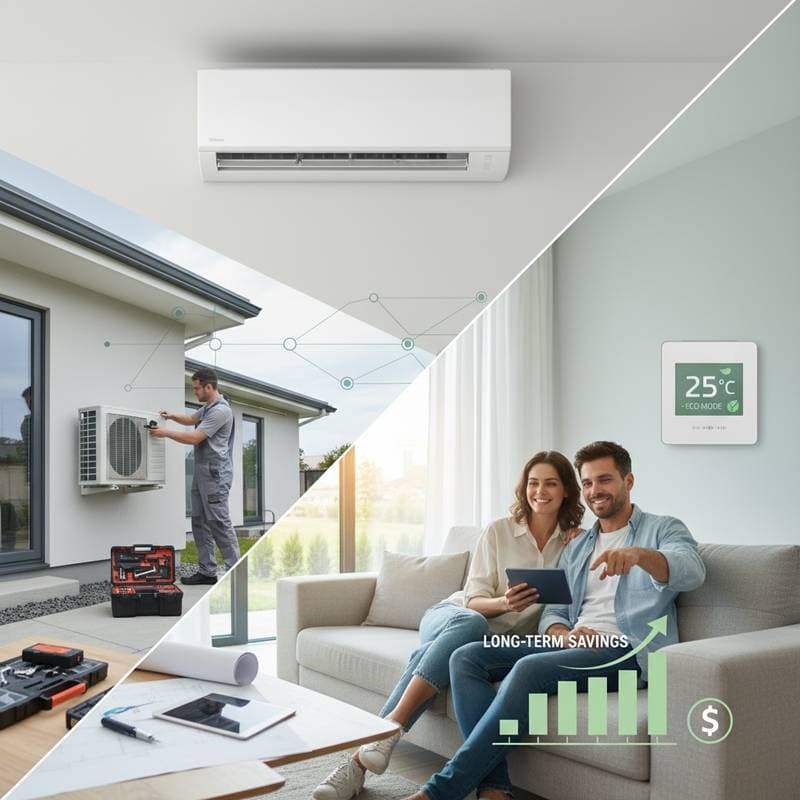
Homeowners frequently weigh comfort against efficiency and budget constraints. Mini-split air conditioning systems emerge as a compelling option for targeted cooling and heating in new constructions or older homes lacking ductwork. These ductless units deliver quiet performance and zoning flexibility, yet their pricing involves multiple layers. This guide dissects the elements influencing mini-split costs, outlines expected expenses, and provides strategies for informed purchasing decisions.
Essential Cost Components
1. Equipment Costs
Equipment forms the core of mini-split expenses, often accounting for 50 to 70 percent of the total. Several factors shape this investment.
- System Capacity: Expressed in BTUs, capacity matches the system's power to room size. A 9,000 BTU unit suits a 400-square-foot space, while a 36,000 BTU model covers up to 1,500 square feet. Single-zone systems start at $800 for basic models, escalating to $2,500 for high-capacity versions.
- Number of Indoor Units: Single-zone setups pair one indoor handler with an outdoor compressor, typically costing $1,000 to $3,000. Multi-zone configurations link two to eight indoor units to a single outdoor unit, pushing prices to $2,500 to $10,000 based on zones.
- Brand and Efficiency Ratings: Established brands like Mitsubishi or Daikin command premiums for superior build quality. SEER ratings above 20 indicate top efficiency, potentially reducing annual energy costs by 30 percent compared to lower-rated units. Expect to pay $1,500 more for a 22 SEER model versus a 14 SEER equivalent.
Basic single-zone systems range from $800 to $2,000, while multi-zone options climb to $5,000 or higher due to expanded hardware.
2. Installation Labor
Labor constitutes 30 to 50 percent of overall costs, reflecting the technical demands of setup. Certified technicians manage refrigerant charging, electrical integration, and structural adjustments to comply with safety standards.
Key variables include:
- Complexity of Layout: Short runs under 25 feet incur standard fees of $500 to $1,500. Longer distances or multi-story routing can add $200 per 25 feet for extended labor.
- Mounting Type: Wall-mounted units require minimal prep at $300 to $800. Ceiling cassettes or floor consoles demand custom framing, increasing costs to $1,000 to $2,000.
- Electrical Upgrades: Adding a 240-volt dedicated circuit costs $200 to $600 if your panel supports it; full panel upgrades may reach $1,500.
Single-zone installs in accessible spaces average $1,000 in labor. Multi-zone projects or retrofits in historic homes often exceed $2,500 owing to intricate wiring and modifications.
3. Additional Materials and Accessories
Supplementary items ensure durability and aesthetics, contributing 5 to 15 percent to the budget.
- Mounting brackets or vibration-dampening pads for the outdoor unit: $50 to $150.
- Insulated copper refrigerant lines: $100 to $400 per 25 feet.
- Drainage solutions and protective line covers: $75 to $200.
- Wiring, conduits, and disconnect boxes: $100 to $300.
- Wi-Fi-enabled thermostats: $150 to $400 for enhanced control.
These elements prevent issues like corrosion or noise, justifying their inclusion for long-term system integrity.
DIY vs Professional Installation
Online videos may suggest mini-split installation as straightforward, but it demands HVAC expertise and regulatory adherence.
DIY Installation:
Pre-charged line sets in kits simplify refrigerant handling, slashing labor to zero for capable users. Costs drop by $500 to $2,000, but risks include voided warranties and efficiency losses from improper sealing. Limit DIY to single-zone, small-room applications if you possess electrical and plumbing skills.
Professional Installation:
Contractors guarantee code compliance and optimal performance, preserving manufacturer warranties that span 5 to 12 years. This approach suits most scenarios, especially multi-zone systems where balancing refrigerant flow proves critical.
For novices, professional service outweighs DIY savings through avoided repairs, which can exceed $1,000 for leaks or electrical faults.
When to Call the Pros
Certain aspects necessitate expert intervention to avert hazards and inefficiencies.
- Electrical Work: High-amperage connections risk fire or shock without certification.
- Refrigerant Handling: EPA regulations restrict charging to licensed technicians; errors release harmful gases.
- Complex Layouts: Multi-zone balancing prevents uneven cooling and compressor strain.
- Building Codes: Local permits, often $100 to $300, require professional filing and inspections.
Upfront professional fees of $1,000 to $3,000 yield reliability, potentially saving thousands in future corrections.
Cost Comparison Example
The following table illustrates cost variations by system scale and installation method. Figures represent national averages for 2025, adjusted for inflation and material trends.
| System Type | Equipment Cost | Installation Cost | Total Estimated Range |
|---|---|---|---|
| Single-Zone (Small Room, DIY) | $800–$1,500 | $0–$500 | $800–$2,000 |
| Single-Zone (Professional) | $1,000–$2,500 | $800–$1,500 | $1,800–$4,000 |
| Multi-Zone (2–4 Rooms) | $2,500–$6,000 | $1,500–$3,000 | $4,000–$9,000 |
| Whole-Home (5+ Zones) | $6,000–$15,000 | $3,000–$6,000 | $9,000–$21,000 |
Obtain site-specific quotes from three contractors to refine these estimates for your property.
Maintenance and Longevity
Routine care extends mini-split lifespan to 15–20 years while upholding efficiency.
- Clean or replace air filters monthly during peak seasons to sustain airflow and indoor air quality.
- Clear debris from the outdoor condenser quarterly to prevent overheating.
- Monitor for refrigerant leaks via frost on coils or hissing sounds; address promptly to avoid compressor damage.
- Arrange annual professional tune-ups at $150–$300 to calibrate performance and detect wear.
Consistent upkeep minimizes energy use by 10–20 percent and averts costly breakdowns averaging $500–$2,000.
Energy Efficiency Tips
Adopt these practices to optimize your mini-split's output and reduce utility bills by up to 25 percent.
- Seal doors and windows to retain conditioned air.
- Pair with ceiling fans on low speed to distribute temperatures evenly.
- Adjust settings to 78°F in summer and 68°F in winter for balanced comfort.
- Integrate smart thermostats for scheduling, learning occupancy patterns to automate operations.
Such measures enhance zoning benefits, ensuring targeted climate control without excess runtime.
Assessing Your Home for Optimal Sizing
Evaluate insulation, sun exposure, and occupancy before selection. A Manual J load calculation by a professional, costing $200–$400, determines precise BTU needs. Avoid undersizing, which causes constant cycling, or oversizing, which leads to humidity issues and higher costs.
Retain installation records, including serial numbers and service logs, for warranty claims and resale value. This preparation positions your mini-split as a durable asset in home improvement.