Key Takeaways
- Thermal imaging locates concealed moisture prior to the onset of costly mold proliferation.
- The technology identifies temperature discrepancies that indicate damp regions behind walls or beneath floors.
- Periodic thermal assessments enable homeowners to avert structural deterioration and promote salubrious indoor air.
What Is Thermal Imaging and How Does It Detect Moisture?
Quick answer: Thermal imaging utilizes infrared technology to perceive temperature disparities, accentuating cooler regions that frequently indicate entrapped moisture.
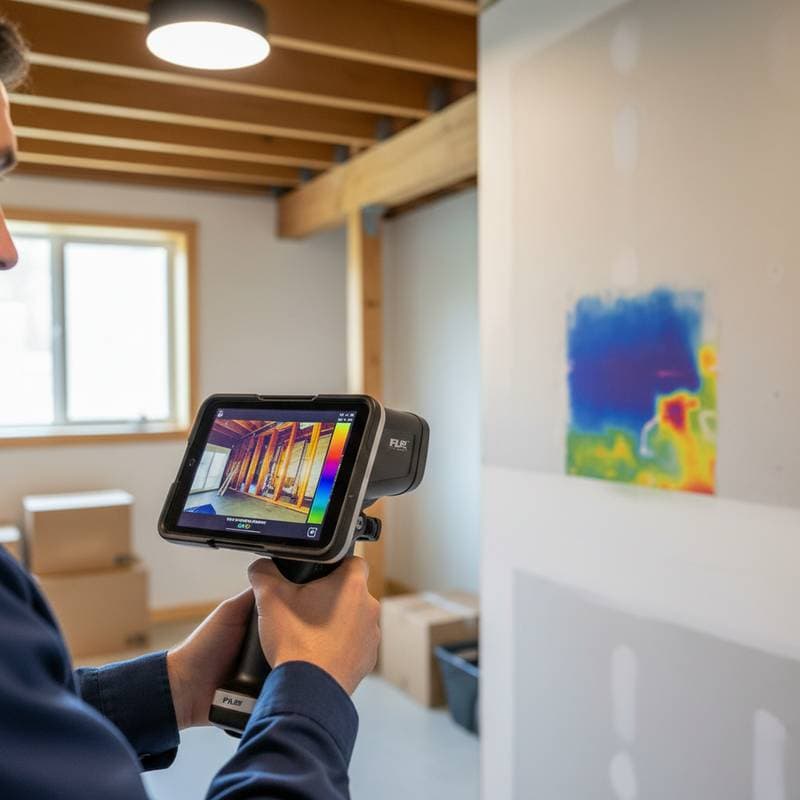
A thermal camera measures surface temperatures and transforms them into color-coded visuals. Dry substances radiate heat uniformly, whereas moist substances remain cooler owing to the evaporative process. This contrast manifests as discernible patterns on the thermal image, permitting visualization of potentially wet zones that appear unremarkable to the unaided eye.
Home inspectors, renovation experts, and vigilant homeowners employ this technique to identify leaks in ceilings, under flooring, or within walls without resorting to destructive methods. It provides a non-intrusive perspective on prospective water damage, proving invaluable for proactive intervention.
Highlights
- Rapid identification: Uncovers concealed dampness prior to the emergence of apparent damage.
- Non-destructive: Eliminates the necessity to dismantle drywall or flooring.
- Precise targeting: Directs remediation efforts to the precise origin of moisture.
- Health-oriented: Mitigates the potential for health complications associated with mold.
Why Is Moisture Detection So Important?
Short answer: Concealed moisture can precipitate mold growth, structural degradation, and diminished indoor air quality if not addressed promptly.
Moisture represents one of the foremost perils to a residence's durability. It may infiltrate via roof fissures, plumbing malfunctions, or condensation arising from inadequate ventilation. Upon entry, it can compromise insulation, cause wood framing to expand, or lead to the disintegration of drywall. The paramount hazard, however, lies in mold development. Mold flourishes in humid, obscured settings and commences proliferation within days of sustained moisture exposure.
Established mold disperses spores capable of inciting allergic responses and respiratory ailments. Such consequences can render daily habitation distressing, particularly for children or individuals with sensitivities. Early moisture detection through thermal imaging forestalls these complications before they intensify.
How Does Thermal Imaging Compare to Traditional Moisture Testing?
Short answer: Thermal imaging identifies moisture more swiftly and encompasses broader areas without inflicting physical harm.
Conventional testing typically entails the use of moisture meters. Although efficacious, these devices necessitate direct surface contact and assess only limited segments at a time. Overlooking the appropriate location may result in entirely missing the issue.
Thermal imaging, by contrast, examines extensive surfaces instantaneously. It delineates temperature configurations suggestive of moisture, facilitating thorough evaluation. Experts frequently integrate both approaches for validation.
| Method | Coverage Area | Accuracy | Invasiveness | Typical Use |
|---|---|---|---|---|
| Moisture Meter | Small, specific points | High when in contact | Slightly invasive | Confirming moisture at a specific spot |
| Thermal Imaging | Large surfaces | High when interpreted correctly | Non-invasive | Detecting hidden or early-stage moisture |
This dual methodology affords homeowners a comprehensive understanding of moisture scope and origin, minimizing speculation in repair endeavors.
Where in Your Home Is Thermal Imaging Most Useful?
Short answer: The tool proves most efficacious in moisture-prone locales such as bathrooms, basements, roofs, and window perimeters where leaks remain obscured.
Moisture frequently conceals itself in ostensibly arid zones harboring inconspicuous leaks. Thermal imaging discloses these vulnerable areas expeditiously. Primary inspection sites encompass:
- Bathrooms and Kitchens: Adjacent to sinks, bathtubs, and dishwashers, where plumbing connections may seep.
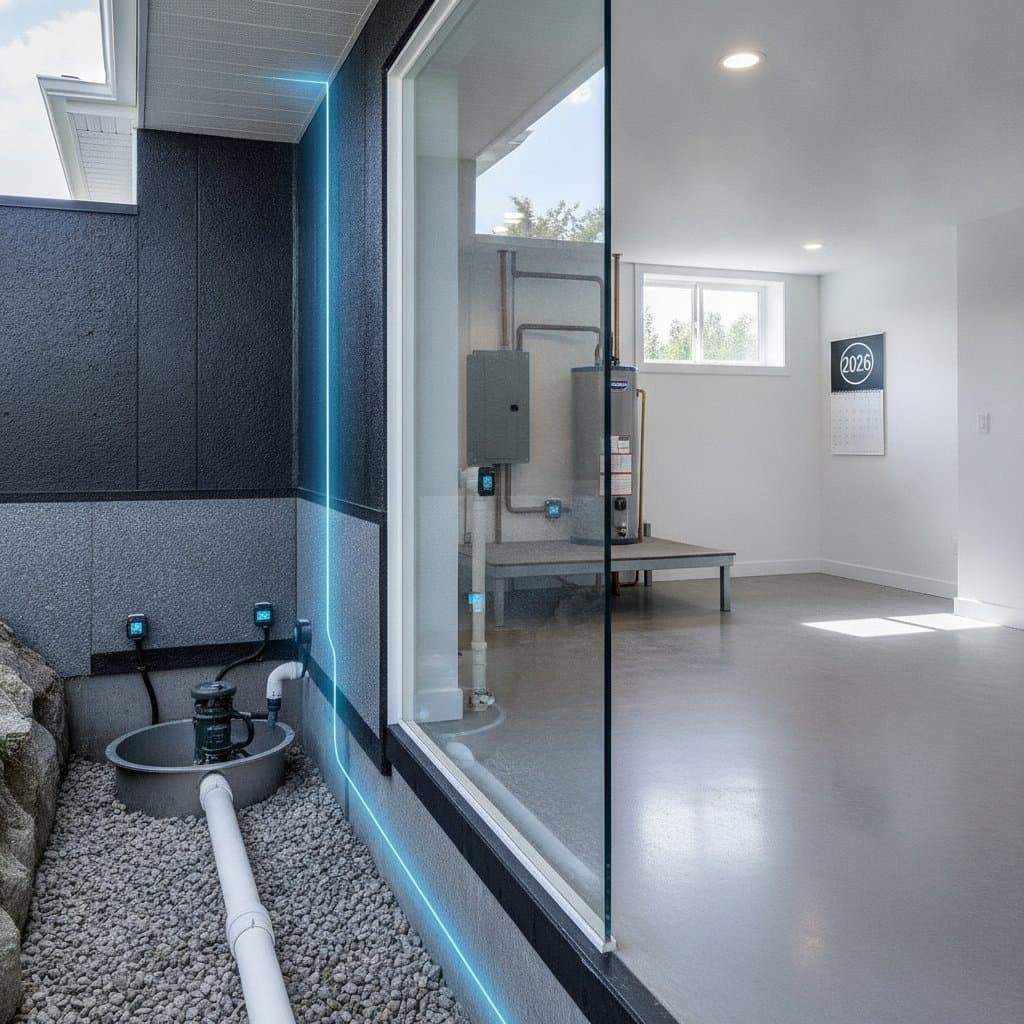
- Basements: Near foundational elements or sump pump installations, where humidity accumulates.
- Roofs and Attics: Beneath shingles or insulation, where minor leaks evolve undetected.
- Windows and Doors: Along seals, where condensation or precipitation may penetrate.
- HVAC Systems: Surrounding ducts or vents, where condensation might accumulate.
These regions warrant routine scanning, particularly in homes with prior leak or flood history. To apply, direct the camera systematically across surfaces during stable environmental conditions for optimal results.
How Does Thermal Imaging Prevent Mold Damage?
Short answer: It identifies nascent moisture, enabling leak repairs prior to mold colonization.
Mold spores pervade virtually all surroundings, yet they pose threats only when moisture sustains their expansion. Thermal imaging pinpoints humid areas in initial phases, allowing remediation of humidity sources before mold establishes.
Following moisture localization, implement drying procedures, rectify leaks, and oversee conditions with dehumidifiers or enhanced ventilation. Mold prevention demands considerably less effort and expense than subsequent eradication. A concise scan presently can obviate thousands in future remediation expenditures.
Benefits of Early Detection
- Safeguards the residence's framework and interior elements.
- Fosters healthier air quality for occupants.
- Circumvents costly overhauls stemming from undetected corrosion.
- Upholds property valuation through demonstrated maintenance.
Can Homeowners Use Thermal Cameras Themselves?
Short answer: Affirmative, yet expert analysis guarantees precision.
Affordable thermal cameras for consumers integrate with smartphones and suit periodic verifications, particularly in suspected zones. Nonetheless, deciphering thermal visuals requires expertise. A shadowed or chilled area could stem from mere illumination, airflow, or reflective cold sources rather than moisture.
Certified inspectors possess the acumen to discern nuanced discrepancies and corroborate findings via moisture meters. For substantial leaks or persistent dampness, engaging a specialist conserves resources and precludes misguided interventions. Homeowners might commence with basic scans post-rainfall, documenting anomalies for professional review.
How Often Should You Schedule Thermal Inspections?
Short answer: Annually or subsequent to leaks, storms, or renovations constitutes optimal frequency.
Consistent evaluations anticipate seasonal fluctuations affecting moisture dynamics. For instance, thermal variations may induce condensation near attic outlets or within wall voids. Post-deluge assessments verify gutter efficacy and roofing resilience.
Numerous homeowners incorporate thermal inspections into standard upkeep, synchronizing with HVAC tune-ups or roof evaluations. This practice sustains moisture oversight and facilitates timely resolution of emergent concerns. Track inspection dates in a home maintenance log to ensure adherence.
FAQ: Common Questions About Thermal Moisture Detection
Will thermal imaging show mold directly?
No, it discloses moisture configurations exclusively. Mold typically emerges in moisture-concentrated sites, so imaging aids in preempting growth by targeting those locales.
Is thermal imaging safe for walls and electrical systems?
Yes. It employs infrared radiation, which remains harmless and contact-free. No jeopardy exists to electrical wiring or structural components.
Can thermal imaging detect leaks in concrete?
It identifies cooler surface regions indicative of moisture permeation via fissures or permeable sections, rendering it beneficial for basement barriers or slab foundations. Conduct scans during moderate temperatures to distinguish moisture from ambient cooling.
Safeguarding Your Home Through Proactive Monitoring
Thermal imaging furnishes a scientifically grounded method to shield residences from imperceptible moisture perils. Whether self-administered or professionally executed, its revelations empower decisive, informed actions. Addressing a minor thermal variance now can forestall extensive harm that might otherwise accrue over months.