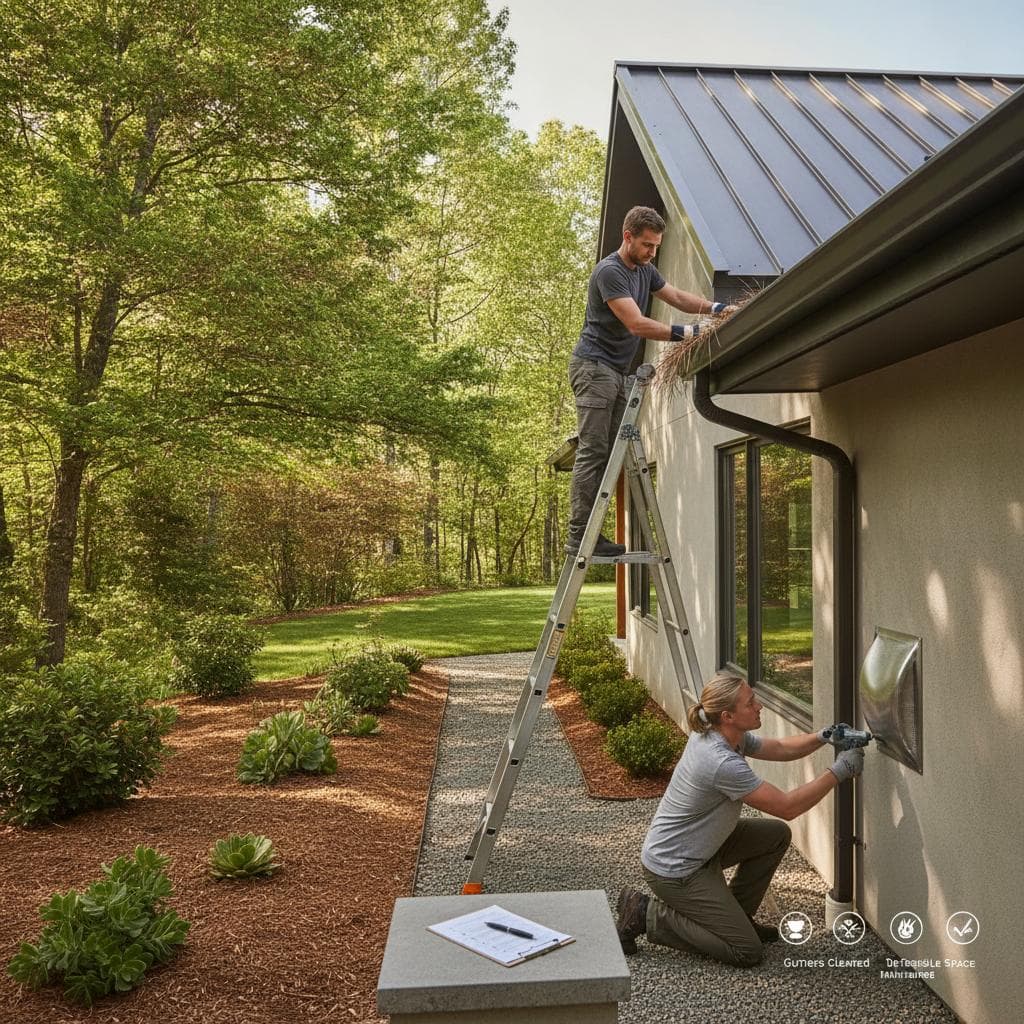
Spring Maintenance to Block Wildfire Embers
Spring offers homeowners a practical window to strengthen defenses against wildfire embers. These airborne sparks travel far ahead of flames and can ignite homes through small openings or accumulated debris. Focused tasks completed now reduce ignition risks and support long term property resilience.
Priority Tasks for Ember Protection
- Clear roofs, gutters, and vents of all dry leaves and needles.
- Install or upgrade vents with fine mesh screens rated for ember resistance.
- Replace wood mulch with gravel or stone within five feet of exterior walls.
- Trim tree branches to maintain at least ten feet of clearance from roofs and decks.
- Inspect and seal gaps around siding, windows, and utility penetrations.
Vulnerable Home Features and Targeted Fixes
Roofs collect fine fuels that ignite quickly when embers land. Regular removal of debris combined with inspection of flashing prevents small fires from starting. Vents remain a primary entry point because standard mesh allows sparks to pass into attics where insulation can smolder. Replacement with ember rated vents that use stainless steel mesh or internal baffles stops this pathway while preserving airflow.
Gutters filled with organic matter act as ready fuel. Metal mesh screens fitted over the opening keep debris out and reduce the chance of ignition. Decks and fences constructed from untreated lumber also require attention. Application of fire retardant coatings or replacement with ignition resistant materials limits flame spread near the structure.
Creating Effective Defensible Space
A defensible space consists of managed zones that interrupt fire movement. Begin with the area closest to the house by maintaining short grass and removing dead vegetation on a weekly schedule during dry periods. Extend this zone outward by spacing tree crowns so that branches from separate trees do not touch. Removal of lower limbs on larger trees prevents ground fire from climbing into the canopy.
Gravel borders around the foundation provide a noncombustible surface that requires minimal upkeep. Native, high moisture plants placed in this zone further reduce fuel load without sacrificing visual appeal. These steps together slow ember driven ignition and give residents additional time to respond.
Value of Ember Resistant Vents
Ember resistant vents represent one of the highest impact upgrades available at modest cost. The mesh or baffle designs block particles as small as one eighth inch while meeting building code airflow requirements. Installation typically requires only basic tools and can be completed in a single weekend for most homes. Pairing these vents with sealed soffits and metal flashing around openings creates a continuous barrier that addresses multiple entry points at once.
Ongoing Seasonal Practices
Gutters benefit from cleaning at the start of spring and again before peak dry weather arrives. Even modest accumulations of needles can ignite within minutes of ember contact. Selection of low resin ground covers such as succulents or irrigated native grasses keeps plantings safe near the home. Metal or tile roofing sheds embers more effectively than wood or asphalt shingles and should be considered during any roof replacement project.
Home Protection Through Seasonal Care
Consistent attention to these maintenance items converts routine spring work into meaningful protection. The combined effect of cleared surfaces, upgraded vents, and managed vegetation creates multiple layers of defense that preserve both safety and property value.