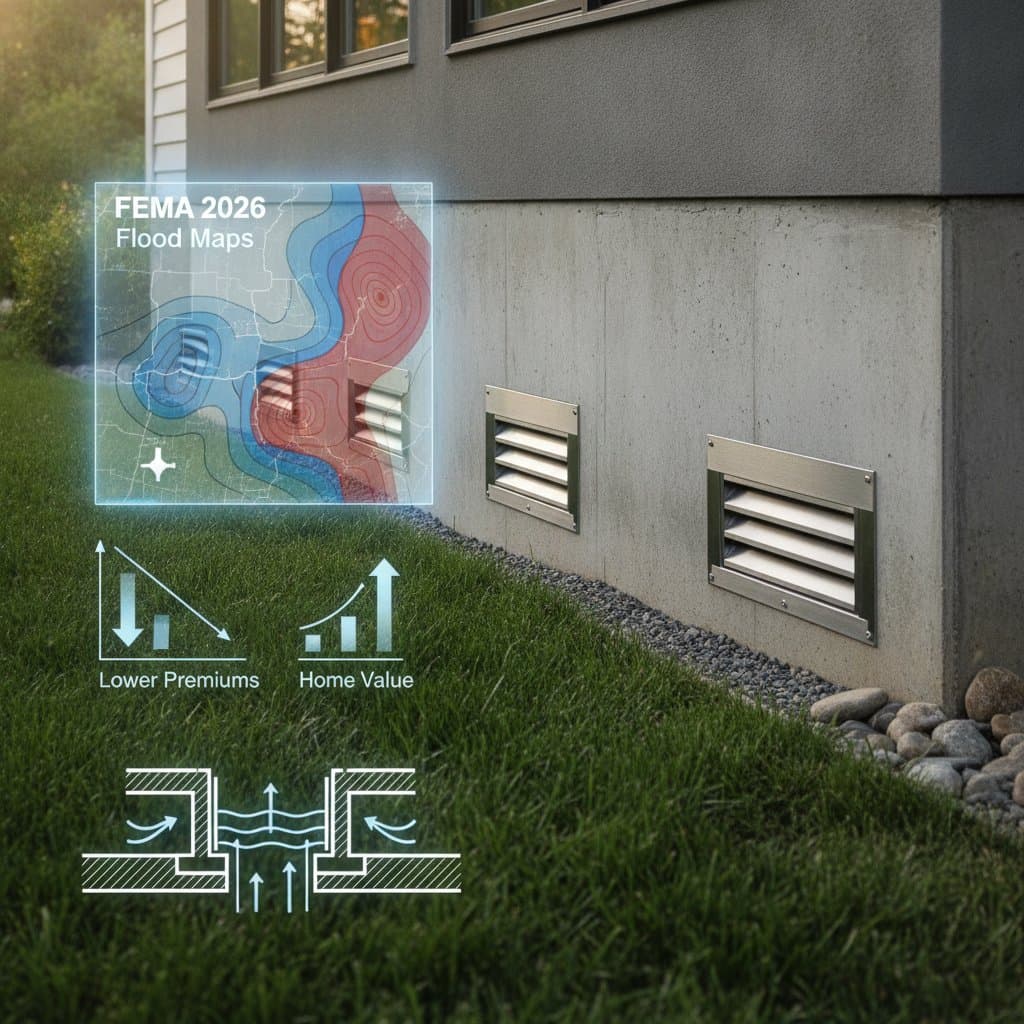
FEMA 2026 Maps Elevate the Role of Flood Vents
FEMA updates scheduled for 2026 will redraw flood boundaries and place more properties inside high risk zones. Homeowners with enclosed spaces below the new base flood elevation must add flood vents to meet building codes. Proper installation protects foundations from hydrostatic pressure and qualifies properties for reduced insurance rates.
Factors That Lower Cost
Several site conditions reduce the expense of retrofitting. Pre existing openings allow contractors to replace old vents without new framing. Vinyl or wood skirting accepts cuts more readily than masonry. Homeowners who mark locations and clear debris in advance shorten labor time.
Budget between eight and twelve dollars per square foot of foundation wall. Include at least a ten percent contingency for unexpected code requirements.
Money Saving Strategies
Flood vent installation can lower premiums and unlock local incentives. Combine the work with masonry repointing or basement waterproofing to share labor and reduce total cost by fifteen to twenty percent. Engineered vents cost more individually yet satisfy coverage ratios with fewer units.
Schedule work during late summer when contractor demand drops. Contact the building department to learn about municipal rebates. Obtain three written quotes to compare warranties and labor rates.
Step by Step Process for Homeowners
Step 1: Verify Your Flood Zone
Visit the FEMA flood map service center or county GIS portal. Confirm whether the property now falls inside an A or V zone. Enclosed areas below the flood elevation require vents.
Step 2: Measure Your Enclosed Space
Calculate the square footage below the flood line. Divide that figure by the net open area rating of the chosen vent model to determine quantity.
Step 3: Plan Vent Placement
Position vents on at least two opposite walls to allow water to flow through. Keep the bottom of each opening no more than one foot above grade.
Step 4: Obtain Permits
Submit a simple plan and the manufacturer specification sheet to the local building department. Approval usually arrives within one to two weeks.
Step 5: Installation
Cut openings to the planned dimensions. Secure each unit and seal the perimeter with waterproof caulk. Test the flap or door for free movement and confirm that certification labels remain visible.
Step 6: Inspection and Documentation
Request a final inspection. Retain the signed approval form for the insurance carrier.
ROI and Long Term Benefits
Flood vents limit foundation damage that can exceed ten thousand dollars. Documented compliance often reduces annual premiums by ten to twenty five percent. A twelve hundred dollar system on a three hundred thousand dollar home can protect tens of thousands in resale value.
Prepare Your Home Ahead of Updated Maps
Insurance carriers and municipalities adopt new maps on their own schedules. Confirm current zone status and request quotes from certified installers before enforcement begins. Integrate vents during any planned foundation or renovation project to avoid later wall removal.
Coastal or river adjacent properties benefit from stainless steel or automatic models that satisfy both FEMA and International Code Council standards.
Ongoing Care for Flood Vents
Inspect units each spring and fall. Clear debris, replace damaged components, and record the work for insurance files. Consistent maintenance preserves both performance and compliance status.