Floor Plans That Balance Family Closeness and Privacy
Key Takeaways
- Effective multigenerational floor plans establish clear zones that support both privacy and daily interaction.
- Features such as dual kitchens, separate entries, and adaptable rooms improve comfort for all residents.
- Early planning for accessibility and flexibility reduces future renovation needs.
Core Elements of Successful Multigenerational Layouts
A functional multigenerational home allows each generation to maintain independence while sharing key areas. Layouts succeed when they divide the residence into distinct zones connected by open living spaces. Flexible storage and wide hallways further support smooth movement between private and common areas.
Essential Design Priorities
- Privacy zones that give each generation a dedicated bedroom wing or suite.
- Central gathering spots such as large kitchens and living rooms.
- Rooms that convert easily as household needs shift.
- Accessible details including wider doorways and main floor suites.
Zoning Strategies for Privacy and Connection
Identify long term residents first, then assign spaces accordingly. An in law suite typically contains a bedroom, sitting area, and compact kitchenette. Families with young children may prefer closer bedroom placement, whereas older relatives often value a separate wing. Sliding doors and short hallways that lead into shared rooms preserve a sense of unity without constant overlap. Shared laundry or mudroom locations can serve as natural daily meeting points.
Proven Layout Configurations
Three arrangements consistently deliver both separation and cohesion.
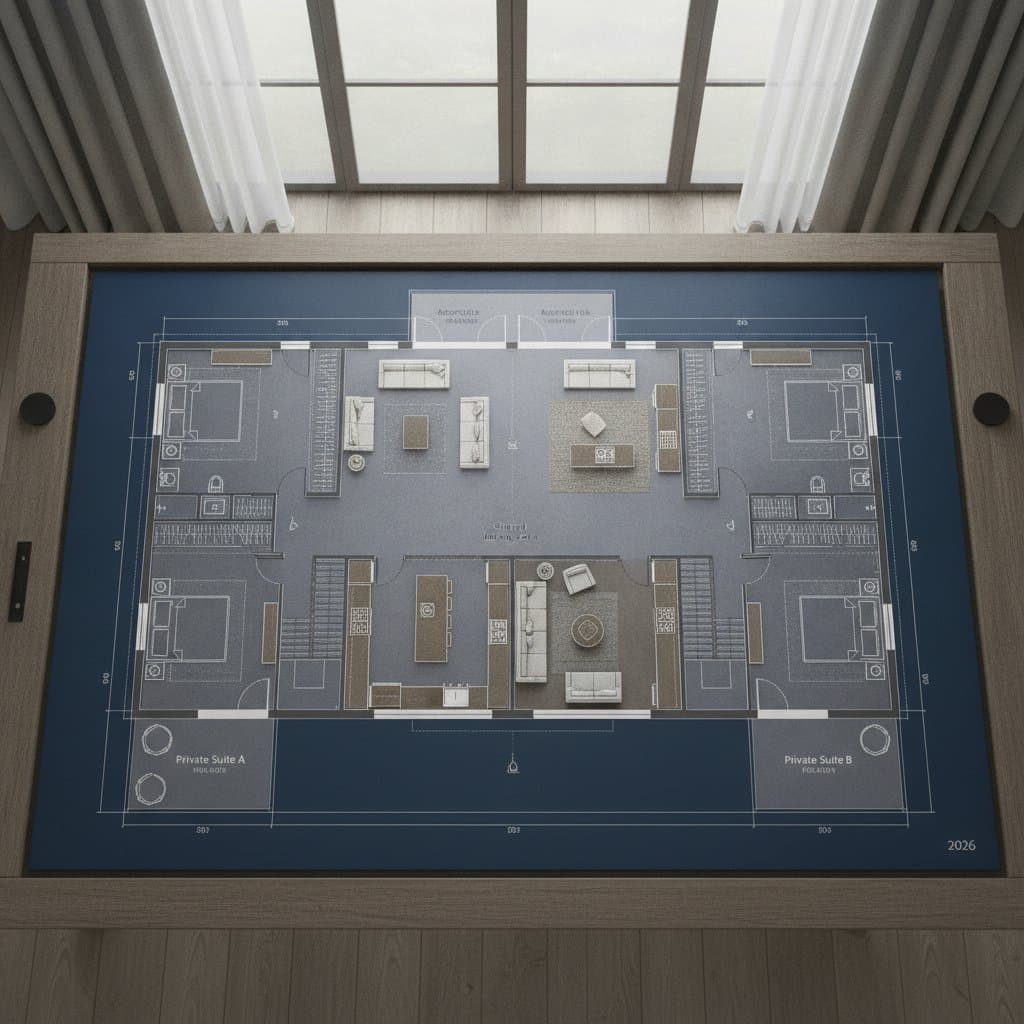
- Split wing plans place bedrooms on opposite sides of a central living core, giving quieter retreats while keeping common rooms accessible.
- Attached casitas or guest suites include private entrances and small kitchenettes suitable for extended family or returning adult children.
- Dual primary suites on different levels provide full amenities for two adult households without sacrificing shared facilities.
Layout Comparison
| Layout Type | Privacy Level | Shared Access | Best Fit |
|---|---|---|---|
| Split wing | Moderate | Direct | Households with teens or grandparents |
| Attached suite | High | Moderate | Relatives seeking autonomy |
| Dual primary | Balanced | Direct | Multi adult homes |
Consider sound travel, daylight patterns, and outdoor connections when selecting a plan. A shared courtyard or paired patio doors can tie zones together visually.
Features That Promote Daily Independence
Separate entrances reduce foot traffic through main living areas. Compact kitchenettes allow private meal preparation. Bathrooms equipped with walk in showers, grab bars, and slip resistant flooring increase safety. Layered lighting with motion sensors in hallways aids nighttime navigation. Built in storage along corridors minimizes clutter in shared zones. Soundproofing between levels permits one group to rest while another uses the living room.
Shared Spaces That Encourage Interaction
Open kitchens with large islands naturally draw people together for meals or conversation. Living rooms arranged with distinct furniture clusters support both group activities and quiet reading. Outdoor extensions such as covered patios or fire pit areas provide additional gathering spots. Flexible dining tables can serve homework sessions or craft projects during the day.
Adaptable Elements for Long Term Value
Plan plumbing rough ins in flexible rooms to simplify future additions. Universal design details such as lever handles and zero threshold entries benefit every age. A den can become a bedroom once a closet is added. First floor suites with full baths remain useful for aging relatives or visiting guests. Smart controls for lighting, temperature, and locks streamline management across multiple residents.
Cost Considerations and Returns
Added plumbing, insulation, and accessibility measures typically increase initial construction costs by 10 to 20 percent. Shared housing expenses, reduced childcare or elder care outlays, and lower utility duplication often offset the premium over time. Flexible designs also tend to hold stronger resale value because they appeal to buyers seeking space for extended family.
Practical Questions Homeowners Raise
Sound absorbing rugs and acoustic panels help maintain calm in common areas. Quiet hours agreed upon by all residents further support harmony. New construction offers maximum layout control, while targeted remodeling works when existing walls allow separate entries. Homes with accessory units frequently attract buyers and sell faster in many markets. When one generation departs, convertible rooms can function as offices, rentals, or guest quarters.
Putting the Design Into Daily Use
A well planned multigenerational residence supports evolving family rhythms through thoughtful separation and inviting common ground. Residents gain convenience, reduced expenses, and sustained connection without sacrificing personal space.