Key Takeaways
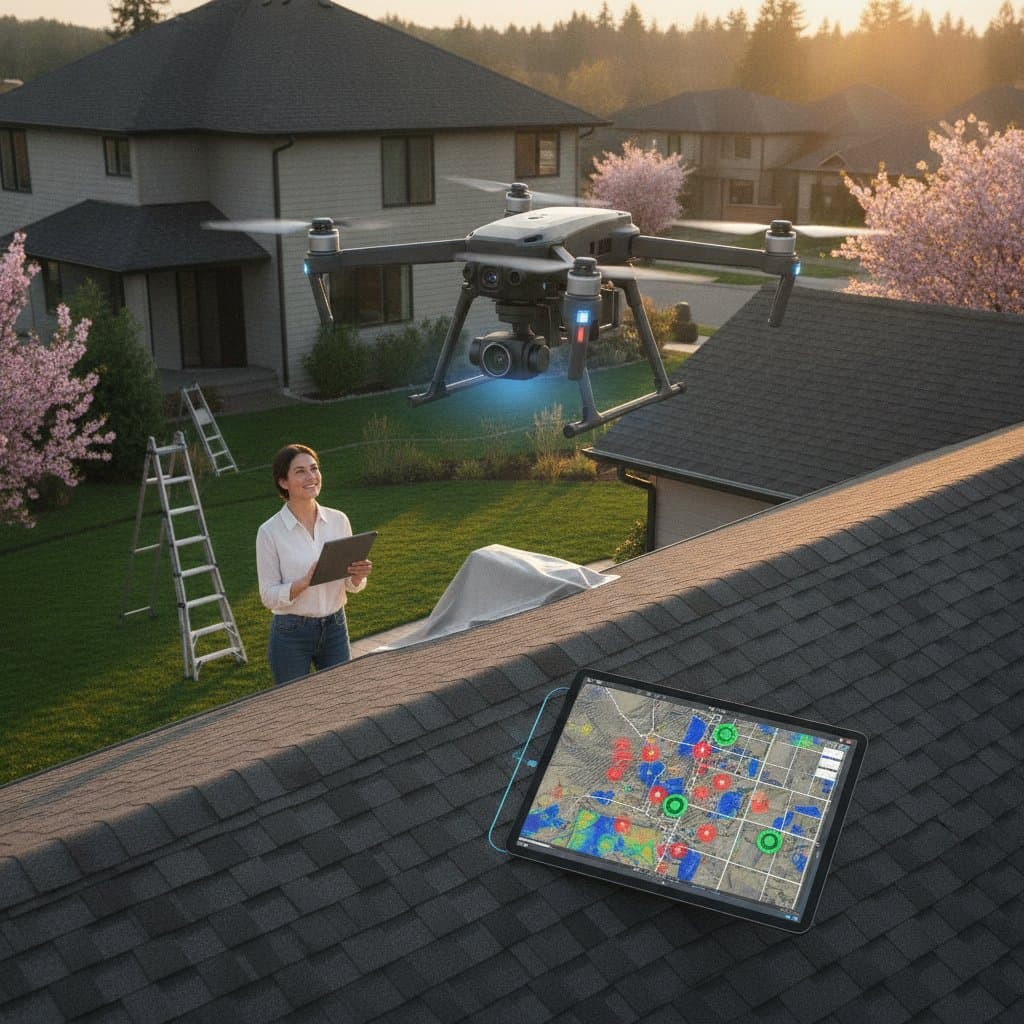
- AI powered drones complete spring roof inspections faster and with greater detail than traditional methods that require climbing.
- Homeowners receive early alerts about wear, leaks, and blockages that help avoid larger expenses later.
- Roofing firms and individual property owners increasingly rely on drone surveys for routine preventive care.
Why Spring Suits Drone Roof Inspections
Spring thaw and rainfall expose damage hidden during winter. Cracks, lifted shingles, and clogged gutters become visible, allowing timely repairs before summer heat intensifies problems.
Drones equipped with infrared sensors locate trapped moisture even on damp surfaces. This capability produces a clearer picture of risk than visual checks alone.
Steady spring weather also supports stable flights. Consistent light and light winds improve image sharpness, which helps the analysis software flag issues accurately.
Cost Comparison of Inspection Methods
Drone surveys reduce both time and physical risk. A manual inspection typically involves ladders, harnesses, and two to three hours on site. A drone flight finishes the same scope in twenty to thirty minutes without anyone ascending the roof.
| Inspection Type | Average Cost | Time Needed | Risk Level | Detail Quality |
|---|---|---|---|---|
| Manual | Moderate to High | 2 to 3 hours | High | Moderate |
| AI Drone | Low to Moderate | 20 to 30 minutes | Very Low | High |
Preventive scans often pay for themselves by catching small defects before they require structural work.
Current Limitations of Drone Surveys
Weather remains a constraint. High winds or rain can affect flight stability and reduce image clarity.
AI outputs sometimes need human review. The software may misidentify moss growth or miss minor flashing defects.
Local privacy rules may limit aerial photography in certain neighborhoods. Equipment purchase or rental costs can also deter infrequent users.
Ongoing software improvements and lower hardware prices continue to ease these constraints.
Roof Types That Gain Most from Aerial Scans
Steep, multi level, or chimney heavy roofs present access challenges that drones handle efficiently. Flat commercial surfaces likewise benefit from rapid wide area coverage.
Solar panel arrays stay undisturbed while drones check debris buildup and temperature variations that indicate malfunction.
Older or fragile roofs avoid added stress because no one walks on the surface.
Scheduling Drone Checks Within Annual Maintenance
A spring flight documents winter effects, while an autumn flight confirms readiness for cold weather. Side by side seasonal reports reveal performance trends in roofing materials.
Digital files serve as clear records for insurance claims or contractor bids. Owners can reference exact locations instead of relying on memory during repair discussions.
Homeowner Feedback on Drone Inspections
Users note that setup takes only minutes in the driveway. Annotated images arrive promptly and clarify which areas need attention first.
Many appreciate avoiding ladder work while still obtaining reliable condition data.
Integrate Drone Data Into Routine Care
AI powered drones now supply precise seasonal records that support smarter upkeep decisions. Regular flights build a timeline of roof performance and reduce uncertainty around repair timing.
Twice yearly scans, paired with professional verification when needed, keep maintenance focused and costs predictable.