Essential Spring Maintenance for Gutters and HVAC Systems
Spring maintenance protects homes from expensive repairs while improving energy efficiency. Gutters and HVAC systems operate behind the scenes to maintain comfort and structural integrity. Seasonal inspections address winter damage and prepare both systems for warmer months.
Benefits of Timely Spring Checks
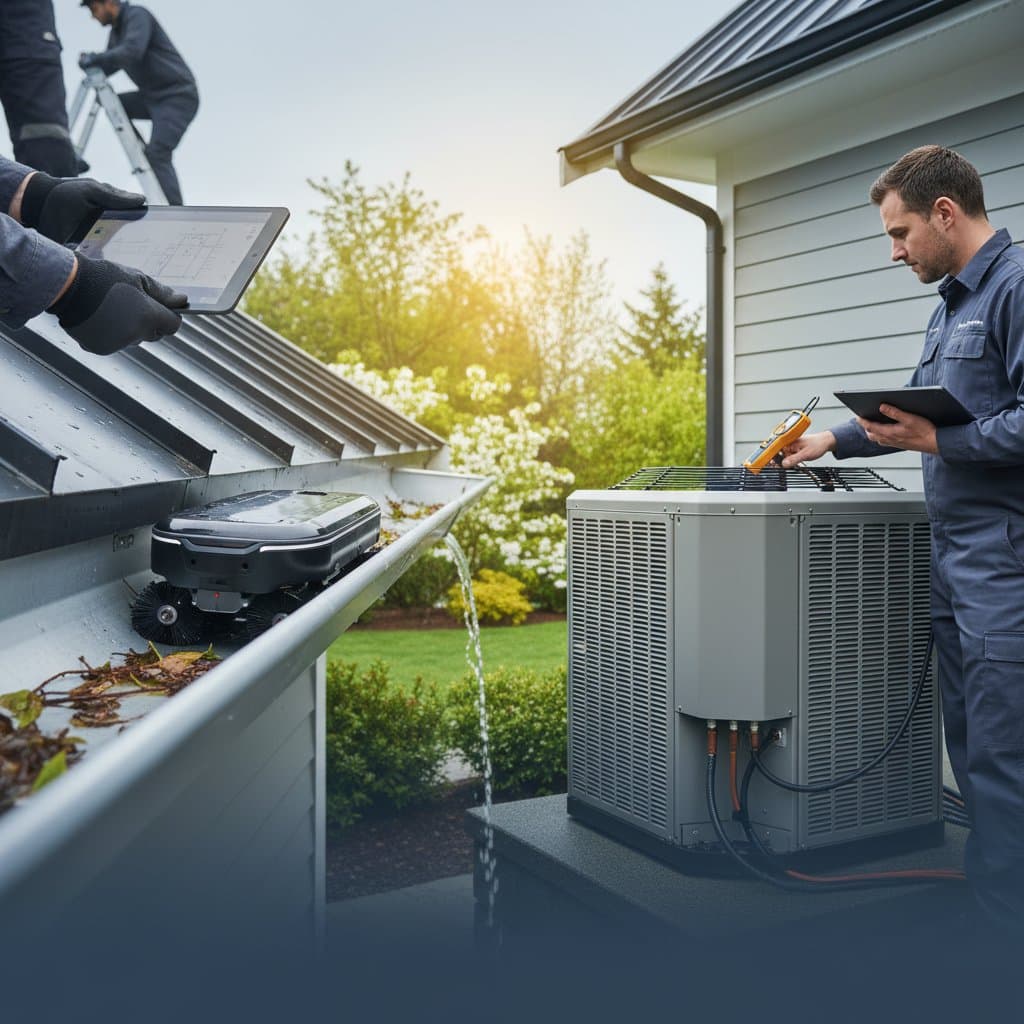
Winter debris and mechanical strain affect drainage and airflow. Gutters filled with leaves or sediment block water flow and direct moisture toward roof edges. HVAC units collect dust that restricts airflow and raises energy use. Addressing these issues in spring prevents attic humidity increases and reduces cooling loads.
Skipping inspections can lower HVAC efficiency by 10 to 15 percent and shorten roof life. Moisture from clogged gutters raises attic humidity, which forces HVAC equipment to run longer. Coordinated checks on both systems control humidity and protect insulation.
HVAC Inspection Steps
Spring marks the shift from heating to cooling. Technicians verify airflow, clean components, and adjust settings for summer demands.
Key Tasks
- Replace filters every one to two months to maintain airflow and reduce compressor stress.
- Clean outdoor condenser coils with mild detergent and low pressure water to restore heat transfer.
- Measure refrigerant levels using superheat and subcooling tests to avoid capacity loss.
- Remove dust from indoor coils and blower wheels, which can cut airflow by 30 percent when neglected.
- Calibrate thermostats against a digital thermometer and configure smart models for proper staging.
Equipment Performance Overview
| System Type | Efficiency Rating | Maintenance Frequency | Operating Cost | Lifespan (Years) |
|---|---|---|---|---|
| Central Air Conditioner | SEER 14 to 18 | Twice yearly | Moderate | 15 to 20 |
| Heat Pump | SEER 16 plus, HSPF 9 plus | Twice yearly | Low to moderate | 15 to 18 |
| Gas Furnace | AFUE 92 to 98 | Annual | Moderate | 18 to 25 |
| Ductless Mini Split | SEER 18 to 22, HSPF 10 | Twice yearly | Low | 15 to 20 |
Maintenance Costs and Savings
| Task | Average Cost | Benefit | Frequency |
|---|---|---|---|
| Gutter Cleaning | Low | Prevents water damage | Twice yearly |
| Gutter Realignment | Moderate | Protects fascia and insulation | Every 3 to 5 years |
| HVAC Tune Up | Moderate | 10 to 15 percent energy savings | Twice yearly |
| Coil Cleaning | Low | Restores capacity | Annually |
| Filter Replacement | Minimal | Improves airflow | Every 1 to 2 months |
Regular service costs far less than roof deck repairs or compressor replacement. A single clogged gutter can trigger thousands of dollars in structural work, while consistent HVAC tune ups avoid major component failures.
Ongoing Performance Tracking
Schedule joint inspections for gutters and HVAC equipment each spring and fall. Record airflow readings, refrigerant pressures, and slope measurements after each visit. Track monthly energy use and repair invoices to identify when system upgrades become cost effective.
Homeowners who maintain both systems report steadier indoor temperatures and fewer unexpected expenses throughout the year.