Introduction to Solar Options in 2026
Homeowners seeking sustainable energy solutions face a choice between traditional solar panels and innovative solar shingles. By 2026, advancements in both technologies promise greater accessibility, yet key differences in cost, efficiency, and installation persist. This article examines these factors to guide decisions toward the most practical investment for residential properties.
Solar panels, mounted atop existing roofs, have long dominated the market due to their proven performance. Solar shingles, integrated directly into the roofing material, appeal to those prioritizing aesthetics. Understanding their comparative strengths reveals why panels often provide superior value in the near future.
Cost Breakdown: Panels Versus Shingles
The upfront cost remains a primary concern for most buyers. In 2026, a standard solar panel system for an average home costs between $15,000 and $25,000 before incentives, depending on system size and location. This figure includes panels, inverters, and basic mounting hardware, with per-watt pricing around $2.50 to $3.50.
Solar shingles, however, command a premium due to their specialized manufacturing and labor-intensive installation. Expect to pay $40,000 to $60,000 for a comparable setup, with costs per watt reaching $6 to $8. These higher prices stem from the need for a full roof replacement in many cases, as shingles serve dual purposes as both energy generators and weatherproofing.
Over time, panels demonstrate faster return on investment through lower initial outlay and eligibility for broader tax credits. Shingles may offset some expenses if replacing an aging roof, but the net savings rarely exceed those of panels for most scenarios.
Efficiency and Performance Metrics
Efficiency determines how much electricity a system generates from available sunlight. Solar panels in 2026 achieve efficiencies of 20% to 22%, with leading models from manufacturers like SunPower pushing toward 23%. This translates to higher energy output per square foot, ideal for space-constrained roofs.
Solar shingles lag slightly, with efficiencies typically between 15% and 18%. While innovations from companies such as Tesla improve these figures annually, they still fall short of panel capabilities. In practical terms, a shingle system might produce 20% less power than an equivalent panel array, extending payback periods.
Durability also factors into performance. Panels withstand harsh weather with warranties up to 25 years, maintaining 80% efficiency throughout. Shingles offer similar longevity but require precise installation to avoid leaks or reduced output from shading issues.
Key Efficiency Comparison Table
| Feature | Solar Panels | Solar Shingles |
|---|---|---|
| Average Efficiency | 20-22% | 15-18% |
| Output per Sq Ft | High | Moderate |
| Warranty Length | 25 years | 25 years |
This table highlights panels' edge in raw energy production, crucial for offsetting utility bills effectively.
Design and Aesthetic Integration
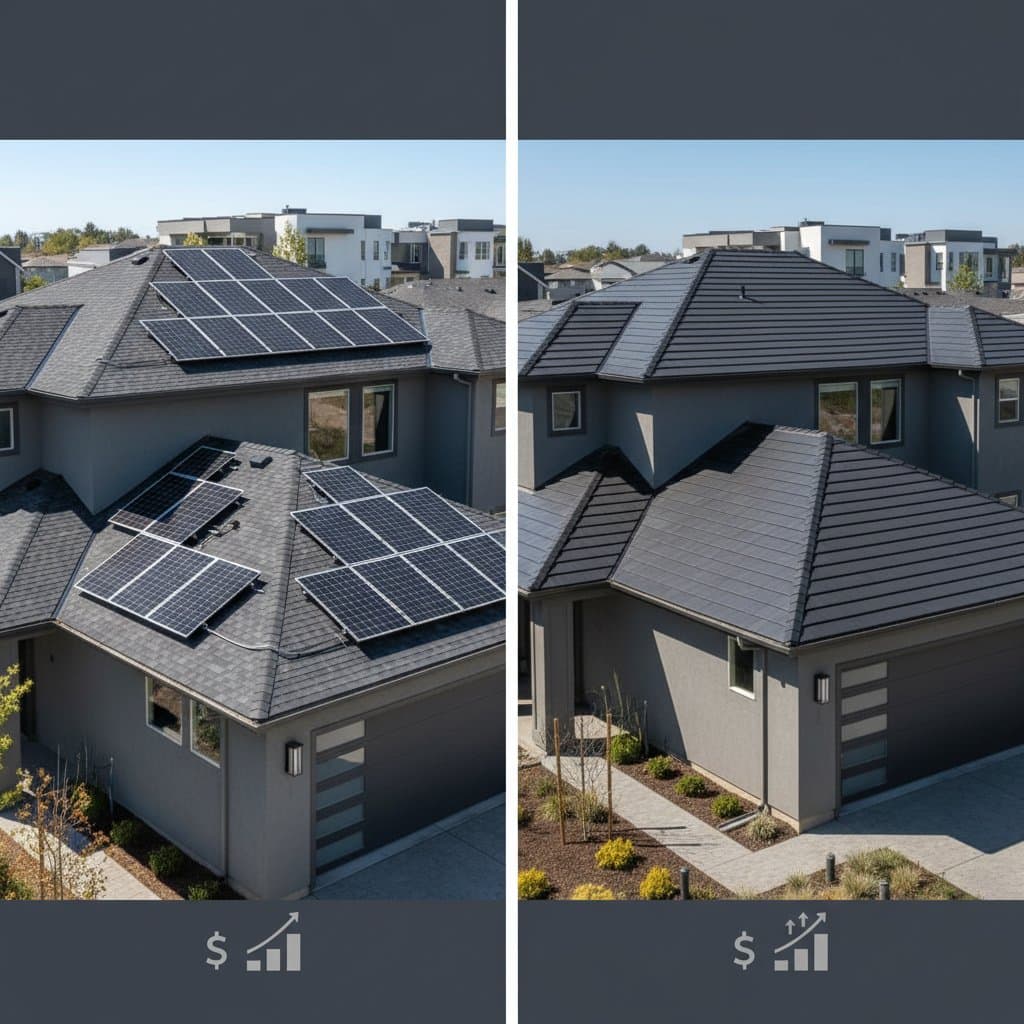
Visual appeal influences homeowner preferences, especially in neighborhoods with strict architectural guidelines. Solar panels, while functional, create a visible array that may alter a home's exterior profile. Modern designs minimize this impact through low-profile mounts and sleek framing.
Solar shingles blend seamlessly, mimicking traditional roofing materials like asphalt or slate. This integration preserves curb appeal, making them suitable for historic or upscale properties. The trade-off involves higher costs and potential compromises in energy yield due to fixed orientations.
For roofs with optimal south-facing exposure, panels maximize sunlight capture without aesthetic disruption. Shingles excel in design-forward applications but demand careful planning to ensure uniform coverage and avoid mismatched sections.
Installation and Maintenance Considerations
Installation complexity varies significantly. Solar panels attach to existing roofs via racking systems, a process completed in one to three days by certified professionals. This approach suits roofs under 10 years old, avoiding unnecessary replacements.
Solar shingles necessitate removing old roofing and installing a complete new layer, extending timelines to one week or more. Skilled labor is essential, as improper sealing can lead to water damage. Post-installation, both options require minimal maintenance, such as occasional cleaning and inverter checks.
Homeowners should assess roof condition beforehand. If replacement looms within five years, shingles offer combined benefits. Otherwise, panels provide a non-invasive upgrade with quicker activation.
- Evaluate current roof age and material.
- Consult local installers for site-specific quotes.
- Factor in permitting requirements, which may differ by technology.
Incentives and Long-Term Savings
Government and utility incentives play a pivotal role in affordability. The federal Investment Tax Credit covers 30% of costs for both panels and shingles through 2026, with potential extensions. State rebates and net metering policies further reduce effective expenses.
Panels benefit from mature supply chains, yielding lower material costs and more installer options. Shingles, as a newer technology, access specialized grants but face limited availability in some regions. Long-term savings favor panels, with payback periods of 6 to 8 years versus 10 to 12 for shingles.
Energy independence adds intangible value. Both systems lower carbon footprints and protect against rising electricity rates, projected to increase 3% annually. Calculating personal usage via online tools helps project annual savings accurately.
Selecting the Optimal Solar Solution
Deciding between solar panels and shingles hinges on individual priorities. Budget-conscious homeowners favor panels for their cost-effectiveness and high efficiency, ensuring rapid returns. Those valuing seamless design may opt for shingles despite the premium, particularly if roof renewal aligns with solar adoption.
Consider energy needs, local climate, and future plans. Panels suit versatile applications, while shingles enhance property aesthetics. Ultimately, both advance sustainable living; the choice that balances upfront investment with lifelong benefits delivers the greatest impact.
Consult professionals to tailor solutions to your home. With 2026 projections showing continued panel dominance in pricing, starting with a detailed assessment positions you for informed, rewarding progress toward energy efficiency.