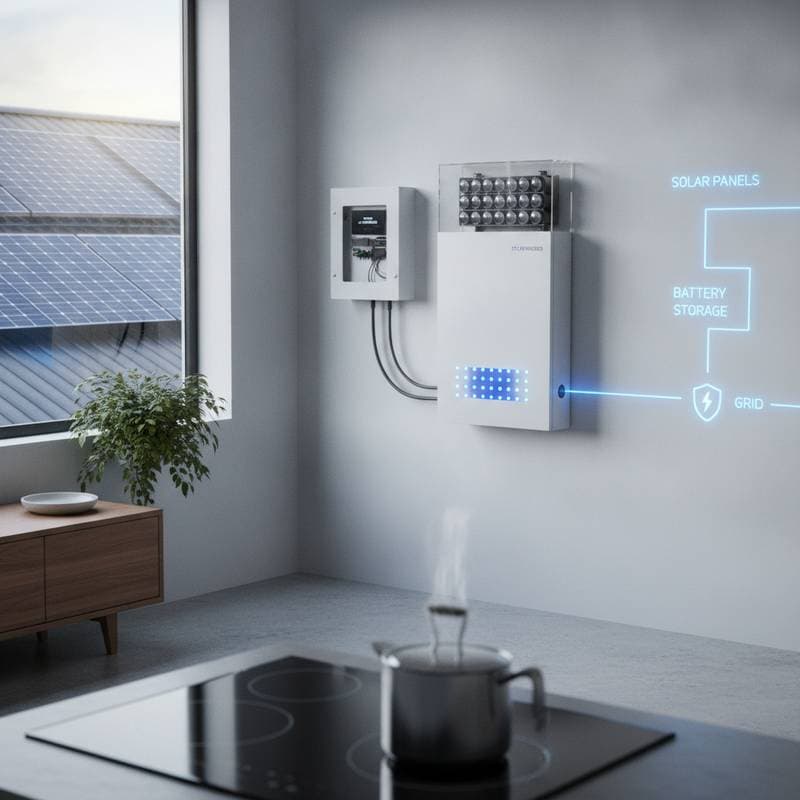
Understanding Solar Battery Costs
A complete solar battery installation includes equipment and labor. Equipment for a typical whole home battery ranges from $7,000 to $15,000. Installation and wiring add $1,000 to $2,000. Permits and inspections cost between $300 and $800.
Total project costs usually fall between $9,000 and $18,000. Smaller partial backup systems cost less. High capacity units for larger homes may exceed $20,000.
Factors That Influence Pricing
Battery capacity measured in kilowatt hours determines how much energy the unit can store. Larger capacities raise the upfront price. Solar system size affects total output and may require panel upgrades.
Inverter compatibility matters because older models often need replacement for battery integration. Labor rates vary by region and contractor expertise. The decision to cover the entire home or only critical circuits also shifts the final cost.
Comparing Battery Technologies
Lithium Ion Batteries
These units cost $9,000 to $16,000. They last 10 to 15 years and reach 90 to 95 percent efficiency. Homeowners choose them for compact size, fast recharge, and minimal upkeep. Popular models include the Tesla Powerwall and LG Chem units.
Lead Acid Batteries
Lead acid options range from $6,000 to $10,000. They operate for 5 to 10 years at 70 to 80 percent efficiency. They suit limited budgets and partial backup needs such as off grid cabins, though they demand more maintenance.
Saltwater Batteries
Saltwater models fall between $8,000 and $14,000. They provide 10 to 12 years of service at 80 to 85 percent efficiency. Environmentally conscious users select them for non toxic and fully recyclable materials.
Key Advantages of Battery Storage
Solar batteries deliver reliable backup without fuel deliveries. They store daytime solar production for evening use or grid peak periods. Homeowners reduce utility bills by discharging stored energy during high rate hours.
The systems lower household carbon output by maximizing on site renewable generation. Operation remains silent with no engine noise or exhaust fumes.
Important Considerations
Upfront expense rises when batteries join a solar array. A single unit may not sustain whole home loads through extended outages. All batteries lose capacity over time and require eventual replacement.
Older solar installations sometimes need electrical upgrades before batteries can connect safely.
Installation Process
A licensed contractor begins with an energy audit of the existing solar array, panel, and consumption patterns. Next the team designs battery capacity and inverter settings matched to the property.
After permits receive approval the installer mounts the battery, integrates it with the solar system, and activates monitoring software. Final testing confirms performance under varied load conditions.
Professional Installation Requirements
High voltage connections and software programming make battery installation unsuitable for do it yourself efforts. Certified installers guarantee compliance with local codes and preserve manufacturer warranties.
Mistakes during amateur work can damage equipment or create safety hazards. Always engage experienced solar professionals for the project.
Reducing Overall Expenses
Federal and local tax credits lower the net investment in many areas. Utility rebates reward systems that help stabilize the grid. Bundling battery work with new panel installation reduces labor duplication.
Some contractors offer seasonal discounts. Financing plans from solar providers spread payments over time at favorable rates.
Ongoing System Care
Monitor battery charge levels and performance trends through the provided app. Keep the installation area free of moisture and dust. Annual professional inspections verify wiring integrity and apply software updates.
Maintain charge above 20 percent to slow degradation and extend service life.
Preparing for Installation
Request detailed proposals from several local installers. Compare battery specifications, warranty terms, and available financing. Proper planning ensures the finished system supplies dependable, quiet backup while increasing the value of on site solar production.