Key Takeaways
- Solar batteries shift from optional luxury to essential tool, granting homeowners grid independence and outage safeguards.
- Return on investment hinges on household energy patterns, regional incentives, and battery capacity, often matching conventional investments in less than ten years.
- Mid-decade advancements will render solar-battery setups more intelligent and affordable, broadening access to energy autonomy for typical residences.
Comparing ROI: Solar Batteries Versus Panels Alone
Solar panels generate reliable long-term savings through reduced utility bills. Batteries elevate these benefits by maximizing self-consumption of produced energy and minimizing dependence on grid supplies.
| System Type | Typical Payback Period | Average Cost Range | Energy Independence |
|---|---|---|---|
| Solar Panels Only | 7 to 10 years | $12,000 to $18,000 | Moderate |
| Solar + Battery | 9 to 12 years | $18,000 to $28,000 | High |
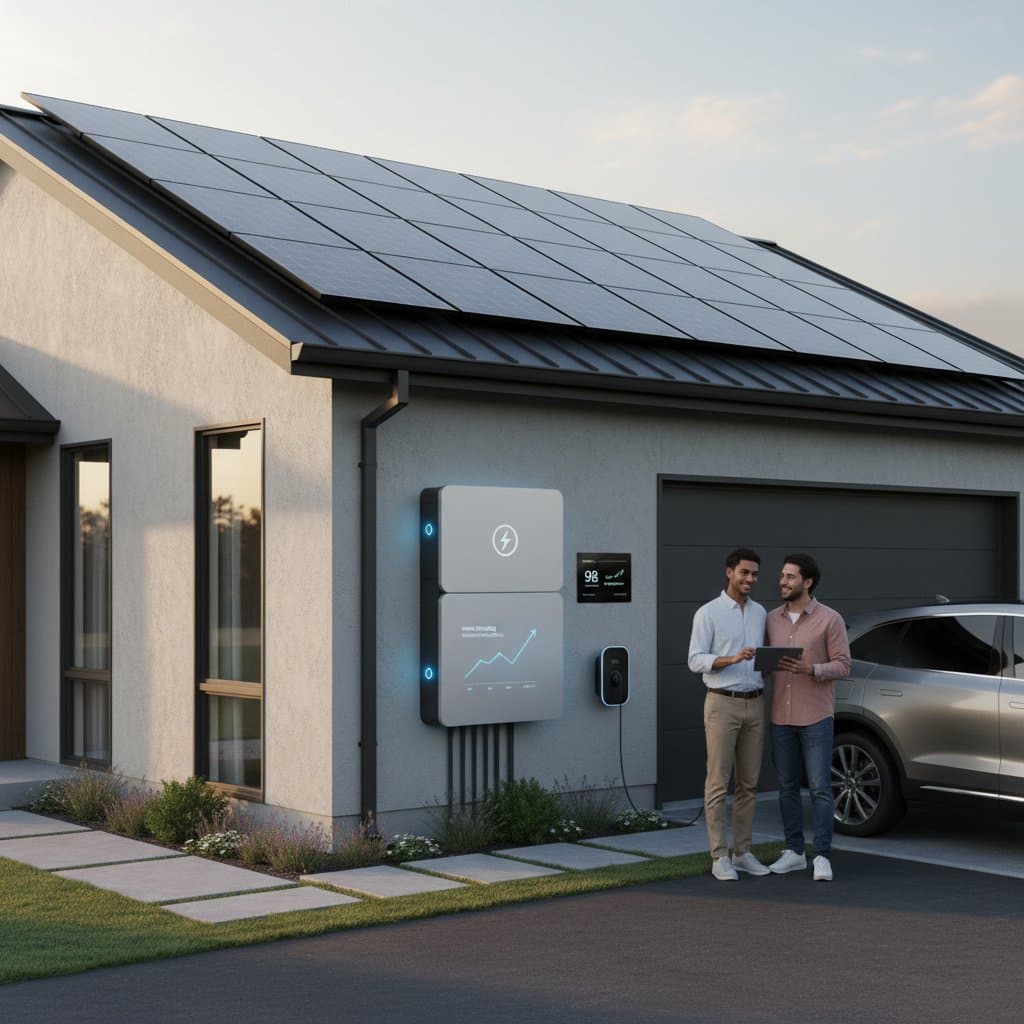
A hybrid system requires a marginally extended payback period yet provides unmatched value. For instance, panels without storage cease operation during blackouts to comply with safety protocols, whereas battery integration sustains critical functions.
This durability translates to concrete economic advantages. Families dependent on refrigeration, remote work setups, or health equipment sidestep expensive interruptions. Incorporating these prevented costs alongside the rising market premium for resilient properties substantially closes the return gap.
Achieving Grid Independence with Solar Batteries
Homeowners prioritizing reliability and energy oversight find solar batteries highly valuable. These units substantially lessen grid dependence by enabling on-site generation, storage, and distribution of power.
Complete grid detachment remains uncommon for average households, yet partial autonomy proves both feasible and profitable. An appropriately scaled installation covers 60 to 80 percent of demands, influenced by climate and usage levels.
Outage scenarios shift focus from mere cost reductions to essential security and ease. Power for cooling food, illumination, and connectivity during failures holds immeasurable worth. Such capabilities increasingly attract purchasers, positioning backup systems as desirable upgrades.
Value and Savings Overview
- Typical ROI: 8 to 12 years, accelerating in regions with elevated electricity rates
- Annual Savings: $1,000 to $2,000, scaled to installation size and local pricing
- Outage Resilience: Prevents disruptions and associated expenses
- Property Value Increase: Sustainable features command 3 to 5 percent premiums
- Sustainability Gains: Eases grid demands and lowers emissions
These metrics demonstrate that solar batteries extend beyond emergency support. They furnish a clear financial advantage while supporting eco-conscious objectives.
Essential Considerations Before Solar Battery Installation
Prospective installers must evaluate several factors to optimize outcomes.
- Capacity Matching: Align battery storage with solar production and daily consumption. Excess capacity prolongs payback, while insufficient sizing hampers effectiveness.
- Outage Essentials: Identify priority circuits, such as those powering refrigerators, lights, and network access.
- Durability Guarantees: Seek warranties spanning at least ten years, paired with accessible maintenance services for sustained reliability.
- Scalability Options: Select configurations adaptable to emerging integrations, including EV charging stations or advanced grid interfaces.
Collaborating closely with professionals on these elements aligns the system with specific energy requirements and daily routines.
Maximizing Benefits from Your Solar Energy Setup
Integrating a solar battery transforms daily energy management into a seamless process. Monitor usage patterns through system apps to refine consumption and extend battery life. Regular assessments ensure the setup evolves with household needs, sustaining long-term efficiency and peace of mind.
Homeowners report heightened confidence during volatile weather or peak demand periods. This setup not only secures financial returns but also fosters a resilient, forward-thinking lifestyle centered on sustainable independence.