2026 Bathroom Trends: Grab Bars That Blend Safety and Style
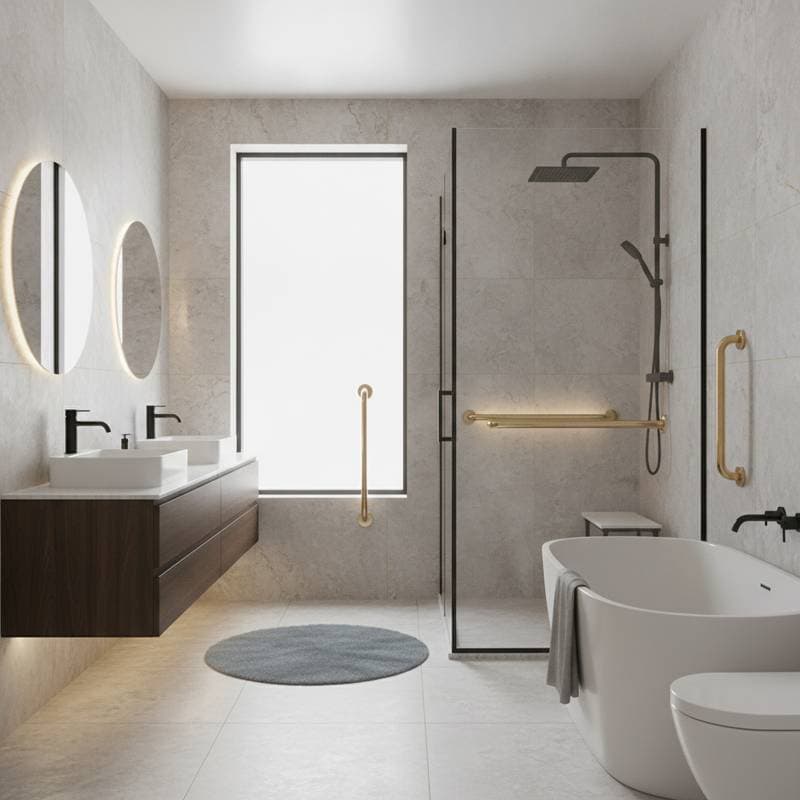
Homeowners no longer accept grab bars that look purely medical. New designs integrate safety hardware directly into bathroom aesthetics while meeting strict accessibility standards.
These updated fixtures support 250 pounds or more, resist moisture damage, and match popular finishes such as matte black, brushed nickel, and warm bronze. The result is a bathroom that stays both secure and visually cohesive.
Why Grab Bars Function as Design Elements
Older grab bars consisted of exposed stainless tubes mounted with visible screws. Newer versions use concealed flanges, matching materials, and multi-purpose shapes that align with faucets, towel bars, and tile patterns.
Manufacturers now offer powder-coated aluminum, solid brass, and composite resins. These options resist corrosion in humid or coastal conditions and maintain consistent color over decades of use.
Material Performance at a Glance
- Polished stainless steel offers high corrosion resistance and an industrial appearance with a 300-pound rating.
- Powder-coated aluminum provides very high corrosion resistance and contemporary style with a 250-pound rating.
- Solid brass delivers classic appeal and a 250-pound rating but requires medium maintenance.
- Composite resin allows custom colors and needs very low upkeep with a 200-pound rating.
- Integrated grab shelves combine storage and support at a 250-pound rating.
Main Grab Bar Configurations
- Standard wall-mounted bars remain the most common choice. Select 1.25-inch diameter models with hidden mounts for minimalist spaces.
- Vertical support bars fit beside showers or tubs where horizontal clearance is limited and can pivot for better grip angles.
- Integrated grab shelves add a flat surface for toiletries while maintaining structural strength near the tub.
- Folding bars mount beside toilets and lock in place. Gas-assisted hinges prevent sudden movement during use.
- Linear modular systems run continuously along walls to match other fixtures and create a unified visual line.
Installation Requirements
Proper anchoring determines real load capacity. Wood-framed walls need solid blocking between studs. Tile or masonry surfaces require stainless anchors or epoxy-set fasteners rated for shear loads.
Mount bars 33 to 36 inches above the finished floor. All hardware in wet zones must be corrosion resistant, and sealants should protect the wall cavity from moisture.
Motion-activated LED versions add low-level lighting for nighttime safety. These low-voltage units connect to existing home systems without special electrical permits in most areas.
Cost and Long-Term Value
Basic stainless models average 150 dollars installed and last about 15 years. Decorative powder-coated units run near 250 dollars and often reach 20 years with minimal upkeep. Integrated shelf systems start around 400 dollars yet reduce the need for separate accessories.
Durable finishes lower replacement frequency and keep the bathroom looking current. Many lines now incorporate recycled metals and low-VOC coatings for reduced environmental impact.
Ongoing Care and Future Options
Inspect fasteners and sealant joints twice a year. Clean surfaces with non-abrasive products to preserve finishes. In hard-water areas, occasional vinegar rinses remove mineral deposits.
Emerging designs include antimicrobial coatings, heated surfaces that match radiant floors, and 3D-printed flanges that follow custom tile layouts. These advances keep grab bars both functional and forward-looking.
Next Steps for Homeowners
Identify support locations around the shower, tub, and toilet first. Verify wall structure, then choose bars that meet or exceed ADA load and diameter guidelines. Coordinate installation with any planned tile or plumbing work to ensure solid anchoring before surfaces are finished. Professional assessment confirms code compliance and long-term reliability.