Key Takeaways
- Homeowners increasingly select permeable driveways to handle stormwater in an environmentally responsible manner while preserving property value.
- These driveways enhance return on investment through superior drainage, decreased maintenance requirements, and elevated curb appeal.
- Emerging regulations promote eco-friendly paving options, so adopting permeable materials positions properties favorably for future compliance.
Understanding Permeable Driveways
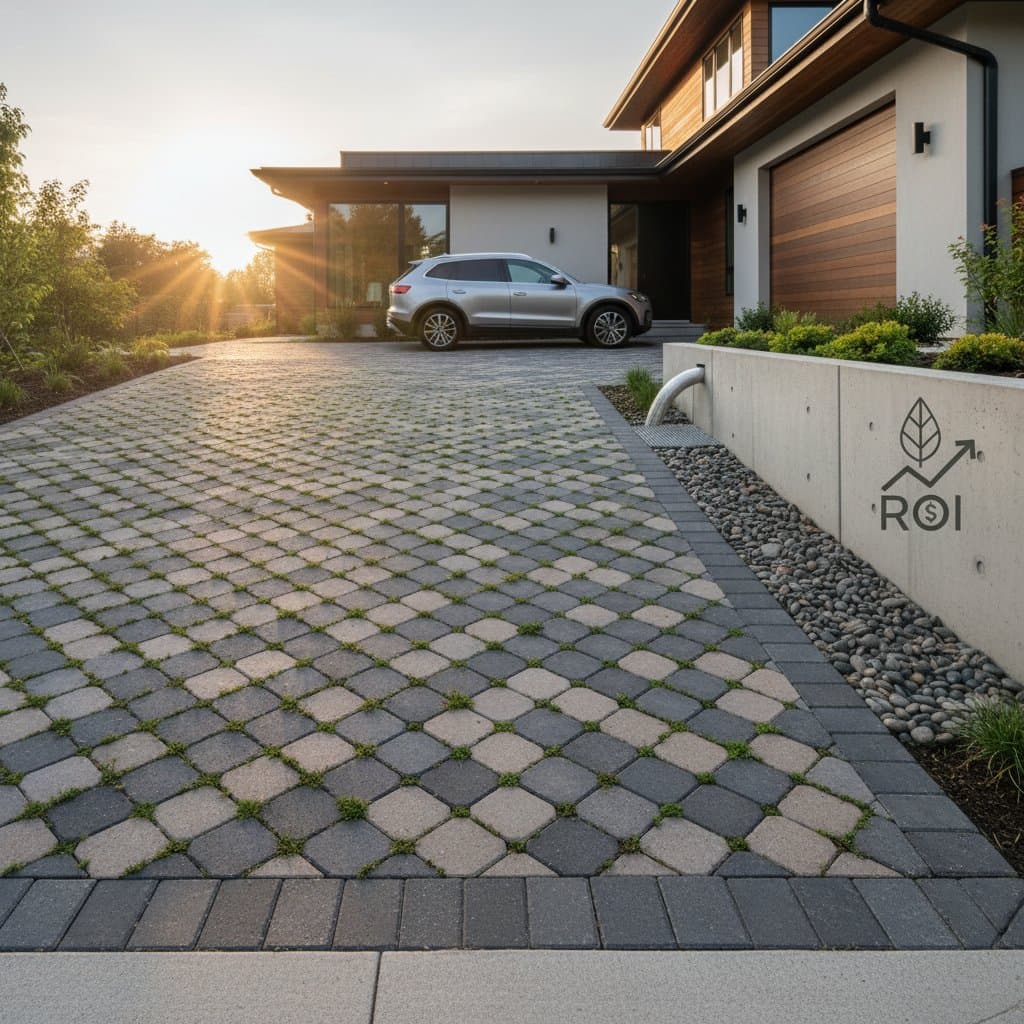
A permeable driveway utilizes materials designed to allow water infiltration through small voids into an underlying gravel base. This base captures and filters rainwater, which then percolates gradually into the surrounding soil. Such construction prevents water accumulation on the surface and supports natural hydrological processes.
Homeowners encounter several common types of permeable driveways, each offering distinct advantages in appearance, expense, and functionality:
- Permeable pavers: These consist of concrete or clay blocks arranged with fine joints packed with coarse sand or gravel to facilitate water passage.
- Porous asphalt or concrete: Formulations with reduced fine aggregates create interconnected voids that permit water to seep through the material itself.
- Gravel or recycled glass systems: These employ stabilizing grids beneath loose aggregates to maintain stability and avoid surface displacement.
Selection depends on priorities such as visual integration with landscaping or budget constraints. Permeable pavers provide versatile design possibilities, whereas porous asphalt delivers a familiar appearance at reduced initial costs.
| Material Type | Typical Cost per Sq. Ft. | Lifespan | Maintenance Level |
|---|---|---|---|
| Permeable Pavers | $10–$25 | 25–40 years | Low |
| Porous Asphalt | $8–$15 | 20–30 years | Moderate |
| Gravel Grid | $5–$10 | 15–25 years | Low |
Costs fluctuate based on geographic location, labor rates, and site-specific preparations, yet these figures offer a reliable benchmark for planning. Longevity reflects proper installation and routine care, ensuring sustained performance over decades.
Essential Considerations for Permeable Driveways
While permeable driveways offer significant benefits, they demand careful planning and occasional upkeep to maintain effectiveness.
Key factors include:
- Initial investment: Expect higher upfront expenses compared to traditional asphalt or concrete installations, often 20 to 50 percent more due to specialized materials and sub-base requirements.
- Potential for clogging: Sediment and organic matter may accumulate in voids over time, impeding water flow. Schedule annual maintenance, such as vacuuming joints or using low-pressure water to flush debris, to preserve permeability.
- Site preparation importance: Achieve optimal results by ensuring the sub-base features adequate depth and compaction tailored to local soil types. Engage certified professionals familiar with regional geology to avoid issues like subsidence or poor drainage.
Homeowners who address these elements experience reliable operation and minimal disruptions. Simple practices, including weekly sweeping and seasonal debris clearance, sustain the driveway's efficiency without extensive labor.
Advancing Stormwater Management with Permeable Driveways
Permeable driveways replicate the infiltration capabilities of undisturbed soil, capturing rainwater onsite rather than directing it to municipal systems. The subsurface layer acts as a reservoir, trapping contaminants such as automotive fluids and particulates before water reaches groundwater or nearby streams. This process reduces urban flooding risks and safeguards aquatic ecosystems.
Municipalities across regions implement stricter stormwater controls, particularly for residential developments, with mandates accelerating by 2026 to curb pollution from impervious surfaces. Proactive installation aligns properties with these standards, potentially qualifying for rebates or incentives that offset costs. Additionally, these driveways minimize soil erosion around foundations and gardens, preserving landscape integrity during intense precipitation events.
To maximize stormwater benefits, integrate permeable driveways with complementary features like rain gardens or bioswales. Such holistic approaches enhance overall site resilience and contribute to community-wide environmental goals.
Homeowner FAQs
Does a permeable driveway elevate home resale value?
Sustainable upgrades like permeable driveways attract buyers seeking reduced environmental footprints and operational efficiencies. Properties with these features often command premiums of 5 to 10 percent in markets valuing green certifications, as they signal forward-thinking ownership and lower future expenses.
Can a permeable driveway accommodate heavy vehicles?
Proper engineering ensures support for standard automobiles, light trucks, and even recreational vehicles. Specify aggregate bases at least 6 to 12 inches deep with high-compaction standards during design to distribute loads evenly and prevent structural failure.
What is the recommended cleaning frequency for a permeable driveway?
Annual or biannual sessions suffice for most installations. Employ a shop vacuum or blower to remove surface litter, followed by gentle rinsing if needed; refrain from applying sealants, as they seal voids and compromise functionality.
Is DIY installation feasible for a permeable driveway?
Small-scale gravel setups suit handy individuals with basic tools, but complex systems like pavers demand expert knowledge for precise leveling and base integration. Professional involvement guarantees compliance with building codes and optimal water management.
Do permeable driveways perform well in cold climates?
These surfaces excel in areas prone to freezing, as infiltrating water avoids surface ponding and ice formation. The design mitigates cracking from expansion cycles, often outperforming solid pavements in durability during winter conditions.
Sustaining Long-Term Value Through Proper Care
Evolving environmental policies underscore the strategic value of permeable driveways as both aesthetic enhancements and practical investments. Regular inspections and minor upkeep preserve their stormwater handling and visual allure, ensuring properties remain competitive. By choosing permeable options, homeowners secure compliance, resilience against weather extremes, and enduring financial returns.