Kitchen Remodel ROI: Upgrades That Add Real Value
Homeowners frequently weigh their remodeling aspirations against available budgets. A kitchen project delivers satisfaction when each expenditure contributes to lasting property value. This guide identifies upgrades that strengthen return on investment and highlights those that may fall short.
Readers who plan to sell soon or simply wish to build equity will find clear direction on where to allocate resources.
Essential Kitchen Upgrades That Increase Home Value
1. Cabinet Refresh or Replacement
Cabinets establish the visual foundation of any kitchen. Full replacement suits cases where existing units show damage or severe wear. Cabinet refacing offers a lower-cost route by swapping doors and drawer fronts while retaining the original boxes. Painting or refinishing produces immediate visual impact at modest expense.
Light neutral finishes such as soft white or warm gray broaden appeal and create an impression of greater space.
2. Countertop Improvements
Countertops rank among the first surfaces buyers examine. Quartz, natural stone, and solid-surface options combine durability with visual appeal. Homeowners working within tighter budgets can select high-quality laminate or butcher block for comparable style at reduced cost.
Material selection should align with overall home value. Premium marble rarely returns full cost in modest properties because buyers do not anticipate luxury finishes at that price point.
3. Energy-Efficient Appliances
Buyers increasingly evaluate energy performance during showings. Appliances carrying strong efficiency ratings lower operating costs and convey that the home has received recent updates. Stainless steel maintains broad acceptance for its clean appearance.
New units must fit designated spaces without gaps or overhangs. Oversized or mismatched appliances interrupt workflow and diminish perceived quality.
4. Lighting that Works and Wows
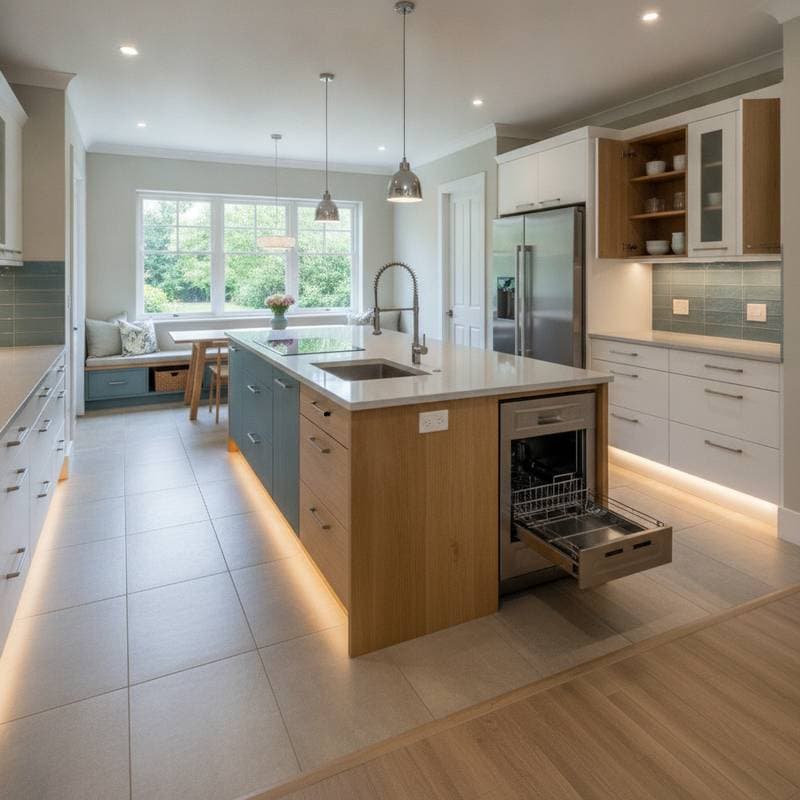
Effective lighting supports both daily tasks and overall ambiance. Combine under-cabinet task lights, recessed ambient fixtures, and focused accent lights above islands. Replacement of older fluorescent units with LED alternatives improves efficiency and updates the room instantly.
Lighting changes remain affordable while producing noticeable gains in function and appearance.
5. Functional Layout Enhancements
Attractive finishes lose impact when circulation remains awkward. Adjustments such as adding a pull-out pantry or shifting an island improve movement between work zones. Structural alterations involving walls or plumbing require consultation with a licensed designer or contractor to control cost and ensure safety.
DIY vs Professional Projects
Painting cabinets, swapping hardware, and installing basic light fixtures suit many homeowners. Electrical rewiring, plumbing relocation, and load-bearing wall removal demand licensed professionals. Begin with small projects to develop skill before advancing to complex work. Always shut off power or water and use appropriate safety equipment.
Situations That Require Licensed Contractors
Certain tasks involve permits and technical expertise. Engage professionals for electrical work beyond fixture swaps, plumbing reroutes, structural changes, stone countertop installation, and custom cabinet fitting. Professional execution satisfies code requirements and supports higher appraisal outcomes.
Protecting the Investment Through Maintenance
Regular care preserves both appearance and performance. Clean surfaces with non-abrasive products, reseal stone countertops on schedule, and maintain caulk lines around sinks. Periodic inspection of appliances and fixtures keeps systems operating efficiently and extends service life.
Executing Your Kitchen Upgrade Plan
Identify the two or three improvements that address daily frustrations first. Establish a budget that covers materials, labor, and a contingency reserve. Collect reference images, obtain multiple contractor bids, and schedule work in phases if completing portions independently.