Pickleball Courts and Their Effect on Property Value
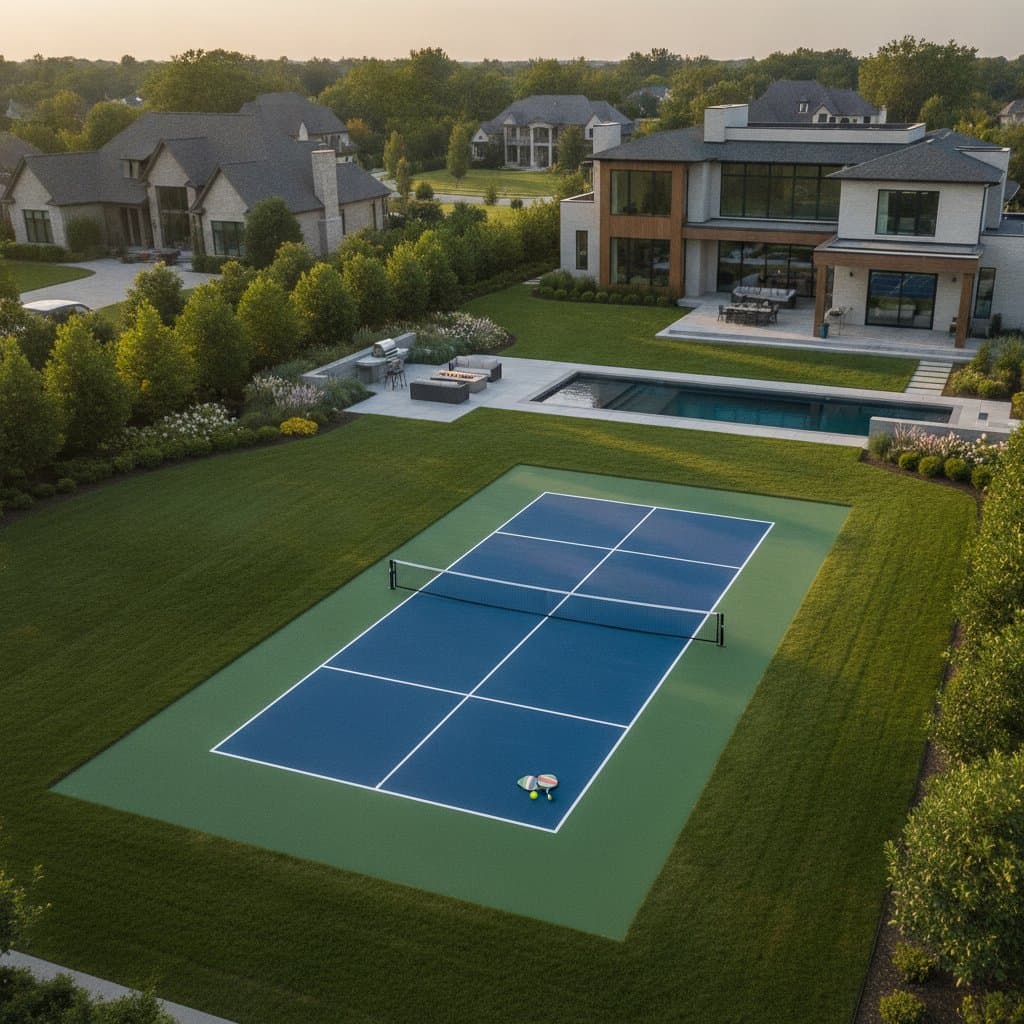
Pickleball has become a leading recreational choice for many households. The sport blends elements of tennis, badminton, and table tennis, which attracts players across different ages and abilities. Homeowners who add a backyard court gain both daily enjoyment and a feature that can improve market position.
Project Costs and Timeline
A standard residential pickleball court ranges from 18000 dollars to 35000 dollars. Construction usually takes three to six weeks once permits and site plans are complete. With routine care the surface lasts fifteen to twenty five years.
Base Surface Options
A concrete slab costs between 6000 dollars and 10000 dollars and provides consistent bounce along with strong durability. Asphalt offers a lower initial price of 5000 dollars to 8000 dollars yet needs more frequent sealing. Site grading and soil conditions often determine the final choice.
Coatings, Markings, and Enclosures
Acrylic coatings add 2000 dollars to 4000 dollars and deliver proper traction. Line striping requires another 200 dollars to 400 dollars. A ten to twelve foot chain link fence costs 4000 dollars to 6000 dollars, while the net and posts add 400 dollars to 800 dollars.
Lighting and Site Amenities
LED lighting systems run from 3000 dollars to 6000 dollars for evening use. Benches, shade structures, and basic landscaping fall between 1000 dollars and 3000 dollars. Total expenses depend on material grades and any added features.
Cost Control Strategies
Homeowners can reduce outlays through several practical steps. Converting an existing paved area avoids new base work. Selecting standard coatings instead of custom colors lowers material fees. Installing two light poles rather than four suits occasional night play. Scheduling the court project alongside other outdoor work reduces labor duplication. Local recreation grants sometimes offset wellness improvements.
Professional Installation Requirements
Site preparation, drainage, and precise surface work call for licensed contractors. Homeowners can handle surface cleaning, net setup, and accessory placement. Professional crews manage grading, concrete or asphalt placement, coating application, and permanent markings. Proper construction prevents early cracking and maintains play quality over time.
Advantages and Limitations
A backyard court increases opportunities for exercise and social gatherings. It can strengthen buyer interest in areas where outdoor recreation ranks high. The feature also supports long term fitness goals for residents. On the other side, the initial investment is substantial and the court occupies notable yard space. Ongoing upkeep and potential noise must fit neighborhood expectations.
Care and Service Life
Monthly cleaning removes debris that can wear the surface. Acrylic coatings benefit from resealing every five to eight years. Annual checks of nets, posts, and hardware keep components secure. Consistent attention supports a twenty five year lifespan and protects the original investment.
Market Direction
Buyers increasingly seek homes that support active outdoor living. Agents now mention pickleball facilities in listings because participation has moved into mainstream interest. Adding a court ahead of broader adoption places the property in a favorable position for future showings.
Next Steps for Homeowners
Begin with a site assessment that confirms available space, slope, and drainage. Obtain detailed bids from three sports court specialists that list materials, warranties, and timelines. Weigh total cost against expected length of ownership and local buyer preferences. A straightforward, well built court typically returns stronger value than an elaborate design. For owners who remain in place, the daily access to play and gatherings provides ongoing returns beyond any future sale.