2026 Multigenerational Layouts That Maximize Home ROI
Choosing a layout that supports multiple generations under one roof represents a strategic approach to long-term housing value. Multigenerational layouts accommodate parents, adult children, and grandparents within a single property. They preserve privacy, comfort, and efficiency at the same time. The right configuration increases usable space, reduces utility costs, and expands resale potential.
The Technical Reason Behind Multigenerational Growth
A home functions as a system that balances individual living needs, building codes, and mechanical efficiency. When multiple age groups share a residence, the layout influences plumbing performance, HVAC zoning, electrical loads, and accessibility features. A well-planned multigenerational layout improves lifecycle cost efficiency by optimizing shared resources such as hot water production, conditioned air distribution, and utility metering.
Designers now view multigenerational housing through a systems lens. The layout must manage spatial zoning, acoustic insulation, and mechanical distribution. This approach prevents conflicts between shared and private spaces. The architecture supports both independence and interaction.
Regional Performance and Climate Considerations
Climate zone plays a central role in determining the success of a multigenerational home. In warmer regions, layouts with detached guest suites or casitas reduce cooling loads by allowing selective conditioning. In colder climates, stacked living zones retain heat more efficiently and minimize exterior surface exposure.
Humidity control remains equally important. Shared laundry and kitchen spaces can increase indoor moisture, which affects HVAC performance and indoor air quality. Integrating balanced ventilation systems with energy recovery ventilators or heat recovery ventilators ensures stable humidity and temperature across multiple zones.
Common Layout Types and Their System Implications
-
Attached Secondary Suite (ADU-Integrated Floorplan): A self-contained unit with separate entry and kitchenette connects to the main home. This option may require an upgraded electrical service panel and dual HVAC zoning. It performs best in moderate climates where shared infrastructure operates year-round. The layout offers high resale potential, particularly in urban infill zones.
-
Split-Level or Basement Apartment: Multi-level separation between generations often uses partial or full basements. This design requires attention to air distribution and moisture control due to below-grade conditions. It suits cold climates with strong insulation and vapor barrier requirements. Return on investment depends on egress compliance and daylight exposure.
-
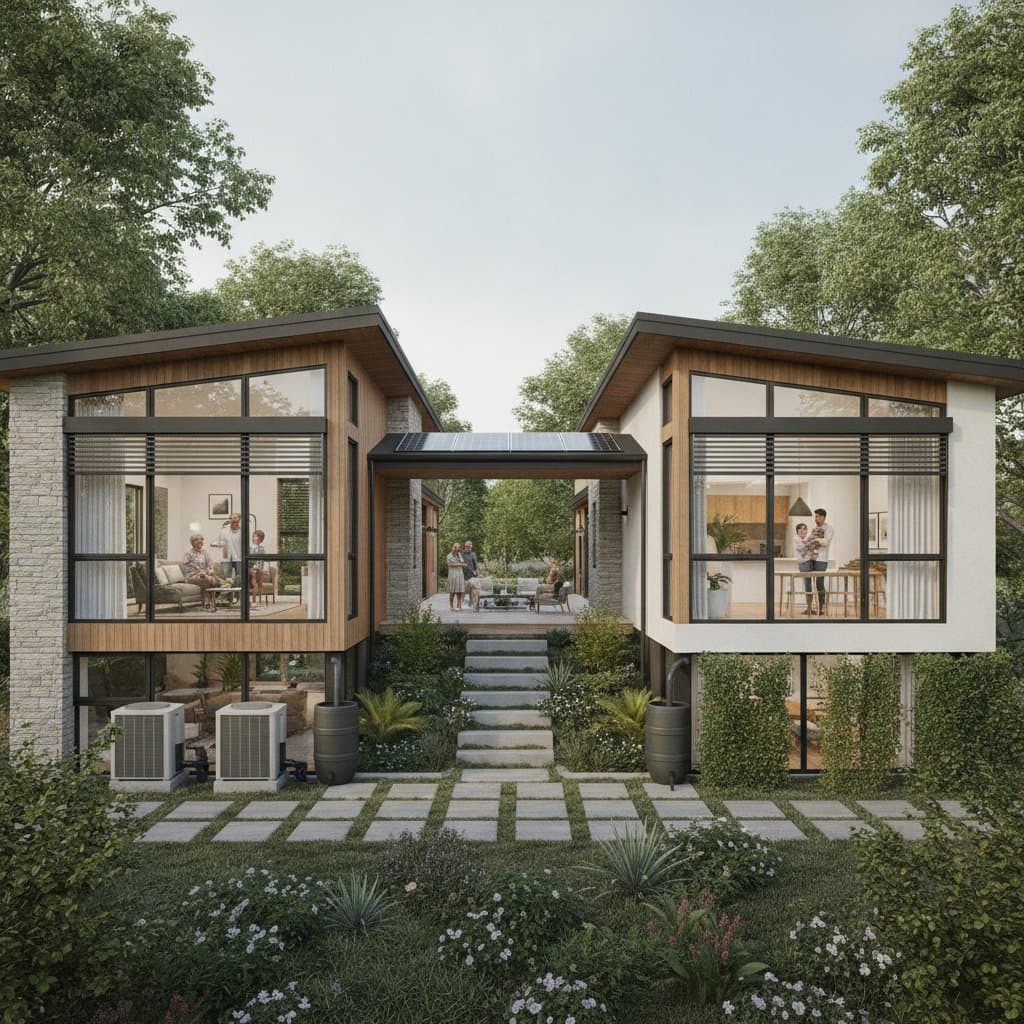
Dual Primary Suites on Separate Wings: Two full bedroom suites sit on opposite ends of the main level. This configuration simplifies HVAC zoning and plumbing runs while maintaining accessibility. It works well in warm or mixed climates where single-level living enhances long-term aging in place. The design delivers excellent resale appeal across demographics that value accessibility and privacy.
-
Casita or Detached Studio: A small building on the same lot remains fully independent yet close to the main home. This option requires a separate sub-panel, mini-split HVAC, and independent water heater. It fits hot or arid regions where detached construction supports passive cooling strategies. The layout provides high return due to rental flexibility and strong appeal for remote work or caregiving.
Key Performance Comparisons
| Layout Type | HVAC Zoning Complexity | Average Installation Cost | Energy Efficiency | Maintenance Frequency | Environmental Impact |
|---|---|---|---|---|---|
| Attached ADU | High | High | High | Moderate | Moderate |
| Basement Suite | Moderate | Moderate | Moderate | High | Low |
| Dual Suites | Low | Moderate | High | Low | Low |
| Detached Casita | High | High | Moderate | Moderate | Moderate |
Integration and Infrastructure Planning
Integration determines how well a multigenerational home performs over its lifecycle. Shared mechanical rooms can simplify service access, yet separate zoning controls prevent comfort disputes. Electrical sub-metering allows transparent cost allocation between households. In plumbing, dual water heaters or recirculation systems can reduce wait times and improve energy efficiency.
Sound control represents another technical necessity. Resilient channel systems, acoustic insulation, and staggered stud walls keep noise transmission low between living zones. These details contribute directly to perceived quality and long-term resale value.
Cost-Benefit Framework
Upfront construction costs rise by roughly 10 to 15 percent for multigenerational designs. Operational efficiency offsets this increase over time. Shared utilities, reduced per-capita energy consumption, and potential rental income enhance return on investment. A dual-suite layout with a high-efficiency heat pump system may cut combined heating and cooling expenses by up to 30 percent compared to separate dwellings of similar size.
Material selection also affects return. Durable flooring, low-maintenance siding, and universal design features reduce replacement cycles. Aging-in-place readiness, such as wide doorways and zero-threshold showers, allows the layout to serve multiple life stages without costly remodels.
When to Consult Professionals
Homeowners should engage a mechanical engineer or energy modeler before committing to a multigenerational design. These experts perform load calculations, evaluate duct distribution, and model energy use across zones. Building code specialists ensure secondary suites meet egress, ventilation, and fire separation requirements. Early technical consultation prevents costly redesigns and guarantees system performance after occupancy.
Planning Your Multigenerational Home
Begin with a site analysis that accounts for climate, lot size, and local codes. Engage professionals early to model energy performance and confirm compliance. Select layouts that balance shared systems with private zones. This approach delivers lasting comfort, lower operating costs, and stronger resale value across changing family needs.