Medicare Benefits for Bathroom Accessibility Upgrades
Choosing the right accessibility upgrades can transform a bathroom from a potential hazard into a safe, functional space that supports independence. Many homeowners postpone these changes due to cost uncertainty. Upcoming Medicare benefit expansions are set to improve access to essential safety fixtures.
Understanding what qualifies, how reimbursement works, and which systems meet eligibility standards can help you plan an efficient upgrade that supports both safety and long-term value.
Key Fixture Specifications
Technology Type: Accessibility fixtures and adaptive bathroom systems
Efficiency Rating: Not applicable, with focus on safety and compliance standards
Climate Zones: All zones for indoor application
Average Capacity: Depends on fixture type, typically 250 to 500 lb load-bearing grab systems
Typical Lifespan: 10 to 20 years with proper maintenance
Installation Complexity: Moderate, requires secure anchoring and code-compliant installation
Technical Overview
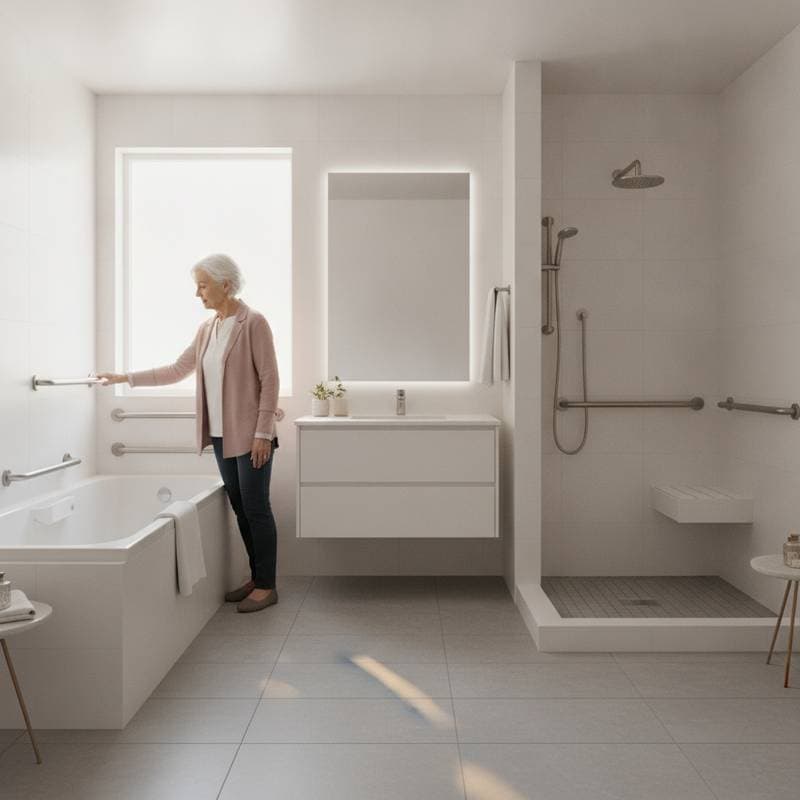
Bathroom accessibility upgrades are designed to reduce fall risk and improve usability for individuals with mobility challenges. These systems include grab bars, walk-in tubs, comfort-height toilets, non-slip flooring, and accessible shower controls. Medicare coverage for such modifications depends on classification as durable medical equipment or as part of a physician-recommended medical adaptation.
Structural renovations are generally excluded. Certain adaptive products integrated into existing bathroom infrastructure may qualify for reimbursement.
Regional Performance Considerations
Climate does not directly affect grab bar performance. Humidity and water exposure can influence material durability. In coastal or high-humidity zones, stainless steel or powder-coated aluminum provides superior corrosion resistance. In drier climates, polymer-coated systems may suffice and are easier to clean.
Regional building codes may also specify anchoring requirements for load-bearing safety devices. Local compliance forms an essential part of the installation process.
System Types Breakdown
| System Type | Technical Specification | Typical Cost | Maintenance | Medicare Eligibility |
|---|---|---|---|---|
| Wall-mounted grab bars | Stainless steel, 250 to 500 lb rated | Low | Minimal | Often covered as durable medical equipment |
| Floor-to-ceiling support poles | Adjustable tension mount, 300 lb | Moderate | Annual check | Conditional coverage |
| Walk-in tubs | Built-in seat, anti-scald valves | High | Regular cleaning | Partial coverage if prescribed |
| Accessible shower chairs | Non-slip base, adjustable legs | Low | Replace pads yearly | Commonly covered |
Each type serves a specific mobility need. Grab bars support transfers. Walk-in tubs combine therapeutic and safety benefits. Medicare may reimburse products that serve a direct medical purpose, especially when supported by physician documentation.
Integration with Existing Infrastructure
A key technical factor is how these systems attach to existing walls and floors. Reinforcing wall studs, using compliant mounting hardware, and sealing penetrations against moisture intrusion are necessary for both safety and longevity. If your home uses hollow wall construction or tile finishes, specialized anchors or backing plates ensure structural integrity.
For integrated systems like walk-in tubs, electrical and plumbing compatibility must meet both local code and manufacturer installation guidelines.
Cost-Benefit Analysis
The upfront cost of accessibility modifications varies. The long-term savings in injury prevention and healthcare costs are substantial. Medicare reimbursement can offset the initial expense for qualifying items. A set of professionally installed grab bars may cost less than a single emergency room visit after a fall.
By securing partial coverage, homeowners can invest in higher-quality materials that last longer and perform better under daily use.
Installation and Professional Recommendations
Bathroom safety systems must meet strict load and moisture standards. Hiring a licensed contractor or occupational therapist-certified installer is recommended. Professionals can ensure correct placement based on user height, reach range, and transfer needs. They can also help prepare the documentation Medicare requires for reimbursement approval.
Steps to Secure Coverage
Homeowners planning accessibility improvements should start with a professional home safety assessment. Identify which fixtures qualify as medically necessary. Request a physician statement to support any Medicare claim. Prioritize products with certification and verified load ratings. Review local building codes to ensure compliance with structural and electrical requirements.