Hurricane Straps: DIY or Professional Installation?
Selecting an effective roof anchoring system determines whether a home resists high winds or faces structural damage. Hurricane straps, known also as hurricane ties or clips, consist of galvanized steel components that attach a home's roof to its walls. These elements create a continuous load path, channeling uplift forces from the roof through the building to the foundation. Homeowners often debate whether to install these straps themselves or engage licensed professionals.
How Hurricane Straps Function Structurally
Hurricane straps link roof trusses, wall framing, and occasionally the foundation. In standard wood-framed buildings, joints between the roof and walls represent vulnerable points during intense winds. Uplift from wind exerts pull on these joints, and without secure connectors, nails may shear or withdraw, leading to roof separation.
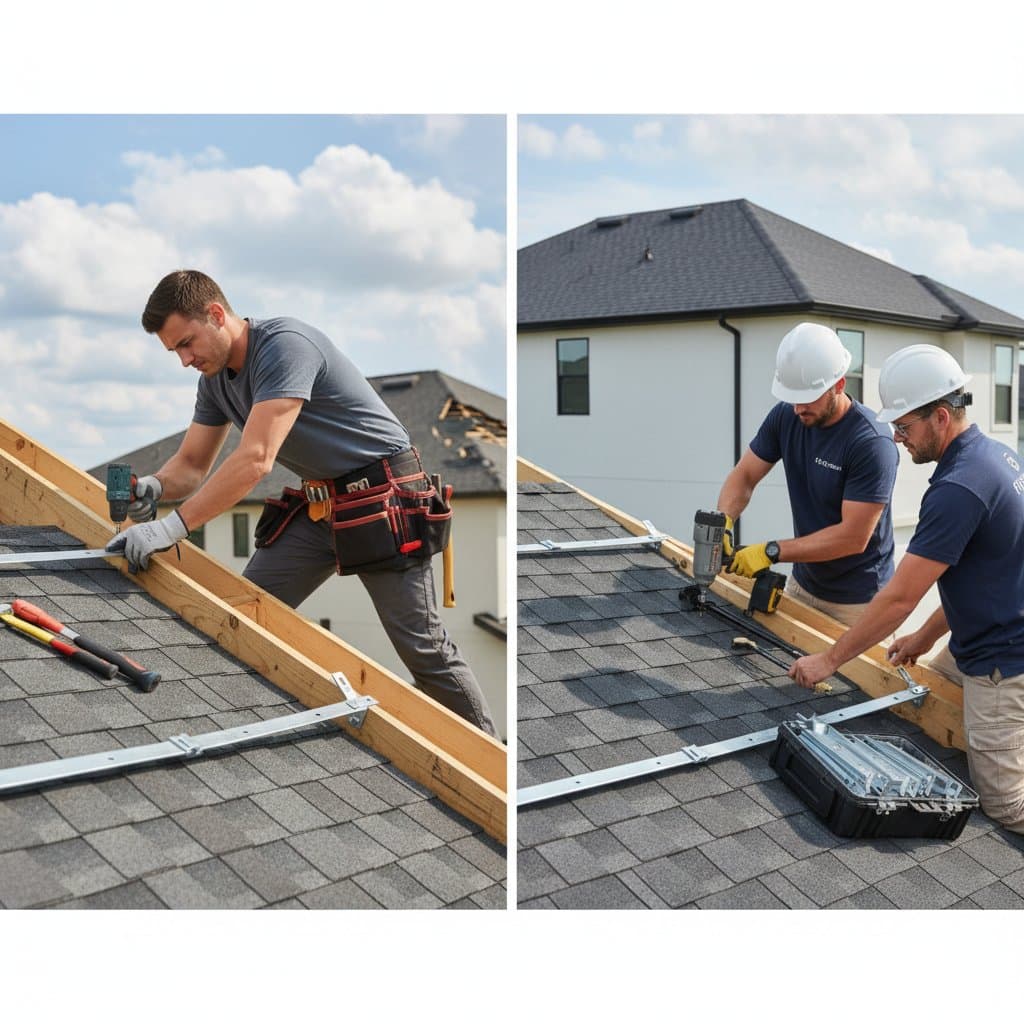
These metal straps spread loads across several framing members. Installers secure each strap using structural nails or screws that pass through both the truss and the top plate, establishing a strong bond. Connection strength relies on the strap variety, fastener dimensions, and precise placement.
Performance in Different Regions
Structures in coastal areas and tropical storm zones face the greatest wind threats. The Department of Energy identifies climate zones 1 through 3 as sites of sustained winds over 100 miles per hour. Local building codes in these areas mandate hurricane straps for new builds.
Inland locations benefit from straps despite lower risks. Moderate storms generate sufficient uplift to weaken older roofs with inadequate ties. Laboratory tests demonstrate that correct strap installations enhance uplift resistance by 50 to 70 percent over basic nailing methods.
Overview of Strap Varieties
Various strap designs address particular connection needs. Selection hinges on framing configuration and roof shape.
| Strap Type | Typical Use | Uplift Rating | Suitable Roof Type |
|---|---|---|---|
| H1 | Connects truss to top plate | 475 lbs | Gable roofs |
| H2.5A | Connects truss or rafter to wall plate | 635 lbs | Hip or gable |
| H10A | Heavy-duty truss connector | 1020 lbs | High-wind zones |
| H16 | Double truss tie | 1200 lbs | Complex roof framing |
H1 and H2.5A suit most retrofit efforts due to their compact size and simple access requirements. H10A and H16 apply to new constructions or projects involving sheathing removal for improved visibility.
Retrofitting into Current Homes
Incorporating hurricane straps into existing structures demands knowledge of how roof framing aligns with wall plates. Older homes frequently feature limited attic entry or insulation that conceals joints. Retrofitting typically occurs in confined attic areas, which prove challenging and physically demanding.
Verify the load path prior to starting work. Straps require direct attachment from trusses to wall framing, avoiding reliance on sheathing or fascia. Fasteners must embed fully in the wood, with straps positioned flat and gap-free. Misplaced straps introduce stress concentrations that diminish system effectiveness.
Obstructions like electrical lines, HVAC components, and insulation complicate access. Altering these elements without safeguards risks code violations or safety issues. Professionals manage such integrations adeptly, especially in homes with overlapping systems.
Evaluating Costs and Advantages
| Installation Type | Upfront Cost | Labor Time per Strap | Long-term Benefit |
|---|---|---|---|
| DIY | Low to moderate (materials only) | 10-15 minutes | Moderate protection if installed correctly |
| Professional | Higher upfront (labor + materials) | 5-7 minutes | Verified code compliance and inspection approval |
DIY approaches reduce labor expenses by hundreds of dollars, yet errors in fastening or alignment undermine the setup. Professionals employ pneumatic tools with precise settings and confirm load paths throughout the frame.
Financially, the added cost of hiring experts represents a small portion of typical insurance deductibles. Several insurers provide rate reductions for documented strap installations, recouping professional fees over time.
Adhering to Codes and Inspections
Coastal state regulations demand metal connectors compliant with ASTM and ICC criteria. Straps need corrosion resistance, paired with specified nails or screws. Inspectors check for comprehensive truss or rafter coverage, rejecting incomplete or faulty setups.
DIY participants must study local codes and manufacturer guidelines. Each model details required nail dimensions, spacing, and orientation. Noncompliance halves the rated capacity.
When to Involve Experts
Engage licensed contractors or structural engineers for roofs with intricate designs, multi-level frames, or hidden trusses. These specialists utilize torque tools and simulation software to validate force transmission.
Experienced homeowners may manage basic single-story retrofits with accessible attics, provided they adhere strictly to instructions. Essential items include safety equipment, adequate illumination, and precise measurements. Consult professionals for any doubts regarding load paths or fasteners.
Steps to Secure Your Roof
Strengthening roof ties with hurricane straps offers an economical method to fortify against winds. Individuals skilled in carpentry can handle straightforward upgrades. However, professional services ensure connections align with engineering and regulatory standards, delivering reliable protection.