Understanding the Need for Bathroom Grab Bars
Home renovation expenses continue to increase across the United States, driven by factors beyond inflation. Material shortages and tariffs on imported metals have elevated the price of essential safety features. For homeowners experienced with remodels, these trends underscore the importance of targeted, preventive measures. Grab bars in bathrooms represent a straightforward upgrade that mitigates fall risks, safeguards family members, and supports higher property values.
A personal incident highlighted this priority when a family member slipped exiting the shower in an apparently secure space. Such events reveal the value of proactive changes. With an investment of a few hundred dollars and a single weekend, bathrooms become far more secure, particularly for elderly individuals or those in recovery.
The Growing Importance of Grab Bars in Modern Homes
Rising labor expenses and extended contractor wait times encourage homeowners to handle modest safety tasks independently. Falls in bathrooms contribute significantly to household injuries, with seniors facing the highest vulnerability. Grab bars benefit a broad range of users, including children, visitors, and anyone requiring stability during transitions in wet environments.
Recent metal price surges, influenced by import tariffs, have increased stainless steel grab bar costs by approximately 15 percent compared to the previous season. Despite this, the benefits justify the expense. Well-placed grab bars enhance safety assessments by home inspectors and attract attention from potential buyers during property transactions.
Selecting Appropriate Grab Bars for Your Space
Grab bars vary in design to suit specific needs and installation locations. Consider the primary users and the bathroom's layout when making choices.
For shower areas, position a vertical bar near the entrance to assist with balance and a horizontal bar along the rear wall for support while standing.
For bathtub setups, opt for angled bars that facilitate both entry and exit movements.
Near toilets, install a horizontal bar adjacent to or behind the fixture to provide assistance for sitting and rising.
Material and Finish Considerations
- Stainless steel: Provides exceptional durability and resistance to corrosion, making it suitable for high-moisture zones.
- Powder-coated aluminum: Offers reduced weight and simplifies installation for those new to DIY projects.
- Plastic-coated steel: Delivers enhanced grip through textured surfaces, though it may fade with prolonged exposure.
Prioritize finishes with subtle ribbing or knurling for improved hold, especially under wet conditions. Test samples in stores to evaluate comfort and stability.
Planning and Timing Your Installation
Autumn presents an optimal period for this task. Milder indoor temperatures enhance comfort during the work, and retailers frequently reduce prices on safety hardware ahead of colder months. Persistent supply disruptions impact popular finishes such as brushed nickel or matte black, so secure materials in advance if desired.
For upcoming bathroom renovations, incorporate wooden blocking within walls prior to drywall completion. This preparation incurs little additional expense but avoids future disruptions to finished surfaces. Professionals value such foresight, as it streamlines their contributions.
Essential Installation Steps
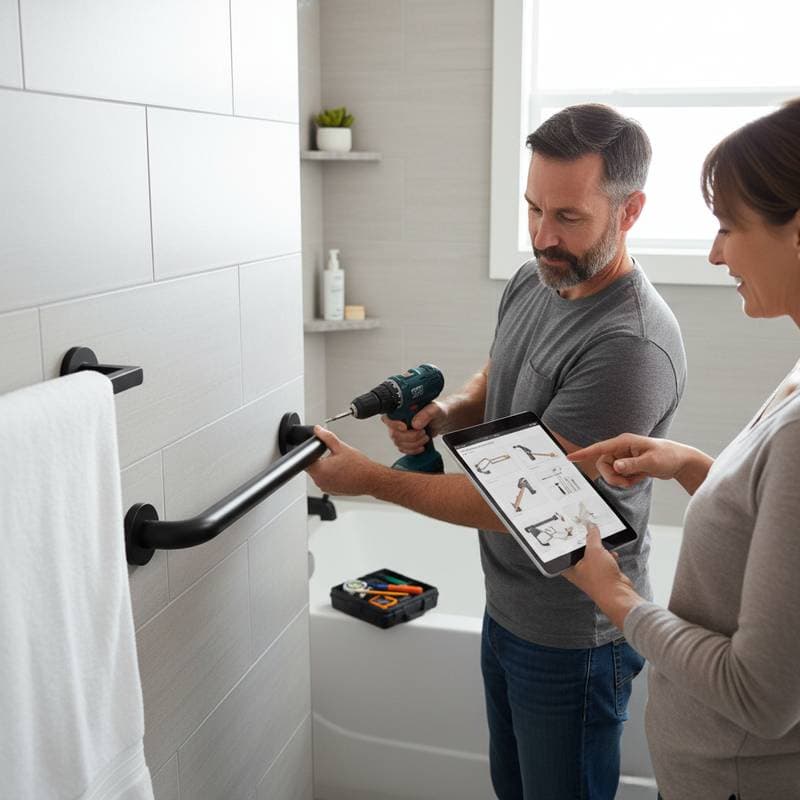
- Measure and mark positions using a level to ensure even alignment. Standard heights range from 33 to 36 inches above the floor for horizontal bars.
- Locate wall studs with a stud finder; secure bars directly to studs using lag screws for maximum strength.
- If studs are unavailable, use heavy-duty toggle bolts or winged anchors rated for at least 250 pounds.
- Apply silicone caulk around mounting holes to prevent water infiltration.
- Test stability by applying firm pressure before regular use.
Tools required include a drill, screwdriver, level, and measuring tape. Total time typically spans four to six hours for two to three bars.
When to Consult Professionals
Complex layouts or non-standard walls, such as tile over concrete, may necessitate expert input. Obtain estimates from local specialists to evaluate options. Many provide packages for installing several bars in one visit, often completing the work efficiently.
Calculating Returns and Enduring Advantages
Beyond immediate safety, grab bars demonstrate intentional accessibility features that resonate with diverse audiences, from buyers to long-term residents. Real estate professionals note that such enhancements strengthen marketability, particularly in homes accommodating multiple generations.
Financially, a $300 outlay can avert healthcare costs exceeding thousands of dollars. For families supporting aging relatives, these modifications extend independent living possibilities and reduce reliance on external care. The intangible assurance surpasses many other home improvements.
Unlike energy-saving initiatives that demand ongoing attention, grab bars endure for decades with basic upkeep. Wipe them periodically using mild soap and a soft cloth to maintain appearance and functionality.
Implementing Safety for Lasting Security
Proceed with confidence by starting with a clear plan and quality materials. This upgrade not only fortifies your home but also fosters a supportive environment for all occupants. Schedule the project soon to enjoy enhanced protection through the seasons ahead.