Key Takeaways
- Bathroom grab bars enhance safety, comfort, and property value for households of all ages.
- Total expenses encompass apparent costs such as materials and labor, alongside concealed ones like structural repairs, plumbing modifications, and aesthetic alignment.
- Selection between straightforward visible bars and embedded designs hinges on bathroom configuration, aesthetic preferences, and future accessibility needs.
The Role of Grab Bars in Contemporary Bathrooms
Grab bars have evolved from utilitarian aids into integral elements of sophisticated home interiors, where functionality intersects with elegance. These fixtures enable secure navigation for individuals of varying ages and abilities, particularly around wet areas like showers, bathtubs, and commodes. Homeowners install them strategically to mitigate slip hazards while harmonizing with surrounding hardware and surfaces.
Essential Insights
- Grab bars range in price from $60 to $400, influenced by material quality and stylistic features.
- Concealed expenses frequently stem from structural reinforcements or surface restorations.
- Emerging preferences favor unobtrusive bars that also function as accessory holders.
- Accurate placement and fastening guarantee compliance with accessibility standards and sustained performance.
Understanding Visible and Concealed Grab Bars
To evaluate expenses effectively, familiarize yourself with the distinctions between these categories.
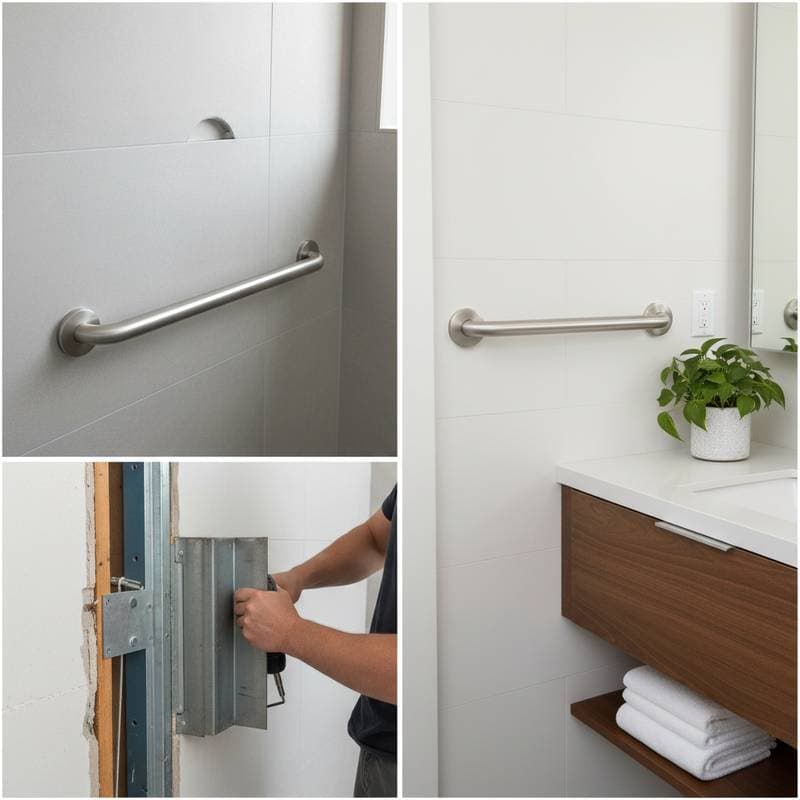
Visible grab bars represent the conventional approach, featuring apparent mounting plates and fasteners. Crafted from materials such as stainless steel, coated alloys, or polished brass, they project straightforward utility.
Concealed grab bars, alternatively known as embedded or recessed variants, integrate directly into walls or adjacent elements. Certain models masquerade as accessory bars or storage ledges, merging support with refined subtlety.
| Type | Typical Cost (Bar Only) | Visual Impact | Installation Complexity | Maintenance |
|---|---|---|---|---|
| Visible | $40–$150 | Apparent, functional or contemporary | Straightforward | Minimal |
| Concealed | $120–$400 | Subtle, refined | Moderate to intricate | Moderate |
Each variant adheres to safety benchmarks, though differences in appearance, tactile experience, and financial commitment are notable.
Installation Cost Comparison
Concealed grab bars generally incur higher total expenditures. A visible bar may install for less than $200, whereas concealed options often exceed $600 when accounting for workmanship and alterations.
Factors Keeping Visible Bars Affordable
- Direct Mounting Process: These bars secure to wall studs or employ robust toggles without extensive intervention.
- Economical Components: Basic stainless or coated metal constructions remain accessible and cost-effective at suppliers.
- Limited Surface Interference: Installation avoids incisions into finishes like tile or plaster.
Elements Elevating Concealed Bar Expenses
- Structural Embedding: Positioning may necessitate wall access or coordination with utility pathways.
- Bespoke Surface Treatments: Alignment with premium hardware elevates material investments.
- Specialized Labor: Certified professionals verify regulatory adherence and load-bearing integrity.
Visible bars prioritize practicality and economy, whereas concealed ones achieve seamless incorporation at greater upfront investment.
Anticipated Concealed Expenses for Homeowners
Projects of this scale often reveal unforeseen requirements upon commencement. Secure fastening exposes underlying necessities beyond the fixture itself.
1. Structural Fortification
Standards demand that grab bars withstand at least 250 pounds of dynamic force. Absent suitable framing, installers add plywood blocking or advanced fasteners behind surfaces. This step contributes $75 to $200 in labor charges.
2. Surface Handling and Sealing
Tiled environments require precise penetration of hard materials like porcelain. Skilled workers deploy specialized tools to avert fractures and apply sealants against water ingress. Replacement of damaged sections incurs $10 to $30 per square foot, scaled to material complexity.
3. Utility Line Adjustments
Concealed designs occasionally intersect with pipes or valves, prompting repositioning efforts. Such plumbing tasks add $150 to $300 to the project tally.
4. Aesthetic Harmonization
Coordinating finishes with existing elements, such as oil-rubbed bronze or satin nickel, increases costs by 20 to 40 percent relative to basic options.
5. Regulatory and Enhancement Fees
Accessibility-focused renovations may trigger permit reviews or supplementary safeguards per local ordinances, introducing delays and nominal charges.
Evaluating the Value of Concealed Grab Bars
These fixtures justify added expenditure when aesthetic cohesion and enduring usability rank highly. They deliver understated support, ideal for serene, resort-inspired settings devoid of overt mechanisms.
Benefits
- Visual Refinement: Preservation of smooth, uninterrupted expanses.
- Multifaceted Utility: Integration as drying rails or structural aids.
- Perceived Sophistication: Elevation of overall spatial quality and intentionality.
Limitations
- Elevated Financial Outlay: Demands for backing and embedding amplify budgets.
- Fixed Positioning: Alterations post-integration prove challenging.
- Repair Intricacies: Internal adjustments necessitate surface disassembly.
Concealed bars excel in comprehensive overhauls balancing form and function. For expedited enhancements or transient dwellings, visible models offer reliability without excess.
Material Impacts on Expense and Durability
Selections in composition dictate resilience, care demands, and initial pricing.
| Material | Average Price | Expected Lifespan | Care Considerations |
|---|---|---|---|
| Stainless Steel | $50–$200 | 20+ years | Corrosion-resistant; simple wiping suffices |
| Brass | $80–$250 | 15–20 years | Periodic buffing prevents oxidation |
| Aluminum | $40–$120 | 10–15 years | Prone to fading; regular polishing advised |
| Plastic-Coated | $30–$90 | 8–12 years | Ergonomic hold; monitor for fading |
| Composite Embed | $150–$400 | 15–25 years | Unified appearance; specialized upkeep |
In moisture-prone locales, stainless steel provides optimal endurance. Brass enhances period or upscale motifs, contingent on diligent maintenance.
2026 Design Influences on Grab Bar Selection
Bathrooms increasingly serve as wellness retreats, prompting seamless incorporation of supportive elements.
- Subdued Tones: Preferences for matte variants in charcoal or soft metallics.
- Streamlined Profiles: Alignment with sparse, elongated enclosures.
- Connected Features: Bars incorporating warmth elements or illumination.
- Tonal Unity: Synchronization with hardware and reflective surfaces.
Forward-thinking layouts incorporate these from inception, minimizing ancillary costs and yielding polished outcomes.
Budgeting Strategies for Precision
Project comprehensive outlays, encompassing both evident and latent components, prior to proceeding.
Visible Bar Project Estimate
- Fixture: $40–$150
- Workmanship: $100–$200
- Aggregate: $140–$350
Concealed Bar Project Estimate
- Fixture: $120–$400
- Workmanship and Adaptations: $200–$400
- Aggregate: $320–$800
Regional variances, finish varieties, and substrate conditions influence these figures. Allocate reserves for unforeseen fortifications or restorations.
Placement and Substrate Influences on Expenses
Substrate Evaluations
- Framed Drywall: Easiest access, lowest associated fees.
- Tiled Backing Panels: Demands cautious boring, incremental charges.
- Unitized Enclosures: Often requires supplemental plates or fixtures.
- Masonry Surfaces: Employs drilling apparatus, extending labor duration.
Positioning Recommendations
- Enclosure Zones: Position horizontally at mid-torso level for stability.
- Tub Edges: Employ diagonal orientations for ingress support.
- Commode Areas: Vertical placements adjacent provide rising assistance.
Strategic siting optimizes effectiveness and forestalls relocation needs.
Realized Long-Term Economies
Modest outlays on grab bars avert substantial medical liabilities from domestic incidents. Health authorities note falls as leading financial burdens in residential settings. Proactive installation yields protection against exorbitant treatment and response expenditures.
Concealed variants further boost market appeal, as prospective owners seek inclusive designs absent clinical overtones.
Addressing Frequent Inquiries
Does Installation Compromise Tile Integrity?
Professional methods employ precision instruments and barriers to safeguard against fissures or infiltration. Substandard approaches risk structural compromise.
Is Self-Installation Feasible?
Basic competence and framing detection permit solo efforts. Nonetheless, expert involvement secures weight distribution and moisture resistance, preserving product assurances.
Do Adhesive Models Suffice for Security?
These offer interim aid but falter against fixed anchors, particularly on irregular textures, over prolonged use.
Selecting Complementary Finishes
Align with prevailing accents for uniformity. Neutral chrome suits versatile palettes, while textured alternatives infuse contemporary flair.
Do Grab Bars Detract from Aesthetic Quality?
Contemporary iterations enhance rather than diminish, with embedded forms vanishing into luxurious contexts.
Sustaining Your Installation
Integrated into daily practices, grab bars facilitate routines from dawn ablutions to evening soaks. Preserve them through routine cleansing with neutral solutions.
For embedded configurations, conduct yearly assessments for stability or barrier degradation. Prompt interventions maintain efficacy.
Implementing Secure Enhancements
Incorporating grab bars represents an accessible path to fortified, inviting bathrooms. Opt for visible durability or concealed elegance based on your vision. Thoughtful foresight ensures expenditures align with outcomes, fostering spaces where assurance and allure converge.