-
Net Open Area Standards: The vent openings must equalize pressure for every square foot of enclosed area below the base flood elevation. Calculations account for the total volume of crawl spaces, garages, or basements to determine the required number and size of vents.
-
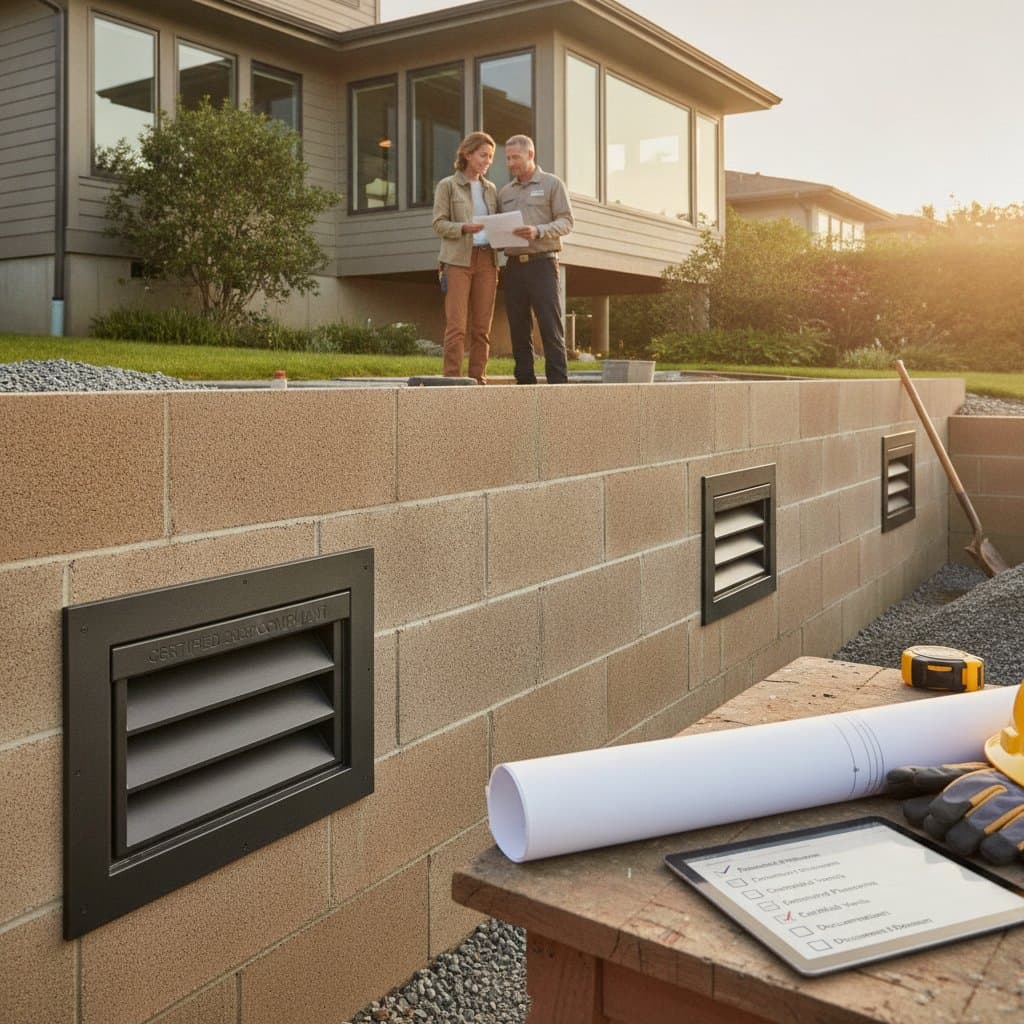
Certified vs Non-Certified Vents: FEMA-approved vents carry certification from an independent testing body, such as the International Code Council Evaluation Service. This certification simplifies insurance documentation and facilitates smoother inspections by local authorities.
-
Installation Height and Location: Vents must be installed in opposite walls when possible to provide adequate cross-flow. Position them no higher than 12 inches above the interior floor level to ensure rapid water entry and pressure relief.
Failing to meet these standards can result in noncompliance penalties or higher flood insurance premiums. Consult FEMA's Technical Bulletin 3-93-5 for detailed specifications and diagrams.
Choosing Between DIY and Professional Installation
Deciding how to install flood vents requires evaluating your skills, home structure, and local requirements. While DIY appeals to handy homeowners, professional services offer reliability for complex setups.
DIY Installation
DIY suits homeowners with construction experience who follow precise guidelines.
- Gather masonry tools, a concrete saw, sealant, and vent manufacturer templates.
- Adhere to FEMA's technical bulletin for vent sizing and placement.
- Allocate 4 to 6 hours for installing two vents, including cutting, framing, and sealing.
- Budget $400 to $800 total, covering materials and basic tools.
Professionals recommend practicing on scrap materials first to avoid structural errors. Local permits may still require inspection, even for self-installed vents.
Professional Installation
Hire experts for homes in designated flood zones or those needing certification.
- Services include site assessment, code compliance checks, and full documentation.
- Work typically completes in one day, minimizing disruption.
- Costs range from $1,200 to $3,200, depending on home size and access challenges.
When inspectors demand certified documentation, professional installation becomes essential. It also guarantees that insurers recognize the vents as compliant, securing potential premium reductions.
Optimal Timing for Installation
Schedule flood vent installation strategically to avoid seasonal bottlenecks and permit delays. In coastal or riverine regions, contractors face high demand during flood seasons, leading to extended wait times.
Target spring or early fall for work, when dry conditions stabilize soil and reduce excavation risks. This timing aligns with lower humidity, aiding sealant adhesion and overall durability.
Anticipate permit processing, which can span weeks in areas reviewing flood zone maps. Submit applications well before insurance renewals or property sales to prevent complications.
Integrate vent installation with ongoing projects, such as foundation repairs or utility updates. This approach consolidates labor, cuts costs, and eliminates the need for future wall openings.
Essential Maintenance Practices
Flood vents demand minimal routine care to sustain their protective role. Blockages from debris or buildup can impair water flow, diminishing effectiveness over time.
Perform inspections annually, ideally after heavy rain periods. A basic cleaning with a hose and visual check for issues maintains optimal function.
Annual Maintenance Checklist
- Examine for rust, corrosion, or cracked frames that could compromise integrity.
- Test louvers or floats to confirm they operate freely without sticking.
- Inspect sealant around edges for deterioration and reapply as needed.
- Ensure vents sit above exterior soil grade to prevent premature submersion.
- Clear leaves, nests, or mud that might obstruct openings.
Well-maintained vents, particularly stainless steel models, endure beyond 20 years. Regular upkeep extends lifespan and preserves insurance eligibility.
Preventing Installation Errors
Homeowners often encounter pitfalls during flood vent setup, leading to reduced performance or added expenses. Awareness of these issues promotes successful outcomes.
- Improper Height: Vents positioned too high fail to equalize pressure promptly, risking structural strain.
- Blocked Openings: Nearby landscaping or accumulated debris hinders airflow and water entry.
- Insufficient Vents: Not achieving the required area-to-vent ratio exposes enclosed areas to flood damage.
- Unsealed Frames: Loose edges permit pest entry or gradual moisture infiltration.
- Non-Certified Products: Unverified vents may invalidate insurance discounts or fail inspections.
Verify all steps against manufacturer guidelines and local codes prior to finalizing work. Consulting a structural engineer for unique home configurations adds further assurance.
Implications of FEMA's Regulatory Evolution
FEMA's 2026 changes mark a transition toward proactive flood mitigation nationwide. Standardized venting protocols will shape updated building codes in various states, fostering greater uniformity.
For homeowners, these rules impose clearer responsibilities alongside enhanced safeguards. Properties meeting standards experience lower post-flood recovery expenses and accelerated reconstruction.
As local governments enforce compliance, proactive owners gain advantages in insurance savings and marketability. This forward-thinking approach builds community-wide resilience against intensifying weather patterns.
Securing Your Home's Foundation
Flood vents serve as an unobtrusive yet critical barrier against water-induced devastation. Proper implementation today averts substantial repair bills tomorrow.
With FEMA's directives on the horizon, informed action positions homeowners for long-term security. Prioritize compliance to protect your investment and ensure peace of mind in flood-vulnerable areas.