How Indoor Plants Can Reduce Your HVAC Costs by Up to 30 Percent
Indoor plants offer more than aesthetic appeal; they provide practical benefits for home efficiency. Biophilic design integrates natural elements like plants to create environments that mimic the outdoors. This approach not only enhances well-being but also optimizes energy use, potentially lowering heating, ventilation, and air conditioning bills by as much as 30 percent.
Homeowners often overlook how plants interact with indoor climates. Vegetation absorbs excess heat, regulates moisture levels, and purifies air, reducing the workload on HVAC systems. By incorporating plants thoughtfully, individuals can achieve greater comfort without increasing energy consumption.
The Principles of Biophilic Design
Biophilic design draws from nature to improve indoor spaces. It emphasizes connections to the natural world through elements such as greenery, natural light, and organic materials. In residential settings, this design philosophy promotes sustainability and health.
Plants serve as key components in biophilic strategies. They contribute to thermal balance by shading surfaces and transpiring water vapor, which cools the air. Studies indicate that such integrations can decrease reliance on artificial climate control, leading to measurable energy savings.
The design also addresses psychological aspects. Exposure to plants reduces stress and improves focus, making homes more inviting. These benefits compound with practical efficiencies, creating holistic improvements.
Mechanisms by Which Plants Enhance HVAC Efficiency
Plants influence indoor environments in multiple ways, each supporting reduced HVAC demands. Understanding these mechanisms allows for targeted implementation.
Temperature Regulation
Foliage acts as a natural insulator. Leaves absorb sunlight and release moisture through transpiration, lowering ambient temperatures in warm conditions. In cooler weather, plants help retain heat by blocking drafts and creating microclimates.
Strategic groupings of plants can create shaded zones that prevent overheating. This reduces the need for air conditioning during peak summer months. Overall, these effects can cut cooling costs significantly.
Humidity Control
Many homes experience fluctuations in humidity that strain HVAC units. Plants naturally humidify dry air by releasing water vapor and dehumidify overly moist spaces through absorption.
Species like peace lilies excel at maintaining balanced moisture levels. This stability minimizes the operation of humidifiers or dehumidifiers, which often run alongside HVAC systems. Consistent humidity leads to more efficient overall climate management.
Air Quality Improvement
Indoor air often contains pollutants that HVAC filters struggle to remove entirely. Plants filter toxins, such as benzene and formaldehyde, converting them into oxygen.
Cleaner air reduces the frequency of system cycling, as better quality decreases buildup on components. This extends equipment life and lowers maintenance needs. Healthier air also enhances occupant comfort, indirectly supporting energy conservation.
Selecting Appropriate Plants for Energy Savings
Not all plants provide equal benefits for HVAC efficiency. Selection depends on factors like light availability, room size, and specific climate needs.
Consider low-maintenance options with high transpiration rates. For instance:
- Snake plants thrive in low light and release oxygen at night, aiding nighttime cooling.
- Pothos vines purify air effectively and grow well in various conditions.
- Ferns add humidity in dry environments without requiring much care.
Evaluate plant hardiness for your region. Drought-tolerant varieties suit arid homes, while tropical species benefit humid climates. Start with a few specimens to assess their impact before expanding.
Placement Strategies for Maximum Impact
Placement determines the effectiveness of plants in influencing HVAC performance. Position them to leverage natural airflow and light patterns.
Follow these steps for optimal results:
- Place larger plants near windows to block direct sunlight and reduce heat gain.
- Cluster medium-sized plants in corners or hallways to circulate cooler air evenly.
- Hang trailing plants above heat sources to dissipate warmth more gradually.
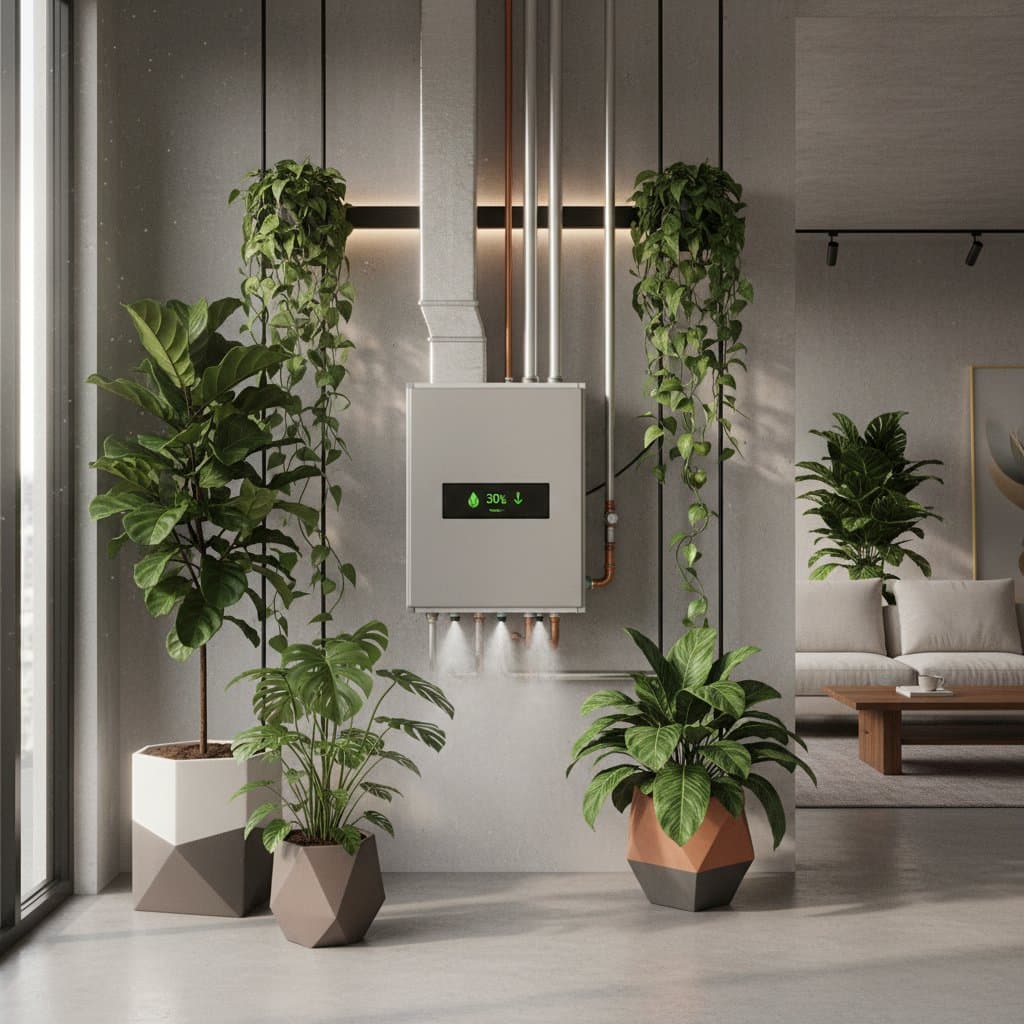
- Integrate potted greenery around vents to filter incoming air without obstructing flow.
- Use vertical gardens on walls to maximize coverage in limited spaces.
Monitor room temperatures before and after placement to measure improvements. Adjust arrangements seasonally to address changing needs, such as increased shading in summer.
Quantifying Savings and Broader Benefits
Implementing biophilic elements can yield up to 30 percent reductions in HVAC energy use, depending on home size and plant density. Smaller spaces may see quicker results, while larger homes benefit from comprehensive installations.
Beyond costs, plants foster sustainability. They decrease carbon footprints by lessening electricity demands from HVAC operations. Improved air quality correlates with fewer health issues, potentially reducing medical expenses.
Aesthetic enhancements also increase property value. Homes with integrated greenery appeal to eco-conscious buyers. These factors create long-term financial and lifestyle advantages.
Steps to Integrate Plants into Your Home Today
Begin your biophilic transformation with simple actions. Assess current HVAC usage through utility bills to establish a baseline.
Acquire plants suited to your environment and place them according to the strategies outlined. Track energy consumption over several months to evaluate savings.
Consult local experts if needed, but most implementations require minimal investment. The result is a more efficient, comfortable home that aligns with sustainable living principles.